Comparison

Feathertail Glider vs Feather-tailed Possum

Feathertail Glider (Acrobates pygmaeus) and Feather-tailed Possum (Distoechurus pennatus) both belong to the family Acrobatidae (feather-tailed possum) and part ways below it. Both are recorded in 1 country.
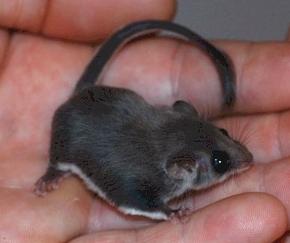
Feathertail Glider

Feathertail Glider

Acrobates pygmaeus

Acrobates_pygmaeus_1.jpg: Doug Beckers from Killcare Heights, Australia derivative work: Berichard (talk), CC BY-SA 2.0, via Wikimedia Commons

Feather-tailed Possum

Feather-tailed Possum

Distoechurus pennatus

Daniel, CC BY 4.0, via Wikimedia Commons

Side by side

Feathertail GliderFeather-tailed Possum
Scientific nameAcrobates pygmaeus (Shaw, 1793)Distoechurus pennatus (Peters, 1874)
English nameFeathertail GliderFeather-tailed Possum
GroupMammalsMammals
ClassMammalia MammalMammalia Mammal
OrderDiprotodontiaDiprotodontia
FamilyAcrobatidae Feather-tailed PossumAcrobatidae Feather-tailed Possum
GenusAcrobates Feather-tailed GlidersDistoechurus Feather-tailed Possums
Named in17931874
Red List categoryLeast ConcernLeast Concern
Countries on record1 country2 countries
GBIF occurrence records8,129 records43 records

Rows where the two agree are shown in grey.

Where each is found

Both recorded in 1 country

Only Feather-tailed Possum (1)

From Catalogue of Life checklists and GBIF occurrence records. A country missing from a list means no record is held, which is not proof of absence.

Checked facts

Feathertail GliderFeather-tailed Possum
Appearance
  • The species has soft, silky fur that is greyish brown on the upper body and white underneath. English Wikipedia
  • The species has dark fur rings around its eyes, a hairless and deeply cleft rhinarium, and moderately large rounded ears. English Wikipedia
  • Its tongue is long and thin, reaching up to 11 mm, and bears numerous long papillae. English Wikipedia
  • Its tongue structure facilitates pollen collection and consumption of semi-liquid foods. English Wikipedia
  • The species has a distinctive bony disc with a narrow crescent-shaped slit in front of its eardrum. English Wikipedia
  • The female has two vaginas that merge into a single sinus before opening into the cloaca. English Wikipedia
  • The female's forward-opening pouch contains four teats. English Wikipedia
  • The species has dorsal tongue papillae consisting of small, backward-pointing bristles. English Wikipedia
  • The species has body coloration ranging from dull buff and light brown to grayish. English Wikipedia
  • The species has black-and-white stripes on its muzzle and the top of its head. English Wikipedia
  • The species has conspicuous black patches behind each small, naked ear. English Wikipedia
  • The species has a mostly naked tail with horizontal stiff hairs along each side and at its base. English Wikipedia
  • The species has a prehensile tail tip. English Wikipedia
Size
Habitat
  • The species inhabits a wide range of forest types from sea level to at least 1,200 m elevation. English Wikipedia
  • The species occurs in river redgum forests associated with inland rivers, particularly the Murray River. animaldiversity.org
  • The species has been observed foraging in large trees, bushes, tall grasses, and on the ground. animaldiversity.org
  • Its foraging height ranges from ground level to 40 m above the ground. animaldiversity.org
  • The species commonly searches beneath loose bark and gleans foliage in eucalyptus trees. animaldiversity.org
  • The species inhabits almost all forest types, including disturbed forests and gardens. English Wikipedia
  • The species occurs in forest habitats at elevations up to 1,900 metres. English Wikipedia
Diet
  • The species consumes nectar, pollen, and arthropods including moths, ants, and termites. English Wikipedia
  • The species' foliage gleaning behaviour suggests that it consumes manna, honeydew, lerps, and arthropods. animaldiversity.org
  • Searching beneath loose bark suggests that the species consumes honeydew and arthropods. animaldiversity.org
  • Nectar consumption has been observed but is reported to occur rarely. animaldiversity.org
Behaviour
  • The species is arboreal but occasionally descends to the ground to forage. English Wikipedia
  • The species spends as much as 87% of its time more than 15 m above the ground, particularly in eucalyptus trees. English Wikipedia
  • The species can glide distances of up to 28 m. English Wikipedia
  • The species typically glides three to five times per hour during the night. English Wikipedia
  • Groups of up to five individuals may share a nest, particularly during the breeding season. English Wikipedia
  • Groups of the species have been recorded occupying enclosed spaces such as hollow tree trunks, telephone interchange boxes, bird nests, and possum dreys. animaldiversity.org
  • Groups containing as many as 20 individuals have been recorded, although these groups are not considered stable associations. animaldiversity.org
  • The species constructs spherical nests from vegetation, usually including eucalyptus leaves, bark, and tree-fern fibre. animaldiversity.org
  • The species has tongue papillae that enable it to retrieve nectar and pollen from flowers. English Wikipedia
Reproduction
  • In Victoria, the breeding season extends from July to January. English Wikipedia
  • Females typically produce two litters of up to four young during a breeding season. English Wikipedia
  • The second litter undergoes embryonic diapause until the first litter has completed weaning. English Wikipedia
  • Young remain in the mother's pouch for approximately 65 days. English Wikipedia
  • Pouch life lasts approximately nine weeks. animaldiversity.org
  • Multiple paternity is common, including among offspring within the same litter. English Wikipedia
  • Females can mate again shortly after giving birth to their first litter. English Wikipedia
  • Females have been observed producing a second litter following a postpartum oestrus. animaldiversity.org
  • The number of pouch young seldom exceeds four. animaldiversity.org
  • Approximately one young per litter is lost during lactation on average. animaldiversity.org
  • Approximately 90% of individuals of both sexes disappear from the population through dispersal or mortality before reaching maturity. animaldiversity.org
No checked fact yet
Lifespan
  • The species has a maximum recorded lifespan of approximately five years. English Wikipedia
No checked fact yet
Distribution
  • The species occurs across eastern and southeastern Australia from Cape York to the southeastern corner of South Australia. animaldiversity.org
  • The species is restricted to mainland Australia. animaldiversity.org
No checked fact yet
Conservation
  • The species is described as common throughout its geographic range and individual habitats. animaldiversity.org
  • The species is considered potentially highly sensitive to habitat alterations associated with timber harvesting. animaldiversity.org
No checked fact yet
Uses
  • The species was featured on the reverse of the Australian one-cent coin until the denomination was discontinued in 1991. English Wikipedia
  • The species is consumed as part of the diet of New Guinea's indigenous people. animaldiversity.org
Other

In brief

Feathertail Glider

Acrobates pygmaeus occurs across eastern and southeastern Australia, from Cape York to the southeastern corner of South Australia, and is restricted to mainland Australia. It is described as the world's smallest gliding mammal. Full profile

Feather-tailed Possum

The Feather-tailed Possum is the only member of the genus Distoechurus. It has black-and-white stripes on its muzzle and head, conspicuous black patches behind its ears, and a mostly naked, prehensile tail. Full profile

Compare something else

Page built on 27 November 2026 from the data on the two species pages, where every source is listed.

Cite this page

ScientificNames.org. (2026). Feathertail Glider vs Feather-tailed Possum. Retrieved November 27, 2026, from https://scientificnames.org/compare/feathertail-glider-vs-feather-tailed-possum