Comparison
Long-winged Dagger Moth vs Knot Grass
Long-winged Dagger Moth (Acronicta longa) and Knot Grass (Acronicta (Viminia) rumicis) both belong to the genus Acronicta (daggers) and part ways below it.
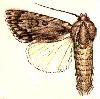
Long-winged Dagger Moth
Acronicta longa
Sir GEORGE F. HAMPSON, Bart., Public domain, via Wikimedia Commons


Side by side
| Long-winged Dagger Moth | Knot Grass | |
|---|---|---|
| Scientific name | Acronicta longa Guenée, 1852 | Acronicta (Viminia) rumicis Linnaeus, 1758 |
| English name | Long-winged Dagger Moth | Knot Grass |
| Group | Insects | Insects |
| Class | Insecta Insect | Insecta Insect |
| Order | Lepidoptera | Lepidoptera |
| Family | Noctuidae Cutworms | Noctuidae Cutworms |
| Genus | Acronicta Daggers | Acronicta Daggers |
| Named in | 1852 | 1758 |
| Countries on record | 2 countries | 46 countries |
| GBIF occurrence records | 919 records | 243,142 records |
Rows where the two agree are shown in grey.
Where each is found
Only Long-winged Dagger Moth (2)
Only Knot Grass (46)
- Aland Islands
- Albania
- Andorra
- Austria
- Belarus
- Belgium
- Bosnia and Herzegovina
- Bulgaria
- Croatia
- Czechia
- Denmark
- Estonia
- Finland
- France
- Germany
- Greece
- Guernsey
- Hungary
- Ireland
- Isle of Man
- Italy
- Japan
- Jersey
- Latvia
- Liechtenstein
- Lithuania
- Luxembourg
- Moldova
- Montenegro
- North Macedonia
- Norway
- Poland
- Portugal
- Romania
- Russia
- San Marino
- Serbia
- Slovakia
- Slovenia
- South Korea
- Spain
- Sweden
- Switzerland
- The Netherlands
- Ukraine
- United Kingdom
From Catalogue of Life checklists and GBIF occurrence records. A country missing from a list means no record is held, which is not proof of absence.
Checked facts
| Long-winged Dagger Moth | Knot Grass | |
|---|---|---|
| Appearance |
|
|
| Size |
|
|
| Habitat | No checked fact yet |
|
| Diet |
|
|
| Behaviour | No checked fact yet |
|
| Reproduction | No checked fact yet |
|
| Distribution |
|
|
| Conservation | No checked fact yet |
|
| Other | No checked fact yet |
|
In brief
Long-winged Dagger Moth
The species occurs across much of North America, including Nova Scotia, Alberta, Florida, and Texas. It has pale gray wings with three prominent dashes and a thick connecting bar. Full profile
Knot Grass
Knot Grass is a moth belonging to the genus Acronicta and the family Noctuidae. It occurs throughout the Palearctic region. The adult moth has a distinctive white spot midway along the trailing edge of its forewing. Full profile
Compare something else
Page built on 27 November 2026 from the data on the two species pages, where every source is listed.
Cite this page
ScientificNames.org. (2026). Long-winged Dagger Moth vs Knot Grass. Retrieved November 27, 2026, from https://scientificnames.org/compare/long-winged-dagger-moth-vs-knot-grass
“Long-winged Dagger Moth vs Knot Grass.” ScientificNames.org, 2026, scientificnames.org/compare/long-winged-dagger-moth-vs-knot-grass. Accessed 27 Nov. 2026.
ScientificNames.org. “Long-winged Dagger Moth vs Knot Grass.” Accessed November 27, 2026. https://scientificnames.org/compare/long-winged-dagger-moth-vs-knot-grass.
@misc{scientificnames_long_winged_dagger_moth_vs_knot_grass,
  author = {{ScientificNames.org}},
  title = {Long-winged Dagger Moth vs Knot Grass},
  year = {2026},
  url = {https://scientificnames.org/compare/long-winged-dagger-moth-vs-knot-grass},
  note = {Accessed 2026-11-27}
}