Comparison

African Pompano vs Pilot Fish

African Pompano (Alectis ciliaris) and Pilot Fish (Naucrates ductor) both belong to the family Carangidae (jacks) and part ways below it. Both are recorded in 41 countries.
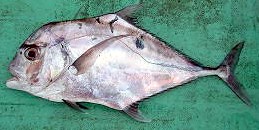
African Pompano

African Pompano

Alectis ciliaris

Kare Kare, CC BY-SA 3.0, via Wikimedia Commons

Pilot Fish

Pilot Fish

Naucrates ductor

Unknown author, Public domain, via Wikimedia Commons

Side by side

African PompanoPilot Fish
Scientific nameAlectis ciliaris (Bloch, 1787)Naucrates ductor (Linnaeus, 1758)
English nameAfrican PompanoPilot Fish
GroupFishesFishes
ClassTeleostei TeleostTeleostei Teleost
OrderCarangiformesCarangiformes
FamilyCarangidae JacksCarangidae Jacks
GenusAlectis CockfishesNaucrates Pilotfishes
Named in17871758
Red List categoryLeast ConcernLeast Concern
Environmentmarinemarine
Countries on record70 countries60 countries
GBIF occurrence records2,732 records1,577 records

Rows where the two agree are shown in grey.

Where each is found

Both recorded in 41 countries

Only African Pompano (29)

Only Pilot Fish (19)

From Catalogue of Life checklists and GBIF occurrence records. A country missing from a list means no record is held, which is not proof of absence.

Checked facts

African PompanoPilot Fish
Appearance
  • The African pompano has a deep, laterally compressed body with the head and tail tapering toward their respective ends. English Wikipedia
  • The first dorsal fin has four to seven visible spines, followed by one spine and 18 to 20 soft rays in the second dorsal fin. English Wikipedia
  • The anal fin has two spines followed by 15 or 16 soft rays. English Wikipedia
  • The pectoral fins are long and curved. English Wikipedia
  • The body appears scaleless because its minute scales are embedded in the skin. English Wikipedia
  • The lateral line has a pronounced dorsal arch and 12 to 30 scutes in its posterior section. English Wikipedia
  • Juveniles have trailing dorsal and anal fin filaments that shorten as they mature. English Wikipedia
  • The body is silvery-metallic blue to blue-green above and silvery underneath. English Wikipedia
  • Juveniles have five chevron-shaped dark body bars and a black blotch near the base of the third to sixth soft dorsal-fin rays. English Wikipedia
  • Juvenile fin filaments have dark blue to black bases, while the other fins are pale or translucent. English Wikipedia
  • The body elongates as the fish matures. biogeodb.stri.si.edu
  • The tail is strongly forked and its base is slender. biogeodb.stri.si.edu
  • The species has a small, diffuse dark spot at the upper end of the gill opening. biogeodb.stri.si.edu
Size
  • The species is documented to reach at least 130 cm in length. English Wikipedia
  • The maximum published weight is 22.9 kg. English Wikipedia
  • A maximum length of 150 cm has been reported, although those larger reports are considered unreliable in document 1. English Wikipedia
Habitat
  • Adults commonly inhabit coastal waters at depths below 100 m. English Wikipedia
  • Adults inhabit reefs and wrecks throughout the water column. English Wikipedia
  • Juveniles are pelagic and occur in coastal areas and the open ocean. English Wikipedia
  • Adults are described as solitary in coastal seas, while young fish are generally pelagic and drifting. biogeodb.stri.si.edu
  • The species occurs in tropical waters with temperatures ranging from 18 to 27 °C. English Wikipedia
Diet
  • The species feeds predominantly on crustaceans, cephalopods and small fishes. English Wikipedia
  • Its recorded prey categories include bony fishes, octopuses, squids, cuttlefishes and mobile benthic crustaceans. biogeodb.stri.si.edu
  • The pilot fish eats ectoparasites from its associated host animals. English Wikipedia
  • The species consumes leftover food around its host animals. English Wikipedia
  • Its recorded food categories include pelagic crustaceans, ectoparasites, and bony fishes. biogeodb.stri.si.edu
Behaviour
  • The African pompano is a schooling predatory fish. English Wikipedia
  • Juvenile fin filaments resemble jellyfish medusae and may provide protection against predators. English Wikipedia
  • Larger fish, including mackerel, tunas and sharks, prey on the species. English Wikipedia
  • Pilot fish congregate around sharks, rays, and sea turtles. English Wikipedia
  • Pilot fish sometimes follow ships over long distances. English Wikipedia
  • The species is known to associate preferentially with oceanic whitetip sharks. English Wikipedia
  • The association between pilot fish and sharks is described as mutualistic. English Wikipedia
  • The pilot fish gains protection from predators through its association with sharks. English Wikipedia
  • Sharks benefit from the association because pilot fish remove their parasites. English Wikipedia
  • Smaller pilot fish have been observed entering sharks' mouths to remove food fragments between their teeth. English Wikipedia
Reproduction
  • The reproductive habits and maturation lengths of the species are poorly known. English Wikipedia
  • A study in India recorded peak abundance of Alectis ciliaris larvae in April. English Wikipedia
  • The eggs are spherical and pelagic, with a yolk and oil globule. English Wikipedia
  • Spawning is thought to occur over sandy substrates in Mexico during spring. English Wikipedia
No checked fact yet
Distribution
  • The species occurs throughout tropical oceans and seas worldwide. English Wikipedia
  • Its recorded distribution includes the eastern and western coasts of the United States, South America, Africa, the Indian Ocean, Asia, Australia and Pacific islands. English Wikipedia
  • The species occurs throughout the Eastern Pacific region except the upper Gulf of California. biogeodb.stri.si.edu
  • The species is recorded throughout the Atlantic Ocean, including both its eastern and western portions. biogeodb.stri.si.edu
Conservation
  • FishBase assigns the species a high to very high vulnerability score of 69 out of 100. fishbase.se
  • FishBase reports a minimum population doubling time of 4.5 to 14 years. fishbase.se
No checked fact yet
Uses
  • The species is commercially and recreationally fished because of its large size and food quality. English Wikipedia
  • The species is marketed fresh, dried or salted. English Wikipedia
  • Adults are commonly caught using hook-and-line methods, including trolling. English Wikipedia
  • Juveniles are occasionally caught using beach seines. English Wikipedia
  • Juveniles are considered potential aquarium fish because of their attractive appearance, although they do not survive well in captivity. English Wikipedia
  • The species is highly regarded as a game fish and is considered one of the strongest jacks at larger sizes. English Wikipedia
  • The species has been implicated in multiple ciguatera cases. English Wikipedia
  • The pilot fish is edible and has been described as tasting good. English Wikipedia
  • The species is rarely available as food because of its erratic behaviour when caught. English Wikipedia
Other
  • The species belongs to the family Carangidae and order Carangiformes. English Wikipedia

In brief

African Pompano

African Pompano (Alectis ciliaris) is a fish in the family Carangidae, order Carangiformes and class Teleostei. The species occurs throughout tropical oceans and seas worldwide. It has a deep, laterally compressed body, long curved pectoral fins and a strongly forked tail. Full profile

Pilot Fish

Naucrates ductor inhabits pelagic oceanic waters, occurring in midwater and near-surface portions of the water column. It is commonly associated with sharks, rays, turtles, and large fishes. Full profile

Compare something else

Page built on 29 November 2026 from the data on the two species pages, where every source is listed.

Cite this page

ScientificNames.org. (2026). African Pompano vs Pilot Fish. Retrieved November 29, 2026, from https://scientificnames.org/compare/african-pompano-vs-pilot-fish