Comparison

Randall's Pistol Shrimp vs Bigclaw Snapping Shrimp

Randall's Pistol Shrimp (Alpheus randalli) and Bigclaw Snapping Shrimp (Alpheus heterochaelis) both belong to the genus Alpheus (pistol shrimps) and part ways below it.
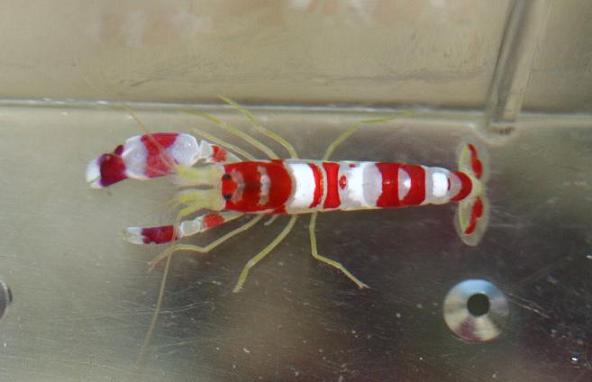
Randall's Pistol Shrimp

Randall's Pistol Shrimp

Alpheus randalli

The original uploader was Hkchan123 at Chinese Wikipedia., CC BY-SA 3.0, via Wikimedia Commons

Bigclaw Snapping Shrimp

Bigclaw Snapping Shrimp

Alpheus heterochaelis

The original uploader was Hkchan123 at Chinese Wikipedia., CC BY-SA 3.0, via Wikimedia Commons

Side by side

Randall's Pistol ShrimpBigclaw Snapping Shrimp
Scientific nameAlpheus randalli A. H. Banner & D. M. Banner, 1980Alpheus heterochaelis Say, 1818
English nameRandall's Pistol ShrimpBigclaw Snapping Shrimp
GroupCrustaceansCrustaceans
ClassMalacostracaMalacostraca
OrderDecapodaDecapoda
FamilyAlpheidae Snapping ShrimpsAlpheidae Snapping Shrimps
GenusAlpheus Pistol ShrimpsAlpheus Pistol Shrimps
Named in19801818
Environmentmarinemarine
Countries on record4 countries8 countries
GBIF occurrence records43 records2,256 records

Rows where the two agree are shown in grey.

Where each is found

Only Randall's Pistol Shrimp (4)

Only Bigclaw Snapping Shrimp (8)

From Catalogue of Life checklists and GBIF occurrence records. A country missing from a list means no record is held, which is not proof of absence.

Checked facts

Randall's Pistol ShrimpBigclaw Snapping Shrimp
Appearance
  • The species has a small rostrum and lacks spines along the edge of its carapace. English Wikipedia
  • Its enlarged snapping claw can occur on either the right or left side and measures approximately half the body length. English Wikipedia
  • The enlarged claw has a deep notch on both sides beneath its finger joint. English Wikipedia
  • The species' smaller claw is unmodified and normally sized. English Wikipedia
  • Its coloration is translucent dark green, with orange and blue tips on the uropods. English Wikipedia
  • Its coloration ranges from dark blue-green to gray. animaldiversity.org
  • Its body is translucent and speckled with darker gray-brown spots. animaldiversity.org
  • Most individuals have orange coloration behind the eyes, on the tail tip, and on the enlarged claw. animaldiversity.org
  • The species has three pairs of legs, two pairs of antennae, and two claws. animaldiversity.org
  • Both claws are covered with setae. animaldiversity.org
  • The modified snapping claw occurs on either side of the body rather than consistently on one particular side. animaldiversity.org
Size
  • The species can reach a maximum body length of 5.5 cm, although most adults are smaller. English Wikipedia
  • Adult individuals typically measure between 3.0 and 5.5 cm from the rostrum to the tail end, although some reach only 10 mm. animaldiversity.org
  • Males and females reach approximately the same overall body size. animaldiversity.org
  • The male's snapping claw is slightly larger than the female's. animaldiversity.org
Habitat
  • The species inhabits sandy or silty areas of the seabed. English Wikipedia
  • The shrimp shares an extensive burrow with a goby belonging to the genus Amblyeleotris. English Wikipedia
  • The species has been recorded living at a depth of 18 metres. English Wikipedia
  • The species inhabits shallow tropical and semitropical waters near the seabed. English Wikipedia
  • Its preferred habitats include reefs, seagrass meadows, salt marshes, and muddy areas. English Wikipedia
  • Most populations inhabit subtidal seabeds at depths of 30 metres or more. animaldiversity.org
  • The species commonly inhabits oyster reefs. animaldiversity.org
  • It occupies waters with salinities ranging from mesohaline concentrations of 5–18 ppt to hyperhaline concentrations above 40 ppt. animaldiversity.org
  • The species commonly uses rocks, shells, seaweed, and other available cover in shallow water. animaldiversity.org
Diet
  • The species feeds on worms, small crustaceans, gobies, and pearlfish. English Wikipedia
  • Its larvae depend entirely on egg yolk and oil reserves until functional mouthparts develop. animaldiversity.org
Behaviour
  • The shrimp has poor eyesight and responds to the movements of its goby companion. English Wikipedia
  • The shrimp retreats into its burrow quickly even when the perceived danger is low. English Wikipedia
  • The shrimp retreats immediately when the goby enters the burrow head first to escape danger. English Wikipedia
  • Both the shrimp and goby retreat into the interior of their burrow at night. English Wikipedia
  • The burrow entrances are sealed at night. English Wikipedia
  • The shrimp shares its living space with goby fish while helping them dig. ocean.si.edu
  • Individuals conceal themselves in natural openings during daylight hours. English Wikipedia
  • Individuals hide or burrow beneath rocks and shells for daytime protection. animaldiversity.org
  • The species produces a loud, staccato concussive sound using its snapping claw. English Wikipedia
  • The snapping sound results from the collapse of a short-lived cavitation bubble created by a high-speed water jet. English Wikipedia
  • The modified snapping pincer is present only in adult individuals. animaldiversity.org
  • The species is highly territorial and frequently experiences territorial intrusions between adjacent territories. animaldiversity.org
  • Territorial confrontations commonly begin with antenna contact and snapping by both individuals. animaldiversity.org
  • The species commonly forms monogamous male-female pairs. English Wikipedia
  • Approximately 65% of shrimp captured in one study were found in male-female pairs. animaldiversity.org
Reproduction
  • Female shrimp carry their eggs beneath their abdomen. English Wikipedia
  • At breeding time, a shrimp probably creates an opening near an adjoining burrow occupied by a shrimp of the opposite sex. English Wikipedia
DistributionNo checked fact yet
  • The species occurs in the western Atlantic Ocean and the Gulf of Mexico. English Wikipedia
  • Its distribution includes the West Indies and Bermuda. English Wikipedia
  • Its western Atlantic distribution extends from Cape Hatteras south to Florida and Brazil. English Wikipedia
  • The species is frequently found along the United States Atlantic coast between the Outer Banks of North Carolina and southern Florida. animaldiversity.org
  • Populations occur along the coasts of Caribbean islands and extend south to Brazil. animaldiversity.org
OtherNo checked fact yet

In brief

Randall's Pistol Shrimp

Alpheus randalli inhabits sandy or silty areas of the seabed and shares an extensive burrow with a goby of the genus Amblyeleotris. It has a transparent or white background colour with red markings, including alternating red and white bands on the abdomen. Full profile

Bigclaw Snapping Shrimp

Alpheus heterochaelis inhabits shallow tropical and semitropical waters in the western Atlantic Ocean and the Gulf of Mexico, including the West Indies and Bermuda. It is distinguished by an enlarged snapping claw that produces a loud concussive sound through the collapse of a cavitation bubble. Full profile

Compare something else

Page built on 28 November 2026 from the data on the two species pages, where every source is listed.

Cite this page

ScientificNames.org. (2026). Randall's Pistol Shrimp vs Bigclaw Snapping Shrimp. Retrieved November 28, 2026, from https://scientificnames.org/compare/randalls-pistol-shrimp-vs-bigclaw-snapping-shrimp