Comparison

Arizona Toad vs Wyoming Toad

Arizona Toad (Anaxyrus microscaphus) and Wyoming Toad (Anaxyrus baxteri) both belong to the genus Anaxyrus (north american toads) and part ways below it. Both are recorded in 1 country.

Arizona Toad

Arizona Toad

Anaxyrus microscaphus

Laura Gaudette, CC BY 4.0, via Wikimedia Commons

Wyoming Toad

Wyoming Toad

Anaxyrus baxteri

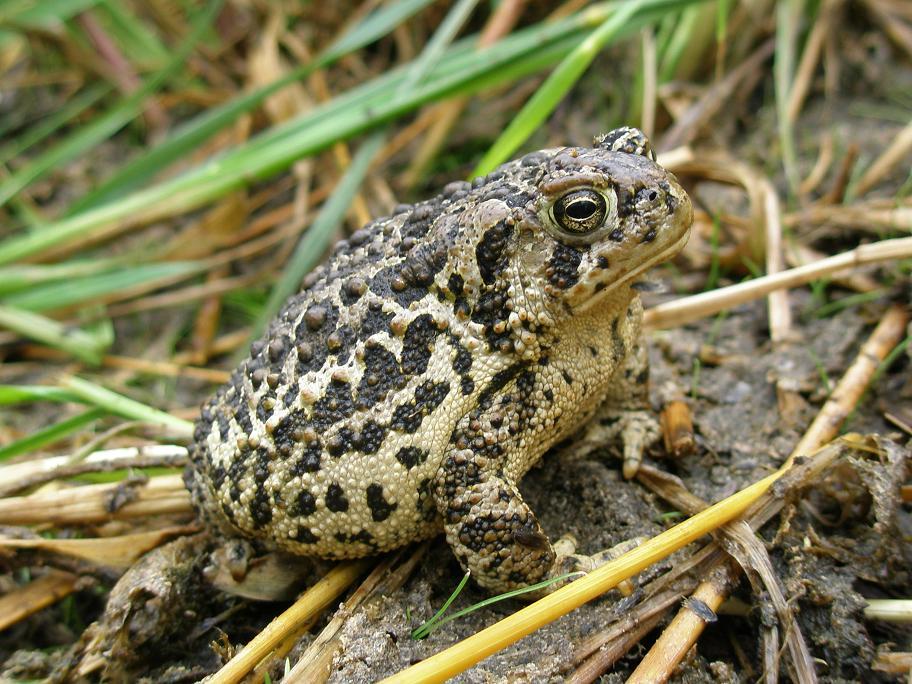
USFWS Mountain-Prairie, credit Sara Armstrong, CC BY 2.0, via Wikimedia Commons

Side by side

Arizona ToadWyoming Toad
Scientific nameAnaxyrus microscaphus (Cope, 1867)Anaxyrus baxteri (Porter, 1968)
English nameArizona ToadWyoming Toad
GroupAmphibiansAmphibians
ClassAmphibia AmphibiansAmphibia Amphibians
OrderAnura FrogsAnura Frogs
FamilyBufonidae True ToadBufonidae True Toad
GenusAnaxyrus North American ToadsAnaxyrus North American Toads
Named in18671968
Red List categoryLeast ConcernExtinct in the Wild
Countries on record2 countries1 country
GBIF occurrence records5,642 records516 records

Rows where the two agree are shown in grey.

Where each is found

Both recorded in 1 country

Only Arizona Toad (1)

From Catalogue of Life checklists and GBIF occurrence records. A country missing from a list means no record is held, which is not proof of absence.

Checked facts

Arizona ToadWyoming Toad
AppearanceNo checked fact yet
  • The Wyoming toad has dark brown, gray, or green skin with small dark markings on its underside. English Wikipedia
  • The dorsal surface of the Wyoming toad bears small, rounded, blotchy warts and blurry light lines. English Wikipedia
  • Male Wyoming toads have dark throats. English Wikipedia
  • Individual Wyoming toads can be distinguished by differences in their skin colors and wart patterns. English Wikipedia
SizeNo checked fact yet
HabitatNo checked fact yet
  • Wyoming toads inhabit floodplains and the short-grass margins of ponds, creeks, and lakes. English Wikipedia
  • Wyoming toads use abandoned pocket gopher and ground squirrel burrows as hibernation sites. English Wikipedia
  • Adult Wyoming toads are attracted to habitats with greater vegetation cover than those preferred by younger individuals. English Wikipedia
  • Adult Wyoming toads generally occupy locations farther inland than younger individuals. English Wikipedia
  • Adult Wyoming toads occupy substrates with cooler surface temperatures than younger individuals. English Wikipedia
  • Historically, Wyoming toads occupied floodplains, ponds, shallow lakes, and seepage pools in the Laramie Basin. English Wikipedia
BehaviourNo checked fact yet
  • Wyoming toads are mainly active at night. English Wikipedia
  • Wyoming toads emerge from hibernation in early May and migrate to the north shore for mating. English Wikipedia
  • Wyoming toads return to the south shore by late September or early October to hibernate. English Wikipedia
  • Younger Wyoming toads remain active for approximately one month longer than older individuals. English Wikipedia
  • The mating call of the Wyoming toad has a low frequency, a slow pulse rate, and a longer duration than calls of other toads. English Wikipedia
ReproductionNo checked fact yet
  • Male Wyoming toads reach sexual maturity at approximately two years of age. English Wikipedia
  • Female Wyoming toads reach sexual maturity at approximately three years of age. English Wikipedia
  • Captive breeding programs for Wyoming toads have experienced low reproductive output because of low ovulation and fertilization rates. English Wikipedia
  • Extended hormonal priming of Wyoming toads has increased fecundity and the number of eggs produced per individual. English Wikipedia
  • Higher water temperatures reduce the time required for Wyoming toad metamorphosis. English Wikipedia
  • Captive-bred Wyoming toads have been released into Mortenson Lake, Lake George, and a private release site. English Wikipedia
  • Some wild breeding activity was reported at Crescent Lake, Wyoming, in 2011. English Wikipedia
DistributionNo checked fact yet
  • The Wyoming toad is endemic to Wyoming and occurs exclusively in the Laramie Plains. wgfd.wyo.gov
  • The historical distribution of the Wyoming toad was restricted to the Laramie Basin in Albany County, Wyoming. pmc.ncbi.nlm.nih.gov
  • Mortenson Lake in Albany County, Wyoming, was the location where a small population of Wyoming toads was rediscovered after their presumed extinction. pmc.ncbi.nlm.nih.gov
ConservationNo checked fact yet
  • The Wyoming toad was federally listed as endangered in January 1984. English Wikipedia
  • The Wyoming toad has been considered extinct in the wild since 1991. English Wikipedia
  • Chytrid fungus is considered a major threat to the survival of the Wyoming toad. English Wikipedia
  • Chytrid infection affected approximately 41% of the Wyoming toad population surveyed at Porter Lake in 2010. English Wikipedia
  • The chytrid infection rate among Wyoming toads at Porter Lake reached 100% in 2011. English Wikipedia
  • A captive-breeding program for Wyoming toads began in 1989. pmc.ncbi.nlm.nih.gov
  • The captive Wyoming toad population was estimated at approximately 500 individuals in the study reporting on its genetic diversity. pmc.ncbi.nlm.nih.gov
  • Wyoming toads exhibit reduced diversity at major histocompatibility complex genes compared with bufonid species that experienced similar population bottlenecks. pmc.ncbi.nlm.nih.gov
  • Population decline may have reduced the immunogenetic diversity of Wyoming toads and increased their vulnerability to infectious diseases. pmc.ncbi.nlm.nih.gov
  • Rearing Wyoming toads for release rather than releasing tadpoles has reduced release mortality and shortened the time needed to reach breeding size. pmc.ncbi.nlm.nih.gov

In brief

Wyoming Toad

Anaxyrus baxteri is endemic to Wyoming and occurs exclusively in the Laramie Plains. Full profile

Compare something else

Page built on 26 November 2026 from the data on the two species pages, where every source is listed.

Cite this page

ScientificNames.org. (2026). Arizona Toad vs Wyoming Toad. Retrieved November 26, 2026, from https://scientificnames.org/compare/arizona-toad-vs-wyoming-toad