| Appearance | - The Southern Toad is a medium-sized, plump-bodied toad. English Wikipedia
- The species has distinctive knobs on its head and backward-pointing spurs extending as far as its parotoid glands. English Wikipedia
- Its dorsal surface is covered with warts, some of which may be spiny. English Wikipedia
- Its head, back, and sides range in color from brick red to mottled grey, brown, and black. English Wikipedia
- Its underparts are pale and may have dark spots on the chest. English Wikipedia
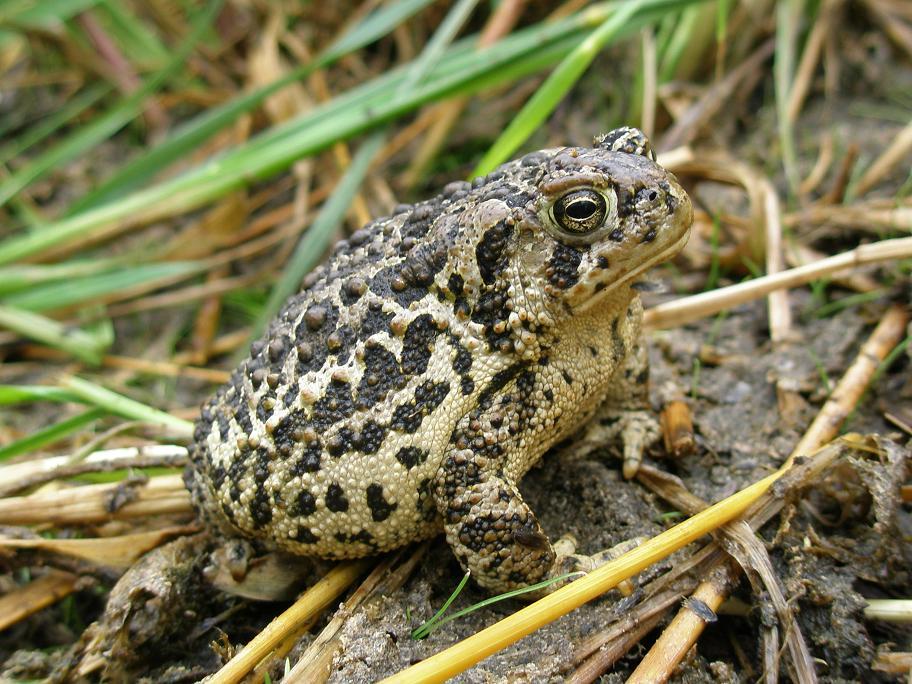
| - The Wyoming toad has dark brown, gray, or green skin with small dark markings on its underside. English Wikipedia
- The dorsal surface of the Wyoming toad bears small, rounded, blotchy warts and blurry light lines. English Wikipedia
- Male Wyoming toads have dark throats. English Wikipedia
- Individual Wyoming toads can be distinguished by differences in their skin colors and wart patterns. English Wikipedia
|
|---|
| Size | | |
|---|
| Habitat | | - Wyoming toads inhabit floodplains and the short-grass margins of ponds, creeks, and lakes. English Wikipedia
- Wyoming toads use abandoned pocket gopher and ground squirrel burrows as hibernation sites. English Wikipedia
- Adult Wyoming toads are attracted to habitats with greater vegetation cover than those preferred by younger individuals. English Wikipedia
- Adult Wyoming toads generally occupy locations farther inland than younger individuals. English Wikipedia
- Adult Wyoming toads occupy substrates with cooler surface temperatures than younger individuals. English Wikipedia
- Historically, Wyoming toads occupied floodplains, ponds, shallow lakes, and seepage pools in the Laramie Basin. English Wikipedia
|
|---|
| Diet | | No checked fact yet |
|---|
| Behaviour | | - Wyoming toads are mainly active at night. English Wikipedia
- Wyoming toads emerge from hibernation in early May and migrate to the north shore for mating. English Wikipedia
- Wyoming toads return to the south shore by late September or early October to hibernate. English Wikipedia
- Younger Wyoming toads remain active for approximately one month longer than older individuals. English Wikipedia
- The mating call of the Wyoming toad has a low frequency, a slow pulse rate, and a longer duration than calls of other toads. English Wikipedia
|
|---|
| Reproduction | - Breeding begins in spring when males migrate from upland habitats to lowland aquatic breeding sites. English Wikipedia
- The typical breeding season extends from early March through late May, although breeding may continue until September. English Wikipedia
- Heavy rainfall triggers large numbers of males to gather and form calling choruses. English Wikipedia
- Each female lays between 1,704 and 16,537 eggs per clutch. English Wikipedia
- Tadpoles take 30–55 days to develop before metamorphosing into juvenile toads. English Wikipedia
- Newly metamorphosed juvenile toads are approximately 1 cm long. English Wikipedia
- Elevated salinity during tadpole development is associated with smaller, less active tadpoles that metamorphose later and become smaller adults. English Wikipedia
| - Male Wyoming toads reach sexual maturity at approximately two years of age. English Wikipedia
- Female Wyoming toads reach sexual maturity at approximately three years of age. English Wikipedia
- Captive breeding programs for Wyoming toads have experienced low reproductive output because of low ovulation and fertilization rates. English Wikipedia
- Extended hormonal priming of Wyoming toads has increased fecundity and the number of eggs produced per individual. English Wikipedia
- Higher water temperatures reduce the time required for Wyoming toad metamorphosis. English Wikipedia
- Captive-bred Wyoming toads have been released into Mortenson Lake, Lake George, and a private release site. English Wikipedia
- Some wild breeding activity was reported at Crescent Lake, Wyoming, in 2011. English Wikipedia
|
|---|
| Distribution | | - The Wyoming toad is endemic to Wyoming and occurs exclusively in the Laramie Plains. wgfd.wyo.gov
- The historical distribution of the Wyoming toad was restricted to the Laramie Basin in Albany County, Wyoming. pmc.ncbi.nlm.nih.gov
- Mortenson Lake in Albany County, Wyoming, was the location where a small population of Wyoming toads was rediscovered after their presumed extinction. pmc.ncbi.nlm.nih.gov
|
|---|
| Conservation | - The Southern Toad is classified as a species of least concern by the IUCN. English Wikipedia
- The species has a wide geographic range and is common across much of it. English Wikipedia
- Its population appears stable. English Wikipedia
- The species has become scarce in parts of Florida where cane toads have become established, due to competition for food. English Wikipedia
- Southern Toad larvae have shown delayed development in areas with high metal contamination. English Wikipedia
| - The Wyoming toad was federally listed as endangered in January 1984. English Wikipedia
- The Wyoming toad has been considered extinct in the wild since 1991. English Wikipedia
- Chytrid fungus is considered a major threat to the survival of the Wyoming toad. English Wikipedia
- Chytrid infection affected approximately 41% of the Wyoming toad population surveyed at Porter Lake in 2010. English Wikipedia
- The chytrid infection rate among Wyoming toads at Porter Lake reached 100% in 2011. English Wikipedia
- A captive-breeding program for Wyoming toads began in 1989. pmc.ncbi.nlm.nih.gov
- The captive Wyoming toad population was estimated at approximately 500 individuals in the study reporting on its genetic diversity. pmc.ncbi.nlm.nih.gov
- Wyoming toads exhibit reduced diversity at major histocompatibility complex genes compared with bufonid species that experienced similar population bottlenecks. pmc.ncbi.nlm.nih.gov
- Population decline may have reduced the immunogenetic diversity of Wyoming toads and increased their vulnerability to infectious diseases. pmc.ncbi.nlm.nih.gov
- Rearing Wyoming toads for release rather than releasing tadpoles has reduced release mortality and shortened the time needed to reach breeding size. pmc.ncbi.nlm.nih.gov
|
|---|
| Uses | | No checked fact yet |
|---|
| Other | - Southern Toads release bufotoxin from their parotoid glands as a defensive mechanism. English Wikipedia
| No checked fact yet |
|---|