Comparison
Purple Three-awn vs Wire Grass
Purple Three-awn (Aristida purpurea) and Wire Grass (Aristida stricta) both belong to the genus Aristida (threeawn) and part ways below it. Both are recorded in 2 countries.
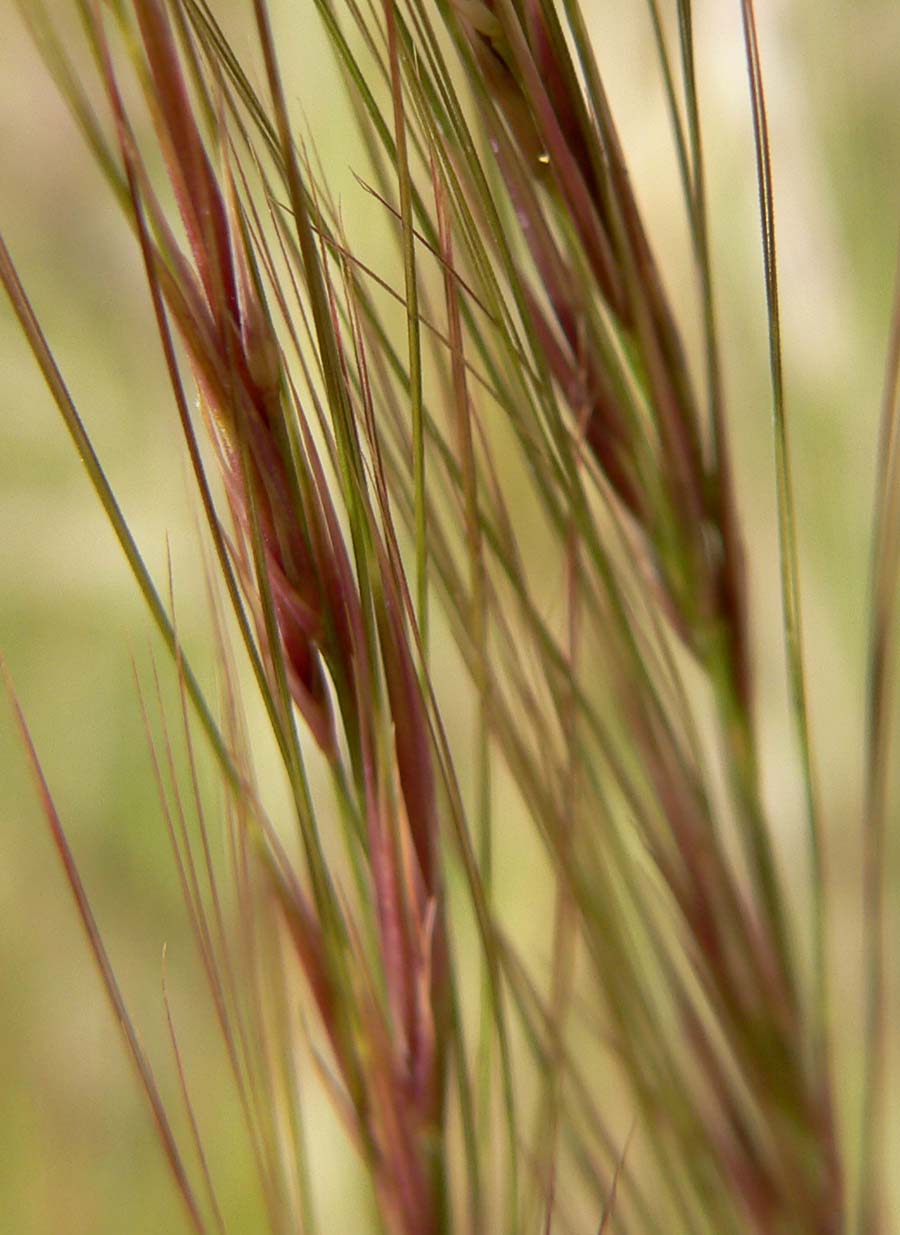


Side by side
| Purple Three-awn | Wire Grass | |
|---|---|---|
| Scientific name | Aristida purpurea Nutt. | Aristida stricta Michx. |
| English name | Purple Three-awn | Wire Grass |
| Group | Flowering plants | Flowering plants |
| Class | Liliopsida | Liliopsida |
| Order | Poales | Poales |
| Family | Poaceae Turf | Poaceae Turf |
| Genus | Aristida Threeawn | Aristida Threeawn |
| Red List category | Least Concern | Not recorded |
| Countries on record | 6 countries | 2 countries |
| GBIF occurrence records | 10,752 records | 1,072 records |
Rows where the two agree are shown in grey.
Where each is found
Both recorded in 2 countries
Only Purple Three-awn (4)
From Catalogue of Life checklists and GBIF occurrence records. A country missing from a list means no record is held, which is not proof of absence.
Checked facts
| Purple Three-awn | Wire Grass | |
|---|---|---|
| Appearance |
|
|
| Size |
|
|
| Habitat |
|
|
| Behaviour | No checked fact yet |
|
| Reproduction | No checked fact yet |
|
| Distribution |
|
|
| Conservation | No checked fact yet |
|
| Uses |
|
|
| Other |
|
|
In brief
Purple Three-awn
Purple Three-awn is a perennial bunchgrass with an erect growth habit. The species is native to North America and occurs across the western two-thirds of the United States, throughout much of southern Canada, and in parts of northern Mexico. Its flower glumes often develop light brown to reddish-purple coloration. Full profile
Wire Grass
Aristida stricta commonly occurs in longleaf pine savannas and dominates understory vegetation in sandhills and flatwoods coastal plain ecosystems of the Carolinas. It regenerates rapidly following fires and has a flammable structure that helps maintain pine savanna habitats. Full profile
Compare something else
Page built on 27 November 2026 from the data on the two species pages, where every source is listed.
Cite this page
ScientificNames.org. (2026). Purple Three-awn vs Wire Grass. Retrieved November 27, 2026, from https://scientificnames.org/compare/purple-three-awn-vs-wire-grass
“Purple Three-awn vs Wire Grass.” ScientificNames.org, 2026, scientificnames.org/compare/purple-three-awn-vs-wire-grass. Accessed 27 Nov. 2026.
ScientificNames.org. “Purple Three-awn vs Wire Grass.” Accessed November 27, 2026. https://scientificnames.org/compare/purple-three-awn-vs-wire-grass.
@misc{scientificnames_purple_three_awn_vs_wire_grass,
  author = {{ScientificNames.org}},
  title = {Purple Three-awn vs Wire Grass},
  year = {2026},
  url = {https://scientificnames.org/compare/purple-three-awn-vs-wire-grass},
  note = {Accessed 2026-11-27}
}