Comparison
Arthraxon cuspidatus vs Jointhead
Arthraxon cuspidatus (Arthraxon cuspidatus) and Jointhead (Arthraxon hispidus) both belong to the genus Arthraxon and part ways below it. Both are recorded in 3 countries.
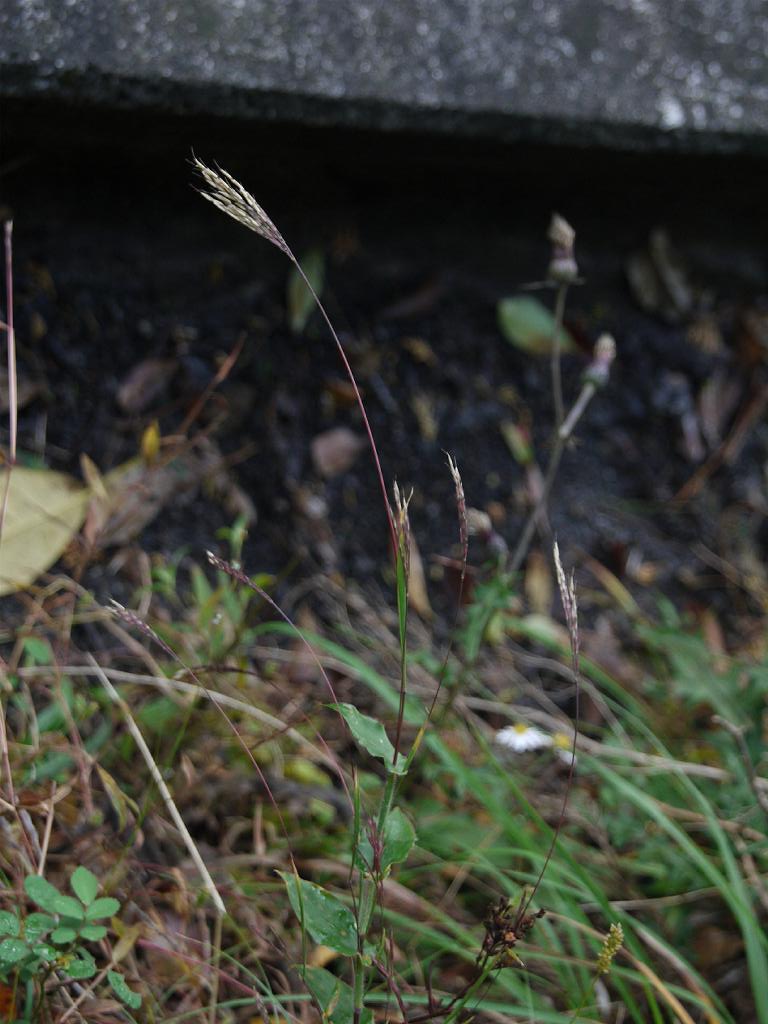
Jointhead
Arthraxon hispidus
No machine-readable author provided. Keisotyo assumed (based on copyright claims)., CC BY 3.0, via Wikimedia Commons

Side by side
| Arthraxon cuspidatus | Jointhead | |
|---|---|---|
| Scientific name | Arthraxon cuspidatus (Hochst. ex A.Rich.) Hochst. ex Hack. | Arthraxon hispidus (Thunb.) Makino |
| English name | Not recorded | Jointhead |
| Group | Flowering plants | Flowering plants |
| Class | Liliopsida | Liliopsida |
| Order | Poales | Poales |
| Family | Poaceae Turf | Poaceae Turf |
| Genus | Arthraxon | Arthraxon |
| Countries on record | 3 countries | 62 countries |
| GBIF occurrence records | 48 records | 26,576 records |
Rows where the two agree are shown in grey.
Where each is found
Both recorded in 3 countries
Only Jointhead (59)
- Angola
- Australia
- Bhutan
- Burundi
- Cambodia
- Cameroon
- Chad
- China
- Costa Rica
- Democratic Republic of the Congo
- El Salvador
- Equatorial Guinea
- Eritrea
- Georgia
- Germany
- Guatemala
- Guinea
- Honduras
- Hong Kong
- Indonesia
- Iran
- Jamaica
- Japan
- Kazakhstan
- Kenya
- Kyrgyzstan
- Laos
- Madagascar
- Malawi
- Mauritius
- Mexico
- Mozambique
- Myanmar
- Nepal
- Nicaragua
- Nigeria
- North Korea
- Papua New Guinea
- Philippines
- Republic of the Congo
- Russia
- Rwanda
- Sierra Leone
- South Korea
- Sri Lanka
- Sudan
- Taiwan
- Tajikistan
- Tanzania
- Thailand
- Turkey
- Uganda
- United Kingdom
- United States
- Uzbekistan
- Venezuela
- Vietnam
- Yemen
- Zambia
From Catalogue of Life checklists and GBIF occurrence records. A country missing from a list means no record is held, which is not proof of absence.
Checked facts
| Arthraxon cuspidatus | Jointhead | |
|---|---|---|
| Appearance | No checked fact yet |
|
| Size | No checked fact yet |
|
| Habitat | No checked fact yet |
|
| Behaviour | No checked fact yet |
|
| Reproduction | No checked fact yet |
|
| Distribution | No checked fact yet |
|
| Conservation | No checked fact yet |
|
| Uses | No checked fact yet |
|
| Similar species | No checked fact yet |
|
| Other | No checked fact yet |
|
In brief
Jointhead
Arthraxon hispidus is native to East Asia and Australia and grows in moist, sunny environments, including riparian areas, wetlands and floodplains. It has ovate or lanceolate leaves with heart-shaped bases, hairy margins and leaf stems, and upright stems. Full profile
Compare something else
Page built on 26 November 2026 from the data on the two species pages, where every source is listed.
Cite this page
ScientificNames.org. (2026). Arthraxon cuspidatus vs Jointhead. Retrieved November 26, 2026, from https://scientificnames.org/compare/arthraxon-cuspidatus-vs-jointhead
“Arthraxon cuspidatus vs Jointhead.” ScientificNames.org, 2026, scientificnames.org/compare/arthraxon-cuspidatus-vs-jointhead. Accessed 26 Nov. 2026.
ScientificNames.org. “Arthraxon cuspidatus vs Jointhead.” Accessed November 26, 2026. https://scientificnames.org/compare/arthraxon-cuspidatus-vs-jointhead.
@misc{scientificnames_arthraxon_cuspidatus_vs_jointhead,
  author = {{ScientificNames.org}},
  title = {Arthraxon cuspidatus vs Jointhead},
  year = {2026},
  url = {https://scientificnames.org/compare/arthraxon-cuspidatus-vs-jointhead},
  note = {Accessed 2026-11-26}
}