Comparison
Goose Creek Milkvetch vs Chickpea Milkvetch
Goose Creek Milkvetch (Astragalus anserinus) and Chickpea Milkvetch (Astragalus cicer) both belong to the genus Astragalus (locoweed) and part ways below it. Both are recorded in 1 country.
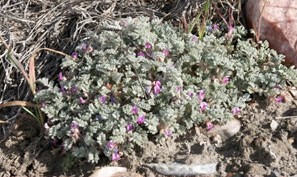


Side by side
| Goose Creek Milkvetch | Chickpea Milkvetch | |
|---|---|---|
| Scientific name | Astragalus anserinus N.D.Atwood, Goodrich & S.L.Welsh | Astragalus cicer L. |
| English name | Goose Creek Milkvetch | Chickpea Milkvetch |
| Group | Flowering plants | Flowering plants |
| Class | Magnoliopsida | Magnoliopsida |
| Order | Fabales | Fabales |
| Family | Fabaceae Bean | Fabaceae Bean |
| Genus | Astragalus Locoweed | Astragalus Locoweed |
| Countries on record | 1 country | 38 countries |
| GBIF occurrence records | 110 records | 21,569 records |
Rows where the two agree are shown in grey.
Where each is found
Both recorded in 1 country
Only Chickpea Milkvetch (37)
- Armenia
- Austria
- Azerbaijan
- Belarus
- Belgium
- Bulgaria
- Canada
- Croatia
- Czechia
- Denmark
- Estonia
- Finland
- France
- Georgia
- Germany
- Hungary
- Iran
- Italy
- Kazakhstan
- Latvia
- Lithuania
- Moldova
- Norway
- Poland
- Portugal
- Romania
- Russia
- Serbia
- Slovakia
- Slovenia
- Spain
- Sweden
- Switzerland
- The Netherlands
- Turkey
- Ukraine
- United Kingdom
From Catalogue of Life checklists and GBIF occurrence records. A country missing from a list means no record is held, which is not proof of absence.
Checked facts
| Goose Creek Milkvetch | Chickpea Milkvetch | |
|---|---|---|
| Appearance | No checked fact yet |
|
| Habitat |
|
|
| Diet | No checked fact yet |
|
| Behaviour | No checked fact yet |
|
| Reproduction | No checked fact yet |
|
| Distribution |
| No checked fact yet |
| Conservation |
| No checked fact yet |
| Uses | No checked fact yet |
|
In brief
Goose Creek Milkvetch
Astragalus anserinus occurs in a 10-square-mile area of the Goose Watershed in the Upper Snake Basin, spanning Idaho, Nevada, and Utah. It is listed as a candidate species under the Endangered Species Act. Full profile
Chickpea Milkvetch
The species grows along forest margins, in meadows, beside streams and along roadsides. It is distinguished by pale yellow or white flowers and pods that resemble chickpea pods and turn black at full maturity. Full profile
Compare something else
Page built on 28 November 2026 from the data on the two species pages, where every source is listed.
Cite this page
ScientificNames.org. (2026). Goose Creek Milkvetch vs Chickpea Milkvetch. Retrieved November 28, 2026, from https://scientificnames.org/compare/goose-creek-milkvetch-vs-chickpea-milkvetch
“Goose Creek Milkvetch vs Chickpea Milkvetch.” ScientificNames.org, 2026, scientificnames.org/compare/goose-creek-milkvetch-vs-chickpea-milkvetch. Accessed 28 Nov. 2026.
ScientificNames.org. “Goose Creek Milkvetch vs Chickpea Milkvetch.” Accessed November 28, 2026. https://scientificnames.org/compare/goose-creek-milkvetch-vs-chickpea-milkvetch.
@misc{scientificnames_goose_creek_milkvetch_vs_chickpea_milkvetch,
  author = {{ScientificNames.org}},
  title = {Goose Creek Milkvetch vs Chickpea Milkvetch},
  year = {2026},
  url = {https://scientificnames.org/compare/goose-creek-milkvetch-vs-chickpea-milkvetch},
  note = {Accessed 2026-11-28}
}