Comparison
Baer's Pochard vs Common Pochard
Baer's Pochard (Aythya baeri) and Common Pochard (Aythya ferina) both belong to the genus Aythya (diving ducks) and part ways below it. Both are recorded in 14 countries.

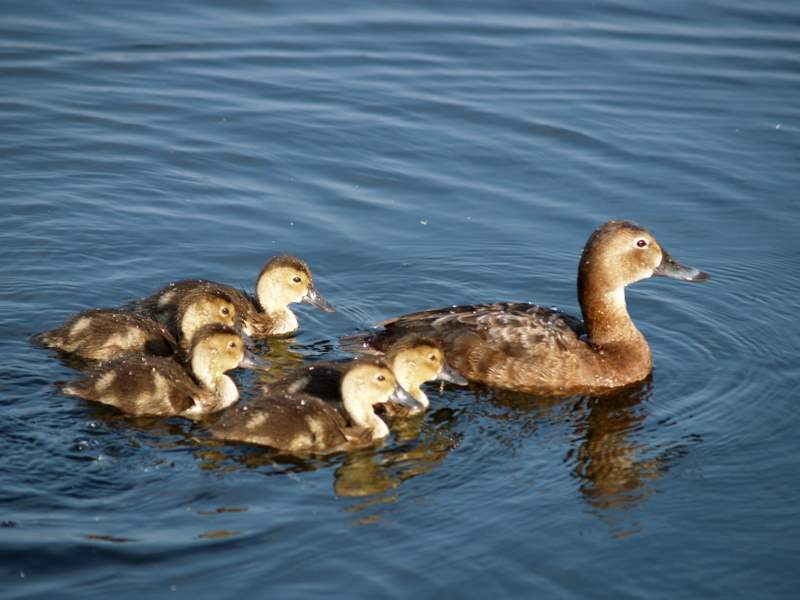


Side by side
| Baer's Pochard | Common Pochard | |
|---|---|---|
| Scientific name | Aythya baeri (Radde, 1863) | Aythya ferina (Linnaeus, 1758) |
| English name | Baer's Pochard | Common Pochard |
| Group | Birds | Birds |
| Class | Aves Bird | Aves Bird |
| Order | Anseriformes Ducks | Anseriformes Ducks |
| Family | Anatidae Ducks | Anatidae Ducks |
| Genus | Aythya Diving Ducks | Aythya Diving Ducks |
| Named in | 1863 | 1758 |
| Red List category | Critically Endangered | Vulnerable |
| Environment | freshwater, terrestrial | freshwater, terrestrial |
| Countries on record | 14 countries | 105 countries |
| GBIF occurrence records | 3,523 records | 1,922,617 records |
Rows where the two agree are shown in grey.
Where each is found
Both recorded in 14 countries
- Bangladesh
- China
- Hong Kong
- India
- Japan
- Mongolia
- Myanmar
- Nepal
- Philippines
- Russia
- South Korea
- Taiwan
- Thailand
- Vietnam
Only Common Pochard (91)
- Afghanistan
- Aland Islands
- Albania
- Algeria
- Armenia
- Austria
- Azerbaijan
- Bahrain
- Belarus
- Belgium
- Bhutan
- Bosnia and Herzegovina
- Bulgaria
- Canada
- Costa Rica
- Croatia
- Cyprus
- Czechia
- Denmark
- Egypt
- Estonia
- Ethiopia
- Faroe Islands
- Finland
- France
- Gambia
- Georgia
- Germany
- Greece
- Guam
- Guernsey
- Hungary
- Iceland
- Iran
- Iraq
- Ireland
- Isle of Man
- Israel
- Italy
- Jersey
- Jordan
- Kazakhstan
- Kenya
- Kosovo
- Kuwait
- Kyrgyzstan
- Latvia
- Lebanon
- Lithuania
- Luxembourg
- Malta
- Moldova
- Monaco
- Montenegro
- Morocco
- North Korea
- North Macedonia
- Northern Mariana Islands
- Norway
- Oman
- Pakistan
- Palestinian Territory
- Poland
- Portugal
- Qatar
- Romania
- Saint Martin
- Saudi Arabia
- Senegal
- Serbia
- Slovakia
- Slovenia
- South Africa
- Spain
- Sudan
- Sweden
- Switzerland
- Syria
- Tajikistan
- The Netherlands
- Tunisia
- Turkey
- Turkmenistan
- Ukraine
- United Arab Emirates
- United Kingdom
- United States
- United States Minor Outlying Islands
- Uzbekistan
- Western Sahara
- Yemen
From Catalogue of Life checklists and GBIF occurrence records. A country missing from a list means no record is held, which is not proof of absence.
Checked facts
| Baer's Pochard | Common Pochard | |
|---|---|---|
| Appearance |
|
|
| Size |
|
|
| Habitat |
|
|
| Diet |
|
|
| Behaviour |
|
|
| Reproduction |
|
|
| Distribution |
|
|
| Conservation |
|
|
| Similar species |
| No checked fact yet |
In brief
Baer's Pochard
Aythya baeri inhabits open lakes, swamps and ponds with slow-flowing water and has breeding populations in North China and Central China. It has wide white speculum feathers, white flanks and a white vent-side. Full profile
Common Pochard
Aythya ferina inhabits lakes, ponds, marshes and reservoirs with abundant aquatic vegetation and breeds across northern and eastern Europe and the wider Palearctic region. It is distinguished by the male's chestnut-coloured head and neck, black breast and tail, and pale grey body. Full profile
Compare something else
Page built on 26 November 2026 from the data on the two species pages, where every source is listed.
Cite this page
ScientificNames.org. (2026). Baer's Pochard vs Common Pochard. Retrieved November 26, 2026, from https://scientificnames.org/compare/baers-pochard-vs-common-pochard
“Baer's Pochard vs Common Pochard.” ScientificNames.org, 2026, scientificnames.org/compare/baers-pochard-vs-common-pochard. Accessed 26 Nov. 2026.
ScientificNames.org. “Baer's Pochard vs Common Pochard.” Accessed November 26, 2026. https://scientificnames.org/compare/baers-pochard-vs-common-pochard.
@misc{scientificnames_baers_pochard_vs_common_pochard,
  author = {{ScientificNames.org}},
  title = {Baer's Pochard vs Common Pochard},
  year = {2026},
  url = {https://scientificnames.org/compare/baers-pochard-vs-common-pochard},
  note = {Accessed 2026-11-26}
}