Comparison

Ferruginous Duck vs Common Pochard

Ferruginous Duck (Aythya nyroca) and Common Pochard (Aythya ferina) both belong to the genus Aythya (diving ducks) and part ways below it. Both are recorded in 89 countries.

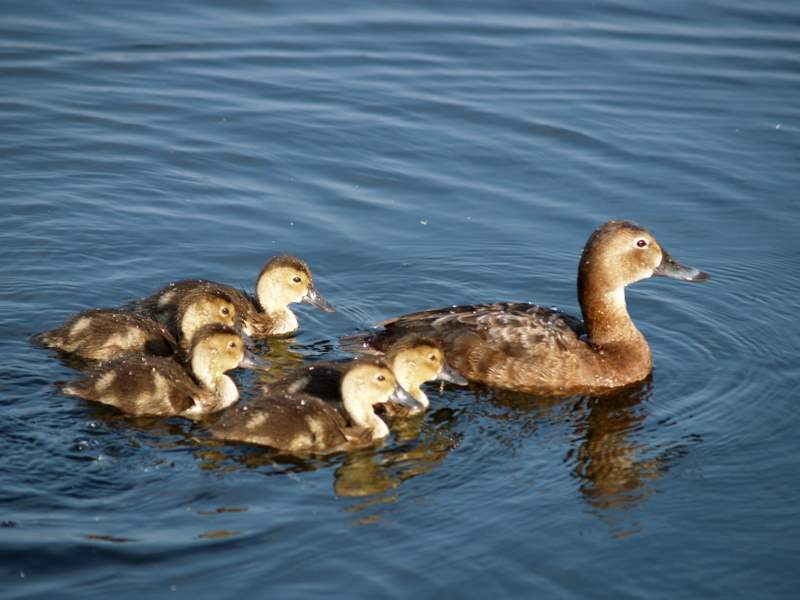
Ferruginous Duck

Ferruginous Duck

Aythya nyroca

Dr. Raju Kasambe, CC BY-SA 4.0, via Wikimedia Commons

Common Pochard

Common Pochard

Aythya ferina

Hunter Desportes, CC BY 2.0, via Wikimedia Commons

Side by side

Ferruginous DuckCommon Pochard
Scientific nameAythya nyroca (Güldenstädt, 1770)Aythya ferina (Linnaeus, 1758)
English nameFerruginous DuckCommon Pochard
GroupBirdsBirds
ClassAves BirdAves Bird
OrderAnseriformes DucksAnseriformes Ducks
FamilyAnatidae DucksAnatidae Ducks
GenusAythya Diving DucksAythya Diving Ducks
Named in17701758
Red List categoryNear ThreatenedVulnerable
Environmentmarine, terrestrialfreshwater, terrestrial
Countries on record94 countries105 countries
GBIF occurrence records163,069 records1,922,617 records

Rows where the two agree are shown in grey.

Where each is found

Both recorded in 89 countries

Only Ferruginous Duck (5)

Only Common Pochard (16)

From Catalogue of Life checklists and GBIF occurrence records. A country missing from a list means no record is held, which is not proof of absence.

Checked facts

Ferruginous DuckCommon Pochard
Appearance
  • Breeding males have dark chestnut plumage on the head, breast and flanks, contrasting with white undertail coverts. English Wikipedia
  • The male has a yellow eye, whereas the female has a dark eye. English Wikipedia
  • Females have duller and browner plumage than males. English Wikipedia
  • The species has a rich rusty-brown overall coloration and a contrasting white triangular patch beneath the tail. ebird.org
  • The species has a peaked crown and a relatively long gray bill. ebird.org
  • The common pochard is a plump, stocky diving duck with a short tail, sloping forehead and relatively long bill. English Wikipedia
  • The male has a chestnut-coloured head and neck, black breast and tail, and pale grey body. English Wikipedia
  • The male's bill is dark grey with a broad blue-grey band across its middle. English Wikipedia
  • The male's iris ranges from yellow-orange to red and becomes brighter during breeding season. English Wikipedia
  • The female has a brown iris that sometimes becomes yellowish-brown. English Wikipedia
  • The juvenile's iris is yellow-olive before acquiring adult coloration during its first winter. English Wikipedia
Size
Habitat
  • The species prefers relatively shallow freshwater bodies with abundant submerged and floating vegetation. English Wikipedia
  • The species prefers wetlands with dense emergent vegetation along their margins. English Wikipedia
  • The species also uses saline and brackish pools or wetlands in some parts of its range. English Wikipedia
  • During migration and wintering, the species frequents coastal waters, inland seas and large open lagoons. English Wikipedia
  • Breeding habitats include marshes and lakes with water at least one metre deep. English Wikipedia
  • The species inhabits lakes, ponds, marshes and reservoirs with abundant aquatic vegetation. birdlife.org
  • The species depends on healthy wetland ecosystems for survival. birdlife.org
Diet
  • The species feeds mainly on aquatic plants, supplemented by molluscs, aquatic insects and small fish. English Wikipedia
  • The species feeds on aquatic plants, seeds and small invertebrates. birdlife.org
  • Its diet also includes small fish and molluscs. English Wikipedia
  • The species obtains much of its food by diving beneath the water surface. English Wikipedia
Behaviour
  • The species obtains food mainly by diving or dabbling. English Wikipedia
  • The species frequently feeds at night. English Wikipedia
  • The species also obtains food by upending in the water. English Wikipedia
  • Ferruginous Ducks are gregarious but less social than other species of Aythya. English Wikipedia
  • Where locally abundant, the species can form large winter flocks, sometimes alongside Tufted Ducks and Common Pochards. English Wikipedia
  • The species begins forming pairs from January onwards. English Wikipedia
  • During courtship, males often curl their tails so that the undertail coverts dip into the water and form a triangular white patch. English Wikipedia
  • Where abundant, the species forms colonies at protected sites such as islands, often alongside gulls. English Wikipedia
  • Where scarce, the species nests singly at dispersed and concealed sites. English Wikipedia
  • The species also obtains food by upending and dabbling at the water surface. English Wikipedia
  • Common pochards do most of their feeding at night. English Wikipedia
  • The species can reach flight speeds of 22–24 metres per second. English Wikipedia
  • The species sometimes lays eggs in the nests of other females or other duck species. birdlife.org
Reproduction
Distribution
  • The breeding range extends from Iberia and the Maghreb eastward to western Mongolia and southward to Arabia. English Wikipedia
  • The species is now scarce and localized in parts of its western breeding range and has disappeared locally from some countries. English Wikipedia
  • The species winters throughout the Mediterranean Basin and around the Black Sea. English Wikipedia
  • Some individuals migrate to sub-Saharan Africa through the Nile Valley. English Wikipedia
  • Eastern populations winter in South and Southeast Asia. English Wikipedia
  • Its breeding range includes temperate and northern Europe and the wider Palearctic region. English Wikipedia
  • The species breeds in northern and eastern Europe and migrates to western, central and southern Europe and North Africa for winter. birdlife.org
Conservation
  • Habitat degradation and destruction caused by human activities threaten the species. English Wikipedia
  • Wetland impoundment, drainage, pollution and mismanagement are among the human-related threats to its habitat. English Wikipedia
  • The introduction of non-native species can degrade habitat and reduce the food resources available to Ferruginous Ducks. English Wikipedia
  • Stocking lakes with grass carp has reduced plant and animal biomass available as food for the species. English Wikipedia
  • Increasing drought risk associated with climate change may threaten populations in drier parts of the species' range. English Wikipedia
  • Disturbance from fishing boats and anglers near marginal vegetation may cause breeding-site abandonment or disrupt breeding timing. English Wikipedia
  • Hunting threatens the species, with large numbers shot during autumn passage and in wintering areas. English Wikipedia
  • Illegal and accidental hunting persists despite legal protection in most European countries. English Wikipedia
  • The species is covered by the Agreement on the Conservation of African-Eurasian Migratory Waterbirds. English Wikipedia
  • Breeding habitats of the species in Armenia have been included in the Emerald Sites network protected by the Bern Convention. English Wikipedia
  • The IUCN classifies the common pochard as vulnerable. English Wikipedia
  • The European population declined by approximately 30–49 percent over a 23-year period. English Wikipedia
  • Habitat loss, hunting and pollution threaten the species. birdlife.org
  • Agricultural expansion, urbanization and climate change contribute to wetland degradation affecting the species. birdlife.org
  • Lead poisoning caused by ingested ammunition is an additional threat to the species. birdlife.org
  • The species is protected under the Agreement on the Conservation of African-Eurasian Migratory Waterbirds. English Wikipedia
  • The global population is estimated at 760,000–790,000 mature pairs. birdlife.org
  • The European breeding population is estimated at 89,700–151,000 pairs. birdlife.org

In brief

Ferruginous Duck

The Ferruginous Duck is a medium-sized diving duck in the family Anatidae, order Anseriformes and class Aves. Its breeding range extends from Iberia and the Maghreb eastward to western Mongolia and southward to Arabia. It has rich rusty-brown plumage and a contrasting white triangular patch beneath the tail. Full profile

Common Pochard

Aythya ferina inhabits lakes, ponds, marshes and reservoirs with abundant aquatic vegetation and breeds across northern and eastern Europe and the wider Palearctic region. It is distinguished by the male's chestnut-coloured head and neck, black breast and tail, and pale grey body. Full profile

Compare something else

Page built on 26 November 2026 from the data on the two species pages, where every source is listed.

Cite this page

ScientificNames.org. (2026). Ferruginous Duck vs Common Pochard. Retrieved November 26, 2026, from https://scientificnames.org/compare/ferruginous-duck-vs-common-pochard