Comparison

Bat Falcon vs Gyrfalcon

Bat Falcon (Falco rufigularis) and Gyrfalcon (Falco rusticolus) both belong to the genus Falco (falcons) and part ways below it. Both are recorded in 1 country.

Bat Falcon

Bat Falcon

Falco rufigularis

Lip Kee Yap, CC BY-SA 2.0, via Wikimedia Commons

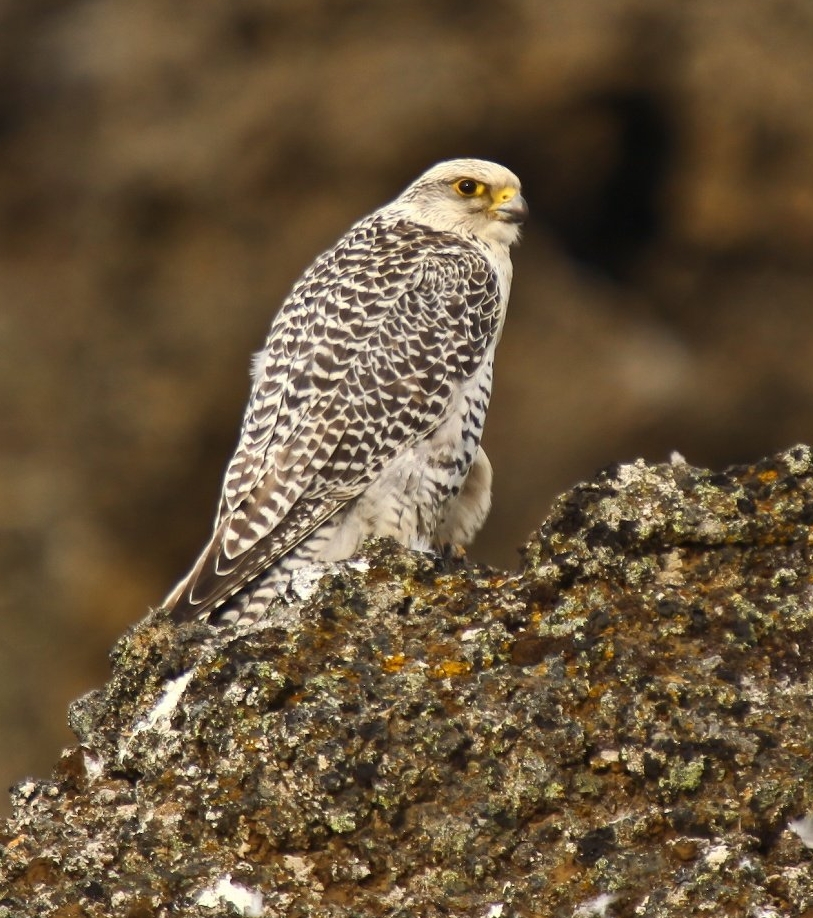
Gyrfalcon

Gyrfalcon

Falco rusticolus

Falco_rusticolus_white.jpg: Ólafur Larsen derivative work: Bogbumper (talk), CC BY-SA 2.0, via Wikimedia Commons

Side by side

Bat FalconGyrfalcon
Scientific nameFalco rufigularis Daudin, 1800Falco rusticolus Linnaeus, 1758
English nameBat FalconGyrfalcon
GroupBirdsBirds
ClassAves BirdAves Bird
OrderFalconiformes FalconsFalconiformes Falcons
FamilyFalconidae FalconsFalconidae Falcons
GenusFalco FalconsFalco Falcons
Named in18001758
Red List categoryLeast ConcernLeast Concern
Environmentterrestrialterrestrial
Countries on record21 countries24 countries
GBIF occurrence records114,191 records26,842 records

Rows where the two agree are shown in grey.

Where each is found

Both recorded in 1 country

Only Bat Falcon (20)

Only Gyrfalcon (23)

From Catalogue of Life checklists and GBIF occurrence records. A country missing from a list means no record is held, which is not proof of absence.

Checked facts

Bat FalconGyrfalcon
AppearanceNo checked fact yet
  • The gyrfalcon exhibits plumage colours ranging from entirely white to dark grey-brown. English Wikipedia
  • The species has four principal colour morphs: white, silver, brown and black. English Wikipedia
  • Juvenile gyrfalcons have darker and browner plumage than adults. English Wikipedia
  • Adult gyrfalcons have yellow ceres, eye-rings and legs, whereas juveniles have blue versions of these features. animaldiversity.org
  • The gyrfalcon has long pointed wings, a long tail and a notched bill. animaldiversity.org
  • The Greenland population most commonly exhibits white plumage flecked with grey on the back and wings. English Wikipedia
Size
Habitat
  • The species inhabits tropical forests, favoring unbroken mature forest but also occurring along forest edges, in gallery forests, on wooded savannas, and in areas with scattered remaining trees. English Wikipedia
  • The species occurs mainly from sea level to approximately 1,700 m elevation. English Wikipedia
  • The species can inhabit suburban and urban areas. English Wikipedia
  • The species also inhabits disturbed forests, road cuts, riverbanks, and cleared agricultural land with scattered trees. animaldiversity.org
  • The species is found in tropical rain forests. animaldiversity.org
Diet
  • The species hunts bats, birds, small rodents, snakes, lizards, frogs, and large insects. English Wikipedia
  • Its insect prey includes dragonflies, butterflies, moths, grasshoppers, true bugs, beetles, and hymenopterans. English Wikipedia
  • Invertebrates dominate numerically among its prey, and young birds are fed large numbers of invertebrates. English Wikipedia
  • Bats generally contribute less than 14% of the species' prey biomass. English Wikipedia
  • The species consumes mostly birds during summer and mostly insects during winter. animaldiversity.org
Behaviour
  • The species launches aerial attacks on prey from conspicuous perches on high, open snags. English Wikipedia
  • The species also hunts while maintaining sustained flight. English Wikipedia
  • Most hunting occurs around dawn or dusk and frequently continues after sunset. English Wikipedia
  • The species communicates visually and vocally and often exchanges calls with its mate during breeding season. animaldiversity.org
  • Gyrfalcons may cache large prey items, including Arctic hares, between feeding periods during nesting. animaldiversity.org
  • Gyrfalcons generally hunt, forage and roost alone outside the breeding season. animaldiversity.org
  • Gyrfalcons are generally non-migratory but may disperse from their breeding range during winter. animaldiversity.org
Reproduction
  • The breeding season extends from February to June in Mexico and northern Central America. English Wikipedia
  • The species nests in February on Trinidad. English Wikipedia
  • Most nests are located in natural tree cavities or cavities excavated by parrots, at heights of 10–50 m above the ground. English Wikipedia
  • Other nesting sites include abandoned trogon cavities in arboreal termite nests, cliffs, and pre-Columbian ruins. English Wikipedia
  • Clutches contain two to four eggs. English Wikipedia
  • Incubation lasts approximately 30 days. English Wikipedia
  • Young fledge approximately 35–40 days after hatching. English Wikipedia
  • Young remain dependent on their parents for at least 12 weeks after fledging. English Wikipedia
  • Both sexes incubate the eggs, with females performing at least 75% of the incubation effort. English Wikipedia
  • Males provide food for incubating females and most of the food for nestlings. English Wikipedia
  • Both parents actively protect the nest, sometimes chasing away other raptors. animaldiversity.org
  • Gyrfalcons generally nest on cliff faces and frequently reuse abandoned nests belonging to other birds. English Wikipedia
  • Gyrfalcon clutches usually contain two to four eggs. English Wikipedia
  • The average gyrfalcon egg measures approximately 58.46 × 45 mm. English Wikipedia
  • Gyrfalcon eggs have an average incubation period of 35 days. English Wikipedia
  • Gyrfalcon nestlings generally leave the nest at seven to eight weeks of age. English Wikipedia
  • Immature gyrfalcons become independent of their parents at three to four months of age. English Wikipedia
  • Gyrfalcons in the studied northern populations generally lay eggs near the end of April. animaldiversity.org
LifespanNo checked fact yet
Distribution
  • The species occurs in Mexico, Central America, Trinidad, and every mainland South American country except Chile and Uruguay. English Wikipedia
Conservation
  • The species is classified as Least Concern by the IUCN. English Wikipedia
  • The species has an extremely large geographic range and an estimated population of at least half a million mature individuals. English Wikipedia
  • The estimated mature population is believed to be decreasing. English Wikipedia
  • The species no longer breeds in several areas where forests have been extensively converted to agriculture. English Wikipedia
  • Pesticides have affected breeding success in Mexico and Central America. English Wikipedia
  • The gyrfalcon is classified as Least Concern on the IUCN Red List. English Wikipedia
  • Pesticide pollution depressed gyrfalcon populations during the mid-twentieth century. English Wikipedia
  • Improved environmental standards in developed countries have contributed to the recovery of gyrfalcon populations. English Wikipedia
UsesNo checked fact yet
  • The gyrfalcon is the official bird of Canada's Northwest Territories. English Wikipedia

In brief

Bat Falcon

Falco rufigularis occurs in Mexico, Central America, Trinidad, and every mainland South American country except Chile and Uruguay. Full profile

Gyrfalcon

Falco rusticolus has a Holarctic distribution, with most of its breeding range north of 60 degrees latitude. It exhibits four principal colour morphs: white, silver, brown and black. Full profile

Compare something else

Page built on 26 November 2026 from the data on the two species pages, where every source is listed.

Cite this page

ScientificNames.org. (2026). Bat Falcon vs Gyrfalcon. Retrieved November 26, 2026, from https://scientificnames.org/compare/bat-falcon-vs-gyrfalcon