Comparison

Black Cuckoo vs African Cuckoo

Black Cuckoo (Cuculus clamosus) and African Cuckoo (Cuculus gularis) both belong to the genus Cuculus (eurasian cuckoos) and part ways below it. Both are recorded in 28 countries.
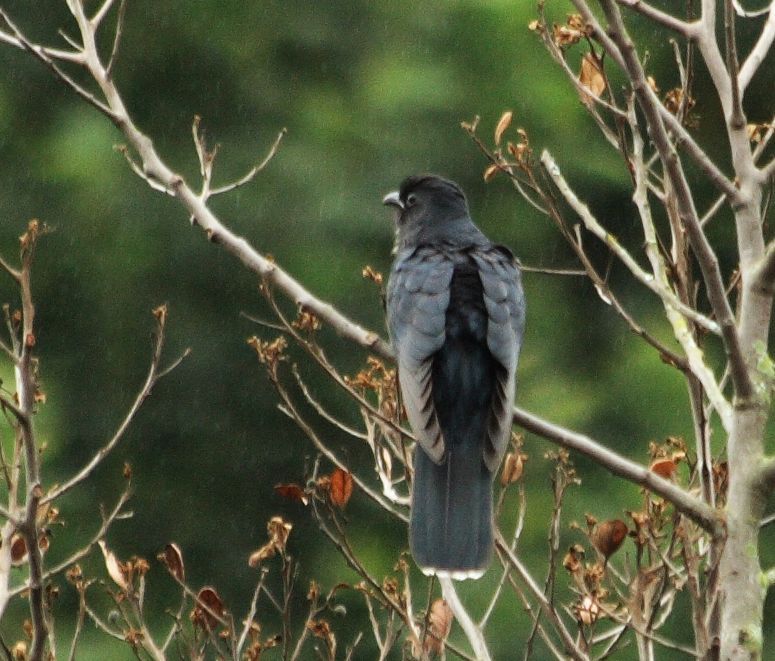
Black Cuckoo

Black Cuckoo

Cuculus clamosus

Alan Manson, CC BY-SA 2.0, via Wikimedia Commons

African Cuckoo

African Cuckoo

Cuculus gularis

Flickr user Alastair Rae . Photo uploaded to commons by user ltshears, CC BY-SA 2.0, via Wikimedia Commons

Side by side

Black CuckooAfrican Cuckoo
Scientific nameCuculus clamosus Latham, 1801Cuculus gularis Stephens, 1815
English nameBlack CuckooAfrican Cuckoo
GroupBirdsBirds
ClassAves BirdAves Bird
OrderCuculiformes CuckooCuculiformes Cuckoo
FamilyCuculidae CuckooCuculidae Cuckoo
GenusCuculus Eurasian CuckoosCuculus Eurasian Cuckoos
Named in18011815
Red List categoryLeast ConcernLeast Concern
Countries on record33 countries34 countries
GBIF occurrence records52,669 records16,952 records

Rows where the two agree are shown in grey.

Where each is found

Both recorded in 28 countries

Only Black Cuckoo (5)

Only African Cuckoo (6)

From Catalogue of Life checklists and GBIF occurrence records. A country missing from a list means no record is held, which is not proof of absence.

Checked facts

Black CuckooAfrican Cuckoo
Appearance
  • The species is medium-sized, and males and females have similar appearances. English Wikipedia
  • The nominate subspecies has black upperparts with a green gloss, slate-grey wings, and a black tail tipped with white. English Wikipedia
  • The nominate subspecies sometimes has outer tail feathers marked with white or buff bars or spots. English Wikipedia
  • The subspecies Cuculus clamosus gabonensis is predominantly black, with a red throat and black-and-white barring on its belly. English Wikipedia
  • The African Cuckoo has dark grey upperparts, head and wings, pale grey throat and breast, and a white belly with dark grey barring. English Wikipedia
  • The African Cuckoo has a dark grey tail with dark barring and a white tip. English Wikipedia
  • Male African Cuckoos have yellow eyes, whereas females have light brown eyes. English Wikipedia
  • The African Cuckoo has a yellow beak tipped with black or horn. English Wikipedia
  • The African Cuckoo has yellowish legs and feet. English Wikipedia
  • Juvenile African Cuckoos occur in grey and hepatic colour forms, with the hepatic form having brown rather than grey plumage. English Wikipedia
  • The African Cuckoo has a long tail and resembles a bird of prey during flight. English Wikipedia
  • The African Cuckoo has grey-and-white plumage, long wings and a long tail. ebird.org
SizeNo checked fact yet
Habitat
  • The Black Cuckoo inhabits woodland but avoids the interior of dense forests. English Wikipedia
  • The species prefers acacia woodland, thickets, riverside woodland, plantations, and trees around villages. English Wikipedia
  • The African Cuckoo typically inhabits savannah with scattered acacia trees and open woodland. English Wikipedia
  • The African Cuckoo is absent from dense forests and arid regions. English Wikipedia
Diet
  • Hairy caterpillars constitute the main food of the Black Cuckoo. English Wikipedia
  • The species also eats termites and ants, including winged individuals caught in flight. English Wikipedia
  • The Black Cuckoo also feeds on beetles, grasshoppers, and other insects. English Wikipedia
  • The species also consumes birds' eggs and nestlings. English Wikipedia
Behaviour
  • A newly hatched Black Cuckoo chick usually evicts other eggs and nestlings within thirty hours of hatching. English Wikipedia
  • Fledged Black Cuckoo chicks leave the nest a few days after fledging. English Wikipedia
  • Foster parents continue feeding Black Cuckoo chicks for approximately three weeks after they leave the nest. English Wikipedia
  • The African Cuckoo is generally solitary. English Wikipedia
  • The African Cuckoo forages for insects in trees and on the ground, searching foliage and probing cattle dung. English Wikipedia
  • The African Cuckoo commonly perches in an almost vertical posture. English Wikipedia
  • Male African Cuckoos defend territories against other cuckoos. English Wikipedia
  • Male African Cuckoos in southern Africa defend territories exceeding 60 hectares. English Wikipedia
  • Male African Cuckoos produce a two-note call in which the second note is higher and louder. English Wikipedia
  • Female African Cuckoos produce a bubbling call consisting of repeated notes. English Wikipedia
Reproduction
  • The nominate subspecies breeds in Southern Africa from September to December. English Wikipedia
  • The Black Cuckoo reproduces through brood parasitism. English Wikipedia
  • Bushshrikes are the principal hosts of the Black Cuckoo. English Wikipedia
  • The tropical boubou and crimson-breasted shrike are among the principal host species. English Wikipedia
  • When parasitising the boubou, Black Cuckoo eggs hatch approximately fourteen days after laying. English Wikipedia
  • In boubou nests, Black Cuckoo eggs hatch three days before the host's eggs. English Wikipedia
  • Black Cuckoo chicks become fledged approximately sixteen days after hatching. English Wikipedia
  • The African Cuckoo is a brood parasite that lays its eggs in the nests of other bird species. English Wikipedia
  • Female African Cuckoos remove an existing egg from the host nest when laying their own egg. English Wikipedia
  • African Cuckoo eggs usually closely resemble the host species' eggs in colour and size. English Wikipedia
  • The yellow-billed shrike and fork-tailed drongo are among the frequently targeted host species of the African Cuckoo. English Wikipedia
  • African Cuckoo eggs incubate for 12–17 days, usually 12 days. English Wikipedia
  • African Cuckoo eggs generally hatch before the host species' eggs. English Wikipedia
  • African Cuckoo chicks eject other eggs and nestlings from the host nest. English Wikipedia
  • African Cuckoo chicks open their eyes approximately eight days after hatching. English Wikipedia
  • African Cuckoo chicks fledge approximately three weeks after hatching. English Wikipedia
  • African Cuckoo fledglings remain dependent on their foster parents for several weeks after fledging. English Wikipedia
Distribution
  • The Black Cuckoo occurs widely throughout sub-Saharan Africa. English Wikipedia
  • The subspecies Cuculus clamosus gabonensis is resident in Central Africa. English Wikipedia
  • The nominate subspecies Cuculus clamosus clamosus migrates between Southern Africa and Central, Eastern, and West Africa. English Wikipedia
  • After its Southern African breeding season, the nominate subspecies moves northward in March to Central, Eastern, and West Africa. English Wikipedia
  • The species' geographic range extends from Liberia eastward to Ethiopia and southward through Angola to South Africa. English Wikipedia
Conservation
  • The Black Cuckoo is classified as a species of least concern by the International Union for Conservation of Nature. English Wikipedia
  • The African Cuckoo was assessed as Least Concern on the IUCN Red List in 2024. iucnredlist.org
  • The African Cuckoo is considered to have a stable population, with no particular threats identified. English Wikipedia

In brief

Black Cuckoo

Cuculus clamosus occurs widely throughout sub-Saharan Africa, with a geographic range extending from Liberia eastward to Ethiopia and southward through Angola to South Africa. It is distinguished by brood parasitism, with bushshrikes serving as its principal hosts. Full profile

African Cuckoo

Cuculus gularis occurs in Sub-Saharan Africa and migrates within the African continent. It is a brood parasite that lays its eggs in the nests of other bird species. Full profile

Compare something else

Page built on 26 November 2026 from the data on the two species pages, where every source is listed.

Cite this page

ScientificNames.org. (2026). Black Cuckoo vs African Cuckoo. Retrieved November 26, 2026, from https://scientificnames.org/compare/black-cuckoo-vs-african-cuckoo