Comparison
Bur Clover vs Black Medick
Bur Clover (Medicago polymorpha) and Black Medick (Medicago lupulina) both belong to the genus Medicago (medic) and part ways below it. Both are recorded in 95 countries.

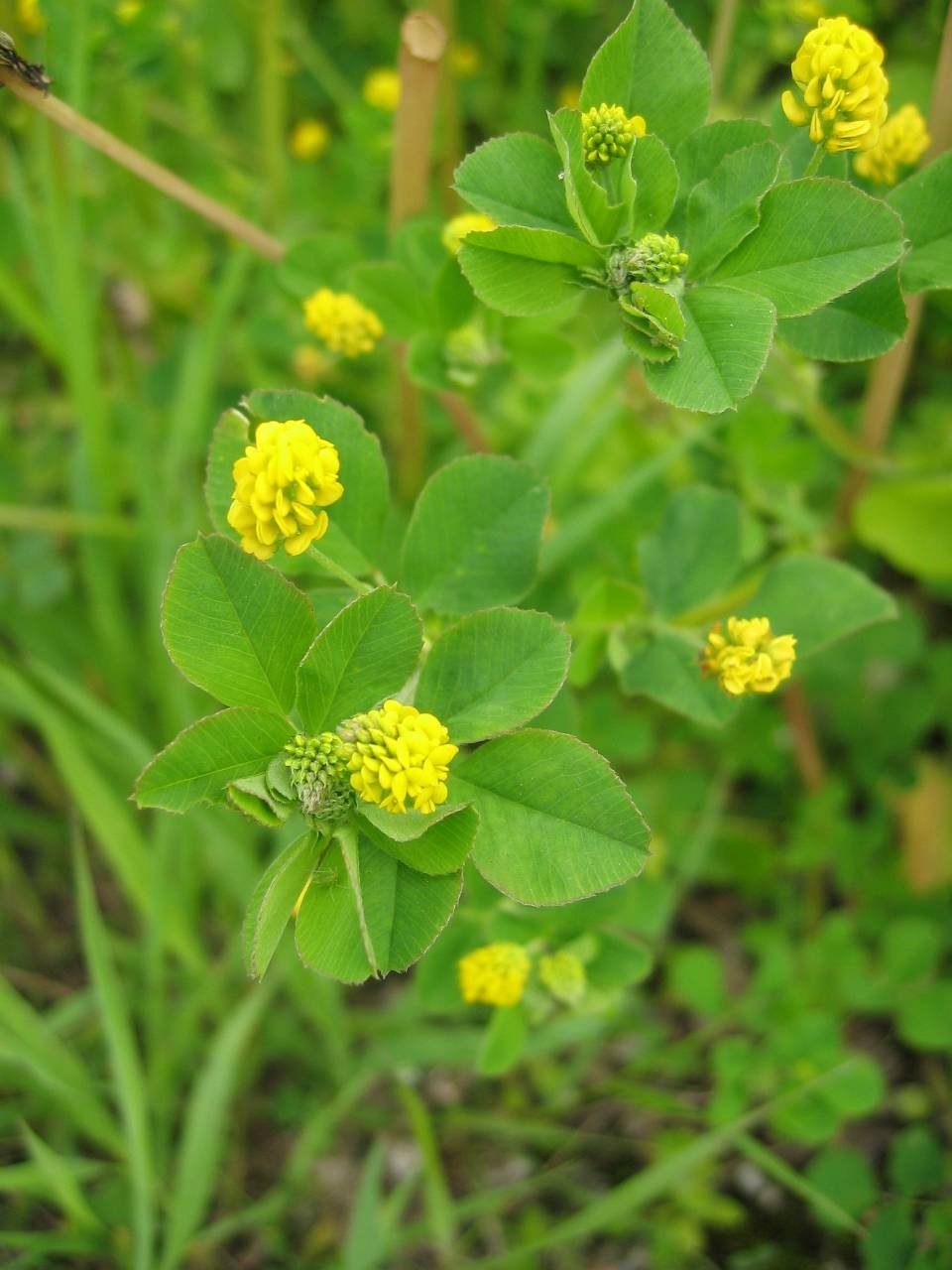


Side by side
| Bur Clover | Black Medick | |
|---|---|---|
| Scientific name | Medicago polymorpha L. | Medicago lupulina L. |
| English name | Bur Clover | Black Medick |
| Group | Flowering plants | Flowering plants |
| Class | Magnoliopsida | Magnoliopsida |
| Order | Fabales | Fabales |
| Family | Fabaceae Bean | Fabaceae Bean |
| Genus | Medicago Medic | Medicago Medic |
| Countries on record | 107 countries | 114 countries |
| GBIF occurrence records | 97,448 records | 793,352 records |
Rows where the two agree are shown in grey.
Where each is found
Both recorded in 95 countries
- Afghanistan
- Albania
- Algeria
- Argentina
- Armenia
- Australia
- Austria
- Azerbaijan
- Bangladesh
- Belgium
- Bermuda
- Bolivia
- Bosnia and Herzegovina
- Brazil
- Bulgaria
- Canada
- Chile
- China
- Colombia
- Croatia
- Cyprus
- Czechia
- Denmark
- Dominican Republic
- Ecuador
- Egypt
- Eritrea
- Estonia
- Ethiopia
- Finland
- France
- Georgia
- Germany
- Gibraltar
- Greece
- Hungary
- India
- Iran
- Iraq
- Ireland
- Israel
- Italy
- Japan
- Jersey
- Kazakhstan
- Kenya
- Kosovo
- Kyrgyzstan
- Lebanon
- Libya
- Luxembourg
- Malta
- Mauritius
- Mexico
- Montenegro
- Morocco
- Myanmar
- Nepal
- New Zealand
- North Macedonia
- Norway
- Oman
- Pakistan
- Palestinian Territory
- Peru
- Philippines
- Poland
- Portugal
- Reunion
- Romania
- Russia
- Saudi Arabia
- Serbia
- Slovakia
- Slovenia
- South Africa
- South Korea
- Spain
- Svalbard and Jan Mayen
- Sweden
- Switzerland
- Syria
- Taiwan
- Tajikistan
- Tanzania
- The Netherlands
- Tunisia
- Turkey
- Turkmenistan
- Ukraine
- United Kingdom
- United States
- Uruguay
- Uzbekistan
- Yemen
Only Bur Clover (12)
- Angola
- Costa Rica
- Djibouti
- French Polynesia
- Jordan
- Kuwait
- Mozambique
- New Caledonia
- Saint Helena
- Venezuela
- Vietnam
- Zimbabwe
Only Black Medick (19)
- Aland Islands
- Andorra
- Bahamas
- Belarus
- Cuba
- Faroe Islands
- Greenland
- Guatemala
- Guernsey
- Haiti
- Iceland
- Isle of Man
- Latvia
- Liechtenstein
- Lithuania
- Moldova
- Mongolia
- North Korea
- Somalia
From Catalogue of Life checklists and GBIF occurrence records. A country missing from a list means no record is held, which is not proof of absence.
Checked facts
| Bur Clover | Black Medick | |
|---|---|---|
| Appearance |
|
|
| Size |
|
|
| Habitat |
|
|
| Diet |
| No checked fact yet |
| Behaviour |
| No checked fact yet |
| Reproduction |
|
|
| Lifespan | No checked fact yet |
|
| Distribution |
| No checked fact yet |
| Conservation |
| No checked fact yet |
| Uses |
|
|
| Similar species | No checked fact yet |
|
| Other |
|
|
In brief
Bur Clover
Bur clover is an annual broadleaf forb in the family Fabaceae, order Fabales, and class Magnoliopsida. It inhabits agricultural land, roadsides, disturbed areas, lawns, fields, and waste places. It is distinguished by three clover-shaped leaflets, small yellow flowers, and tightly coiled pods with hooked prickles. Full profile
Black Medick
Medicago lupulina grows in dry grassland, fields, lawns, waste places, and coastal sand dunes. It has three oval leaflets, small yellow flowers, and mature seed pods that turn black. Full profile
Compare something else
Page built on 28 November 2026 from the data on the two species pages, where every source is listed.
Cite this page
ScientificNames.org. (2026). Bur Clover vs Black Medick. Retrieved November 28, 2026, from https://scientificnames.org/compare/bur-clover-vs-black-medick
“Bur Clover vs Black Medick.” ScientificNames.org, 2026, scientificnames.org/compare/bur-clover-vs-black-medick. Accessed 28 Nov. 2026.
ScientificNames.org. “Bur Clover vs Black Medick.” Accessed November 28, 2026. https://scientificnames.org/compare/bur-clover-vs-black-medick.
@misc{scientificnames_bur_clover_vs_black_medick,
  author = {{ScientificNames.org}},
  title = {Bur Clover vs Black Medick},
  year = {2026},
  url = {https://scientificnames.org/compare/bur-clover-vs-black-medick},
  note = {Accessed 2026-11-28}
}