Comparison

Bushveld Sengi vs Eastern Rock Sengi

Bushveld Sengi (Elephantulus intufi) and Eastern Rock Sengi (Elephantulus myurus) both belong to the genus Elephantulus (long-eared elephant shrews) and part ways below it. Both are recorded in 2 countries.
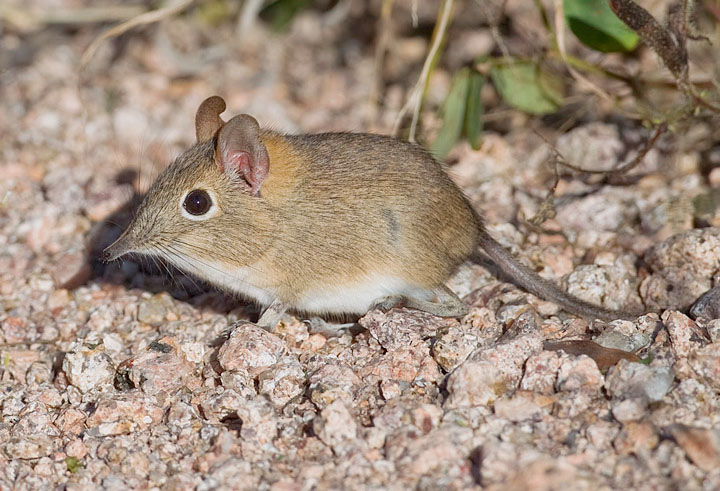
Bushveld Sengi

Bushveld Sengi

Elephantulus intufi

Yathin sk, CC BY-SA 3.0, via Wikimedia Commons

Eastern Rock Sengi

Eastern Rock Sengi

Elephantulus myurus

Marktittley, CC BY-SA 4.0, via Wikimedia Commons

Side by side

Bushveld SengiEastern Rock Sengi
Scientific nameElephantulus intufi (A. Smith, 1836)Elephantulus myurus Thomas & Schwann, 1906
English nameBushveld SengiEastern Rock Sengi
GroupMammalsMammals
ClassMammalia MammalMammalia Mammal
OrderMacroscelidea SengiMacroscelidea Sengi
FamilyMacroscelididae SengiMacroscelididae Sengi
GenusElephantulus Long-eared Elephant ShrewsElephantulus Long-eared Elephant Shrews
Named in18361906
Red List categoryLeast ConcernLeast Concern
Countries on record4 countries3 countries
GBIF occurrence records757 records653 records

Rows where the two agree are shown in grey.

Where each is found

Both recorded in 2 countries

Only Bushveld Sengi (2)

Only Eastern Rock Sengi (1)

From Catalogue of Life checklists and GBIF occurrence records. A country missing from a list means no record is held, which is not proof of absence.

Checked facts

Bushveld SengiEastern Rock Sengi
Appearance
  • Elephantulus intufi is a small mammal belonging to the sengi family. English Wikipedia
  • The species has a long, slender, mobile, trunk-like snout with a small rhinarium containing nostrils at its tip. animaldiversity.org
  • The species can use its mobile snout to manipulate its surroundings, forage, and test the air. animaldiversity.org
  • The species has reduced forelimbs and well-developed hind limb bones and muscles. animaldiversity.org
  • Each foot has five digits with small claws, and the hind feet have digital pads on every digit. animaldiversity.org
  • The species has a brownish-gray dorsal coat and a pale-gray underside. animaldiversity.org
  • The species has brown ears and eyes surrounded by white rings. animaldiversity.org
  • The species has white dorsal extremities and hairless ventral extremities. animaldiversity.org
  • Black extremities distinguish this species from other members of the genus Elephantulus. animaldiversity.org
  • The species has visible glands at the base of its tail and near its anus. animaldiversity.org
SizeNo checked fact yet
Habitat
  • The species inhabits subtropical or tropical dry shrubland and hot deserts. English Wikipedia
  • The species inhabits subtropical or tropical dry lowland grasslands and rocky areas. English Wikipedia
  • The species primarily inhabits rocky boulder outcrops in hilly terrain. animaldiversity.org
  • The species selects rocky formations containing numerous cracks and crevices. animaldiversity.org
  • The species uses vegetation and overhanging ledges near boulders for protection from predators. animaldiversity.org
  • The species' habitat has a semi-arid climate for eight months annually, with summer temperatures of 35–40°C and subzero winter temperatures. animaldiversity.org
  • The species occurs in rocky areas rather than primarily occupying neighboring sandy flat ground. animaldiversity.org
DietNo checked fact yet
  • The species primarily eats insects but may also consume plant material. animaldiversity.org
  • Invertebrates account for an average of 90% of the species' diet by volume. animaldiversity.org
  • Plant leaves, stems, and grains account for an average of 10% of the species' diet by volume. animaldiversity.org
  • Ants and termites together constitute approximately 42% of the species' diet. animaldiversity.org
Behaviour
  • Bushveld sengis live in monogamous pairs within territories separated from other pairs. English Wikipedia
  • Male mate guarding is identified as a possible explanation for the territorial separation of pairs. English Wikipedia
  • Despite living in monogamous pairs, bushveld sengis have weak pair bonds. English Wikipedia
  • The species moves semi-digitigradely, usually scrambling quadrupedally and occasionally hopping with its hind limbs. animaldiversity.org
  • The species is primarily active during daylight, particularly around sunrise and sunset. animaldiversity.org
  • The species also exhibits some nocturnal activity, although most activity occurs during daylight. animaldiversity.org
  • The species generally avoids activity during the hottest part of the afternoon. animaldiversity.org
  • The species exhibits reduced activity during winter. animaldiversity.org
  • Individuals often remain concealed among rocks, with only their ears visibly twitching. animaldiversity.org
  • The species occasionally emerges from shelter to capture prey. animaldiversity.org
  • Footdrumming and vocalizations are common in the species. animaldiversity.org
ReproductionNo checked fact yet
Distribution
  • Elephantulus myurus occurs in Botswana, Mozambique, South Africa, and Zimbabwe. English Wikipedia
  • The species' northern distribution limit is in Mozambique and its southern limit is in the Orange Free State. animaldiversity.org
  • The species occurs in southern Zimbabwe, western Mozambique, eastern Botswana, and throughout the Transvaal. animaldiversity.org

In brief

Bushveld Sengi

The Bushveld Sengi is a small mammal belonging to the sengi family. It occurs in Angola, Botswana, Namibia, and South Africa. It lives in monogamous pairs with weak pair bonds, within territories separated from other pairs. Full profile

Eastern Rock Sengi

Elephantulus myurus occurs in Botswana, Mozambique, South Africa, and Zimbabwe. It has a long, mobile, trunk-like snout and black extremities. Full profile

Compare something else

Page built on 27 November 2026 from the data on the two species pages, where every source is listed.

Cite this page

ScientificNames.org. (2026). Bushveld Sengi vs Eastern Rock Sengi. Retrieved November 27, 2026, from https://scientificnames.org/compare/bushveld-sengi-vs-eastern-rock-sengi