Comparison
Caribbean Grape vs Fox Grape
Caribbean Grape (Vitis tiliifolia) and Fox Grape (Vitis labrusca) both belong to the genus Vitis (grape) and part ways below it. Both are recorded in 2 countries.


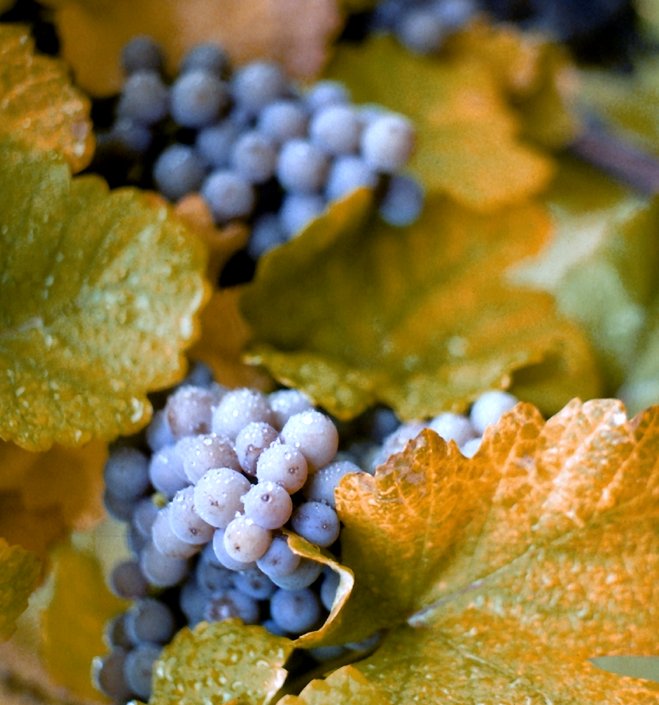
Fox Grape
Vitis labrusca
UnknownUnknown ; cropped, cleaned up, and levels adjustment by Howcheng, Public domain, via Wikimedia Commons

Side by side
| Caribbean Grape | Fox Grape | |
|---|---|---|
| Scientific name | Vitis tiliifolia Humb. & Bonpl. ex Roem. & Schult. | Vitis labrusca L. |
| English name | Caribbean Grape | Fox Grape |
| Group | Flowering plants | Flowering plants |
| Class | Magnoliopsida | Magnoliopsida |
| Order | Vitales | Vitales |
| Family | Vitaceae Grape Family | Vitaceae Grape Family |
| Genus | Vitis Grape | Vitis Grape |
| Countries on record | 21 countries | 20 countries |
| GBIF occurrence records | 3,730 records | 5,378 records |
Rows where the two agree are shown in grey.
Where each is found
Both recorded in 2 countries
Only Caribbean Grape (19)
- Belize
- Colombia
- Costa Rica
- Cuba
- Dominican Republic
- Ecuador
- El Salvador
- French Guiana
- Guadeloupe
- Guatemala
- Haiti
- Honduras
- Jamaica
- Nicaragua
- Panama
- Puerto Rico
- Saint Barthelemy
- U.S. Virgin Islands
- Venezuela
Only Fox Grape (18)
- Afghanistan
- Armenia
- Azerbaijan
- Canada
- China
- Georgia
- Germany
- Greece
- Hungary
- India
- Japan
- Portugal
- Taiwan
- Tajikistan
- Turkey
- Turkmenistan
- Uzbekistan
- Vietnam
From Catalogue of Life checklists and GBIF occurrence records. A country missing from a list means no record is held, which is not proof of absence.
Checked facts
| Caribbean Grape | Fox Grape | |
|---|---|---|
| Appearance |
|
|
| Size |
| No checked fact yet |
| Habitat |
| |
| Diet | No checked fact yet | |
| Behaviour |
|
|
| Reproduction |
| No checked fact yet |
| Distribution |
|
|
| Conservation | No checked fact yet |
|
| Uses |
|
|
| Other | No checked fact yet |
|
In brief
Caribbean Grape
Caribbean grape is a climbing vine (liana) in the flowering plant family Vitaceae. It is native to most of Mexico and several other countries and territories in the Americas and Caribbean. It produces small, acidic fruits with a sugar concentration of approximately 8 Brix. Full profile
Fox Grape
The fox grape (Vitis labrusca L.) is a flowering plant in the genus Vitis, family Vitaceae, order Vitales, and class Magnoliopsida. It is native to eastern North America and occurs from Nova Scotia to Georgia and westward to the Mississippi River. It is a woody climbing vine with thick-skinned, sweet grapes and large leaves with hairy undersides. Full profile
Compare something else
Page built on 26 November 2026 from the data on the two species pages, where every source is listed.
Cite this page
ScientificNames.org. (2026). Caribbean Grape vs Fox Grape. Retrieved November 26, 2026, from https://scientificnames.org/compare/caribbean-grape-vs-fox-grape
“Caribbean Grape vs Fox Grape.” ScientificNames.org, 2026, scientificnames.org/compare/caribbean-grape-vs-fox-grape. Accessed 26 Nov. 2026.
ScientificNames.org. “Caribbean Grape vs Fox Grape.” Accessed November 26, 2026. https://scientificnames.org/compare/caribbean-grape-vs-fox-grape.
@misc{scientificnames_caribbean_grape_vs_fox_grape,
  author = {{ScientificNames.org}},
  title = {Caribbean Grape vs Fox Grape},
  year = {2026},
  url = {https://scientificnames.org/compare/caribbean-grape-vs-fox-grape},
  note = {Accessed 2026-11-26}
}