Comparison
Thick Twist Rush vs Chinese Water Chestnut
Thick Twist Rush (Caustis pentandra) and Chinese Water Chestnut (Eleocharis dulcis) both belong to the family Cyperaceae (sedge family) and part ways below it. Both are recorded in 1 country.
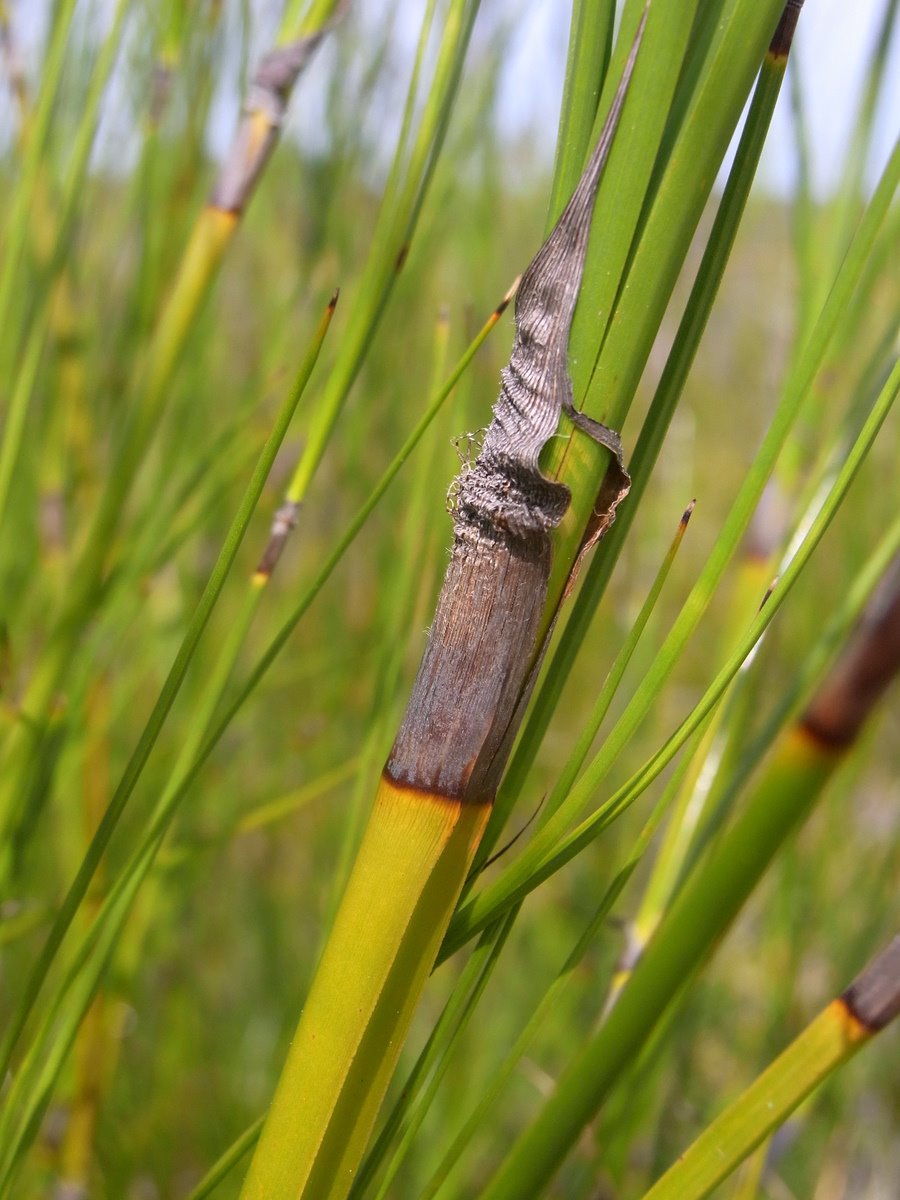


Chinese Water Chestnut
Eleocharis dulcis
Francisco Manuel Blanco (O.S.A.), Public domain, via Wikimedia Commons

Side by side
| Thick Twist Rush | Chinese Water Chestnut | |
|---|---|---|
| Scientific name | Caustis pentandra R.Br. | Eleocharis dulcis (Burm.f.) Trin. ex Hensch. |
| English name | Thick Twist Rush | Chinese Water Chestnut |
| Group | Flowering plants | Flowering plants |
| Class | Liliopsida | Liliopsida |
| Order | Poales | Poales |
| Family | Cyperaceae Sedge Family | Cyperaceae Sedge Family |
| Genus | Caustis | Eleocharis Spikerush |
| Red List category | Not recorded | Least Concern |
| Countries on record | 1 country | 64 countries |
| GBIF occurrence records | 2,862 records | 3,939 records |
Rows where the two agree are shown in grey.
Where each is found
Both recorded in 1 country
Only Chinese Water Chestnut (63)
- American Samoa
- Angola
- Bangladesh
- Benin
- Botswana
- Burkina Faso
- Cambodia
- Cameroon
- Central African Republic
- Chad
- China
- Democratic Republic of the Congo
- Equatorial Guinea
- Fiji
- Gabon
- Gambia
- Ghana
- Guam
- Guinea
- Guinea-Bissau
- Hong Kong
- India
- Indonesia
- Ivory Coast
- Japan
- Kenya
- Liberia
- Madagascar
- Malaysia
- Mali
- Mauritius
- Micronesia
- Mozambique
- Myanmar
- Nepal
- New Caledonia
- Nigeria
- Pakistan
- Palau
- Papua New Guinea
- Philippines
- Republic of the Congo
- Reunion
- Samoa
- Senegal
- Seychelles
- Sierra Leone
- Singapore
- Solomon Islands
- South Africa
- South Korea
- Sri Lanka
- Taiwan
- Tanzania
- Thailand
- Timor Leste
- Togo
- Tonga
- Uganda
- Vietnam
- Wallis and Futuna
- Zambia
- Zimbabwe
From Catalogue of Life checklists and GBIF occurrence records. A country missing from a list means no record is held, which is not proof of absence.
Checked facts
| Thick Twist Rush | Chinese Water Chestnut | |
|---|---|---|
| Appearance | No checked fact yet |
|
| Habitat | No checked fact yet |
|
| Diet | No checked fact yet |
|
| Behaviour | No checked fact yet |
|
| Reproduction | No checked fact yet |
|
| Distribution | No checked fact yet |
|
| Uses | No checked fact yet |
|
| Similar species | No checked fact yet |
|
In brief
Chinese Water Chestnut
The species grows in marshes, underwater, and in mud, and is native to Asia, tropical Africa, and Oceania. It produces small, rounded corms with crisp white flesh that are cultivated for food. Full profile
Compare something else
Page built on 26 November 2026 from the data on the two species pages, where every source is listed.
Cite this page
ScientificNames.org. (2026). Thick Twist Rush vs Chinese Water Chestnut. Retrieved November 26, 2026, from https://scientificnames.org/compare/thick-twist-rush-vs-chinese-water-chestnut
“Thick Twist Rush vs Chinese Water Chestnut.” ScientificNames.org, 2026, scientificnames.org/compare/thick-twist-rush-vs-chinese-water-chestnut. Accessed 26 Nov. 2026.
ScientificNames.org. “Thick Twist Rush vs Chinese Water Chestnut.” Accessed November 26, 2026. https://scientificnames.org/compare/thick-twist-rush-vs-chinese-water-chestnut.
@misc{scientificnames_thick_twist_rush_vs_chinese_water_chestnut,
  author = {{ScientificNames.org}},
  title = {Thick Twist Rush vs Chinese Water Chestnut},
  year = {2026},
  url = {https://scientificnames.org/compare/thick-twist-rush-vs-chinese-water-chestnut},
  note = {Accessed 2026-11-26}
}