Comparison
Long-wattled Umbrellabird vs Andean Cock-of-the-rock
Long-wattled Umbrellabird (Cephalopterus penduliger) and Andean Cock-of-the-rock (Rupicola peruvianus) both belong to the family Cotingidae (contingas) and part ways below it. Both are recorded in 2 countries.
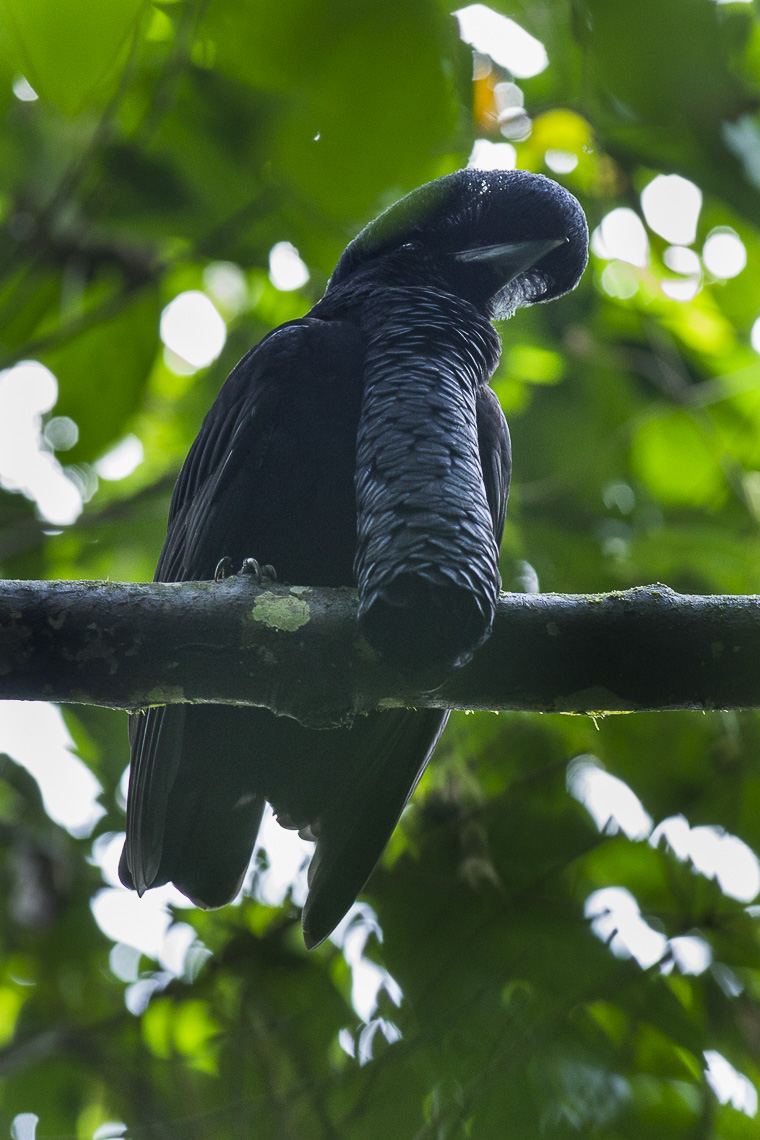
Long-wattled Umbrellabird
Cephalopterus penduliger
Francesco Veronesi from Italy, CC BY-SA 2.0, via Wikimedia Commons


Andean Cock-of-the-rock
Rupicola peruvianus
Félix Uribe from Rionegro, Antioquia, Colombia, CC BY-SA 2.0, via Wikimedia Commons

Side by side
| Long-wattled Umbrellabird | Andean Cock-of-the-rock | |
|---|---|---|
| Scientific name | Cephalopterus penduliger P. L. Sclater, 1859 | Rupicola peruvianus (Latham, 1790) |
| English name | Long-wattled Umbrellabird | Andean Cock-of-the-rock |
| Group | Birds | Birds |
| Class | Aves Bird | Aves Bird |
| Order | Passeriformes Passerine | Passeriformes Passerine |
| Family | Cotingidae Contingas | Cotingidae Contingas |
| Genus | Cephalopterus Umbrellabird | Rupicola Cock-of-the-rock |
| Named in | 1859 | 1790 |
| Red List category | Vulnerable | Least Concern |
| Countries on record | 2 countries | 6 countries |
| GBIF occurrence records | 3,989 records | 44,177 records |
Rows where the two agree are shown in grey.
Where each is found
Both recorded in 2 countries
Only Andean Cock-of-the-rock (4)
From Catalogue of Life checklists and GBIF occurrence records. A country missing from a list means no record is held, which is not proof of absence.
Checked facts
| Long-wattled Umbrellabird | Andean Cock-of-the-rock | |
|---|---|---|
| Appearance |
|
|
| Size |
| No checked fact yet |
| Habitat |
|
|
| Diet |
|
|
| Behaviour |
|
|
| Reproduction |
|
|
| Distribution |
| No checked fact yet |
| Conservation |
|
|
| Uses | No checked fact yet |
|
| Similar species | No checked fact yet |
|
| Name origin |
|
|
| Other |
|
|
In brief
Long-wattled Umbrellabird
Cephalopterus penduliger inhabits humid to wet premontane and cloud forests, as well as humid montane forests at elevations of 1,500–1,800 m above sea level. Males are distinguished by a prominent feathered throat wattle that can be retracted during flight. Full profile
Andean Cock-of-the-rock
Rupicola peruvianus inhabits Andean cloud forests, mainly in ravines and forested streams in montane areas between 500 and 2,400 metres. Males have black wings and tails, pale greyish scapular feathers, and a yellowish bill, while females have a dark bill with a small yellow tip. Full profile
Compare something else
Page built on 26 November 2026 from the data on the two species pages, where every source is listed.
Cite this page
ScientificNames.org. (2026). Long-wattled Umbrellabird vs Andean Cock-of-the-rock. Retrieved November 26, 2026, from https://scientificnames.org/compare/long-wattled-umbrellabird-vs-andean-cock-of-the-rock
“Long-wattled Umbrellabird vs Andean Cock-of-the-rock.” ScientificNames.org, 2026, scientificnames.org/compare/long-wattled-umbrellabird-vs-andean-cock-of-the-rock. Accessed 26 Nov. 2026.
ScientificNames.org. “Long-wattled Umbrellabird vs Andean Cock-of-the-rock.” Accessed November 26, 2026. https://scientificnames.org/compare/long-wattled-umbrellabird-vs-andean-cock-of-the-rock.
@misc{scientificnames_long_wattled_umbrellabird_vs_andean_cock_of_the_rock,
  author = {{ScientificNames.org}},
  title = {Long-wattled Umbrellabird vs Andean Cock-of-the-rock},
  year = {2026},
  url = {https://scientificnames.org/compare/long-wattled-umbrellabird-vs-andean-cock-of-the-rock},
  note = {Accessed 2026-11-26}
}