Comparison

Chermes linearis vs Balsam Woolly Adelgid

Chermes linearis (Chermes linearis) and Balsam Woolly Adelgid (Adelges (Dreyfusia) piceae) both belong to the family Adelgidae (pine aphids) and part ways below it.
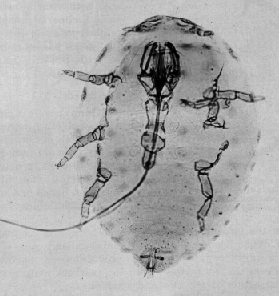
Balsam Woolly Adelgid

Balsam Woolly Adelgid

Adelges (Dreyfusia) piceae

Unknown author, Public domain, via Wikimedia Commons

Side by side

Chermes linearisBalsam Woolly Adelgid
Scientific nameChermes linearis Fourcroy, 1785Adelges (Dreyfusia) piceae (Ratzeburg, 1844)
English nameNot recordedBalsam Woolly Adelgid
GroupInsectsInsects
ClassInsecta InsectInsecta Insect
OrderHemipteraHemiptera
FamilyAdelgidae Pine AphidsAdelgidae Pine Aphids
GenusNot recordedAdelges
Named in17851844
Environmentterrestrialterrestrial
Countries on recordNot recorded11 countries
GBIF occurrence recordsNot recorded1,390 records

Rows where the two agree are shown in grey.

Where each is found

Only Balsam Woolly Adelgid (11)

From Catalogue of Life checklists and GBIF occurrence records. A country missing from a list means no record is held, which is not proof of absence.

Checked facts

Chermes linearisBalsam Woolly Adelgid
AppearanceNo checked fact yet
  • Adult individuals are wingless, nearly spherical insects with rusty brown to purplish-black bodies. tidcf.nrcan.gc.ca
  • Adult individuals have a white, wool-like covering that conceals their bodies and eggs. tidcf.nrcan.gc.ca
  • The woolly covering makes adult individuals resemble tiny pieces of cotton on tree bark. animaldiversity.org
  • Adult individuals beneath their wax covering are dark purple or black. animaldiversity.org
  • The eggs are oblong and amber-colored. animaldiversity.org
  • Newly hatched crawlers have longer legs and antennae than later developmental stages. tidcf.nrcan.gc.ca
SizeNo checked fact yet
HabitatNo checked fact yet
  • The species inhabits forested areas containing fir and spruce trees. animaldiversity.org
  • The species is associated with higher adelgid populations at lower elevations, near forest edges, and near mountain lakes and meadows. animaldiversity.org
  • The species is associated with mild, moist maritime forests along the Atlantic and Pacific coasts. tidcf.nrcan.gc.ca
  • In Europe, the species occurs in spruce-fir forests. tidcf.nrcan.gc.ca
DietNo checked fact yet
  • The species feeds exclusively on fir trees. animaldiversity.org
  • The species obtains nourishment by inserting tube-like mouthparts into tree bark. animaldiversity.org
  • In North America, documented host species include balsam fir, Fraser fir, subalpine fir, Pacific silver fir, and grand fir. animaldiversity.org
  • In Europe, the species feeds on European silver fir. animaldiversity.org
  • The species feeds on bark cortex throughout the tree, including roots, trunks, branches, and twigs, as well as new buds. tidcf.nrcan.gc.ca
BehaviourNo checked fact yet
  • The species remains sedentary for almost its entire life, with movement restricted to the crawler stage. animaldiversity.org
  • After selecting a feeding location, an individual inserts its stylet into the tree and remains there for the rest of its life. animaldiversity.org
  • Crawlers can disperse to other host trees through wind transport. animaldiversity.org
  • Dispersal between trees can occur through wind and animals, including over long distances during bird migration. tidcf.nrcan.gc.ca
  • The species has compound eyes that detect light and sensory capabilities for detecting temperature. animaldiversity.org
  • The waxy covering helps conceal individuals from predators by blending with mosses and lichens on tree bark. animaldiversity.org
  • The species has no known forms of social communication. animaldiversity.org
ReproductionNo checked fact yet
  • The species consists entirely of females and reproduces through parthenogenesis. animaldiversity.org
  • Individuals typically produce approximately 100 eggs in the wild. animaldiversity.org
  • Individuals can lay as many as 250 eggs under laboratory conditions. animaldiversity.org
  • The species commonly has two generations annually, although two to four generations may occur depending on environmental conditions. animaldiversity.org
  • In British Columbia, the species produces three or four generations annually depending on seasonal temperatures. tidcf.nrcan.gc.ca
  • In Atlantic Canada, the species produces two or three generations annually. tidcf.nrcan.gc.ca
  • The summer generation generally hatches between May and June. animaldiversity.org
  • The summer generation reaches adulthood by July and begins egg-laying approximately one week after its final molt. animaldiversity.org
  • First-generation adults mature and lay eggs in May. tidcf.nrcan.gc.ca
  • The final generation of adults matures and lays eggs in August. tidcf.nrcan.gc.ca
  • The species spends its entire life cycle on a single fir-tree host. tidcf.nrcan.gc.ca
ConservationNo checked fact yet
  • The species is considered invasive in North America. animaldiversity.org
  • Severe infestations can kill host trees within two to nine years. animaldiversity.org
  • The species has caused significant mortality of balsam fir in Atlantic Canada. tidcf.nrcan.gc.ca
  • Infestations of the species have been linked to declines in Fraser fir and balsam fir populations in the eastern United States. tidcf.nrcan.gc.ca
  • Visible damage attributed to the species affected more than 5,000 hectares of forest in British Columbia in 2020. tidcf.nrcan.gc.ca

In brief

Balsam Woolly Adelgid

The species inhabits forested areas containing fir and spruce trees. Adult individuals have a white, wool-like covering that conceals their bodies and eggs and makes them resemble tiny pieces of cotton on tree bark. Full profile

Compare something else

Page built on 28 November 2026 from the data on the two species pages, where every source is listed.

Cite this page

ScientificNames.org. (2026). Chermes linearis vs Balsam Woolly Adelgid. Retrieved November 28, 2026, from https://scientificnames.org/compare/chermes-linearis-vs-balsam-woolly-adelgid