Comparison

Chilean Dolphin vs False Killer Whale

Chilean Dolphin (Cephalorhynchus eutropia) and False Killer Whale (Pseudorca crassidens) both belong to the family Delphinidae (oceanic dolphin) and part ways below it.

Chilean Dolphin

Chilean Dolphin

Cephalorhynchus eutropia

Sebastián Saiter V., CC BY 4.0, via Wikimedia Commons

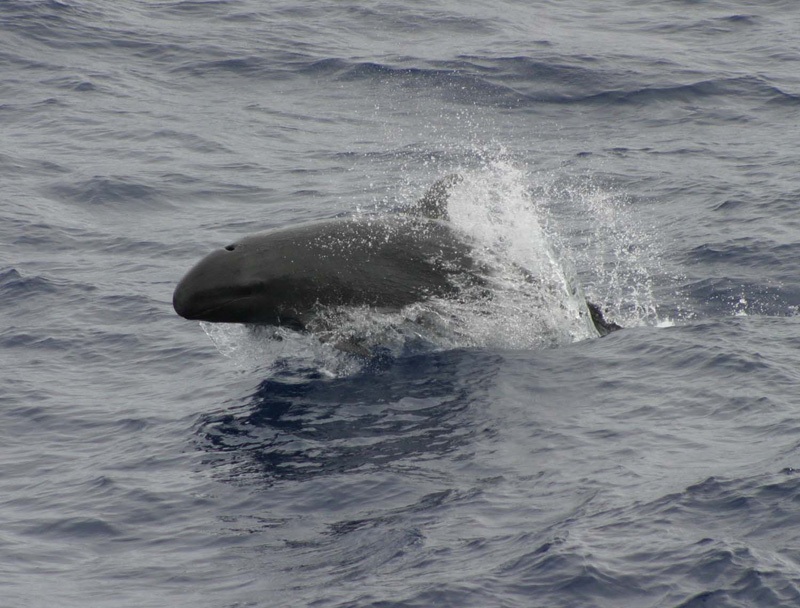
False Killer Whale

False Killer Whale

Pseudorca crassidens

Unknown author, Public domain, via Wikimedia Commons

Side by side

Chilean DolphinFalse Killer Whale
Scientific nameCephalorhynchus eutropia (Gray, 1846)Pseudorca crassidens (Owen, 1846)
English nameChilean DolphinFalse Killer Whale
GroupMammalsMammals
ClassMammalia MammalMammalia Mammal
OrderCetacea CetaceanCetacea Cetacean
FamilyDelphinidae Oceanic DolphinDelphinidae Oceanic Dolphin
GenusCephalorhynchus Piebald DolphinsPseudorca False Killer Whales
Named in18461846
Red List categoryNear ThreatenedNear Threatened
Environmentmarinemarine
Countries on record2 countries32 countries
GBIF occurrence records655 records9,197 records

Rows where the two agree are shown in grey.

Where each is found

Only Chilean Dolphin (2)

Only False Killer Whale (32)

From Catalogue of Life checklists and GBIF occurrence records. A country missing from a list means no record is held, which is not proof of absence.

Checked facts

Chilean DolphinFalse Killer Whale
Appearance
  • The Chilean dolphin has a stout body with a girth reaching approximately two-thirds of its length. English Wikipedia
  • The species has a short beak, a rounded dorsal fin and rounded flippers. English Wikipedia
  • The underside, throat and proximal portions of the flippers are white, while the remaining body is predominantly grey. English Wikipedia
  • The species has 28–34 pairs of teeth in its upper jaw and 29–33 pairs in its lower jaw. English Wikipedia
  • A dark line connects the blowhole, eyes and dorsal fin. English Wikipedia
  • The tail has a characteristic central notch. English Wikipedia
  • The false killer whale has a slender, dark gray or black body with a slightly lighter underside. English Wikipedia
  • The species has an elongated, tapered head without a distinct beak. English Wikipedia
  • Its dorsal fin is sickle-shaped. English Wikipedia
  • Its flippers are narrow, short and pointed, with a distinctive bulge along their leading edges. English Wikipedia
  • Its teeth are conical, with 14–21 teeth in the upper jaw and 16–24 in the lower jaw. English Wikipedia
  • The melon organ in its forehead is larger in males than in females. English Wikipedia
SizeNo checked fact yet
Habitat
  • The species inhabits shallow coastal waters, generally at depths of less than 20 metres. English Wikipedia
  • Chilean dolphins generally remain within 500 metres of the shoreline. English Wikipedia
  • The species occupies bays, estuaries, fjords and coastal channels. English Wikipedia
  • Chilean dolphins have also been recorded in freshwater rivers. English Wikipedia
  • The species prefers cold water at depths of approximately 3–15 metres. animaldiversity.org
  • Individuals may travel as far as five kilometres upstream into rivers and estuaries. animaldiversity.org
  • The species is commonly found in areas with strong tidal currents above steeply descending continental shelves. animaldiversity.org
  • The species inhabits tropical and subtropical marine waters. English Wikipedia
  • It generally inhabits open-ocean and deep-water environments but sometimes occurs near oceanic islands. English Wikipedia
  • The species prefers deep water in the open ocean away from land. australian.museum
Diet
  • Chilean dolphins feed on sardines, anchovies, salmon, squid, crustaceans and green algae. English Wikipedia
  • The species consumes small schooling fish, including sardines. animaldiversity.org
  • Squid and crustaceans are documented components of the species' diet. animaldiversity.org
  • Individuals observed near salmon hatcheries may consume newly released juvenile salmon. animaldiversity.org
Behaviour
  • Chilean dolphins are commonly observed in groups of approximately two to ten individuals. English Wikipedia
  • Occasional larger aggregations of up to 50 individuals have been recorded. English Wikipedia
  • The species exhibits epimeletic behaviour in which healthy individuals assist sick or injured group members. English Wikipedia
  • Chilean dolphins use echolocation to navigate their surroundings. English Wikipedia
  • Communication involves clicks, whistles and cries produced at varying frequencies. English Wikipedia
  • The species is described as extremely shy and difficult to approach. animaldiversity.org
  • Chilean dolphins in southern parts of their range tend to avoid boats. animaldiversity.org
  • Individuals swim in circular or zigzag patterns to herd fish. English Wikipedia
  • The species is highly social and commonly travels in groups of 10–20 individuals. English Wikipedia
  • Large groups can contain more than 500 individuals. English Wikipedia
  • Feeding groups may divide into smaller family groups containing four to six individuals. English Wikipedia
  • Individuals have been recorded remaining with the same pod for as long as 15 years. English Wikipedia
  • It can interact sexually with bottlenose dolphins and pilot whales. English Wikipedia
  • The species uses echolocation to navigate and locate prey. English Wikipedia
  • The species is an efficient pack hunter. australian.museum
Reproduction
DistributionNo checked fact yet
Conservation
  • The IUCN classifies the species as Near Threatened. English Wikipedia
  • The Hawaiian population was recognized as endangered by the United States National Oceanic and Atmospheric Administration in November 2012. English Wikipedia
  • Incidental deaths associated with fishing operations are a threat to the species. australian.museum
  • Some populations, particularly those off Japan and parts of Asia, are deliberately hunted. australian.museum
  • The species is captured for the oceanarium trade. australian.museum
  • Fishing-gear entanglement can cause drowning, restricted circulation and impaired hunting ability. English Wikipedia
  • The species is covered by the Agreement on the Conservation of Small Cetaceans of the Baltic, North East Atlantic, Irish and North Seas. English Wikipedia
Uses
  • False killer whales have been kept in public aquariums in Japan, the United States, the Netherlands, Hong Kong and Australia. English Wikipedia
Similar species
  • The Chilean dolphin overlaps geographically and ecologically with Commerson's dolphin. animaldiversity.org
  • The Chilean dolphin can be distinguished from Commerson's dolphin by lacking a conspicuous white area on its sides and back. animaldiversity.org
  • The false killer whale's closest living relatives include Risso's dolphin, the melon-headed whale, the pygmy killer whale and pilot whales. English Wikipedia
  • The species can hybridize with the common bottlenose dolphin to produce fertile offspring known as wholphins. English Wikipedia
Name originNo checked fact yet
  • The common name refers to the resemblance between the species' skull and that of the killer whale. English Wikipedia

In brief

Chilean Dolphin

Cephalorhynchus eutropia is endemic to the coast of Chile, with a documented range from Valparaíso at 33°S to Cape Horn at 55°S. It has a stout body, a short beak, rounded fins and a predominantly grey body with a white underside, throat and proximal portions of the flippers. Full profile

False Killer Whale

Pseudorca crassidens inhabits tropical and subtropical marine waters, primarily in open-ocean and deep-water environments. It has a slender, dark gray or black body, an elongated tapered head without a distinct beak and a sickle-shaped dorsal fin. Full profile

Compare something else

Page built on 29 November 2026 from the data on the two species pages, where every source is listed.

Cite this page

ScientificNames.org. (2026). Chilean Dolphin vs False Killer Whale. Retrieved November 29, 2026, from https://scientificnames.org/compare/chilean-dolphin-vs-false-killer-whale