Comparison

Somali Pigeon vs Stock Dove

Somali Pigeon (Columba oliviae) and Stock Dove (Columba oenas) both belong to the genus Columba (pigeons) and part ways below it.
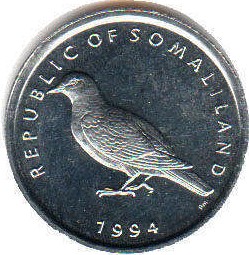
Somali Pigeon

Somali Pigeon

Columba oliviae

Bank of Somaliland, Public domain, via Wikimedia Commons

Stock Dove

Stock Dove

Columba oenas

MPF, CC BY-SA 4.0, via Wikimedia Commons

Side by side

Somali PigeonStock Dove
Scientific nameColumba oliviae S. Clarke, 1918Columba oenas Linnaeus, 1758
English nameSomali PigeonStock Dove
GroupBirdsBirds
ClassAves BirdAves Bird
OrderColumbiformes DovesColumbiformes Doves
FamilyColumbidae DovesColumbidae Doves
GenusColumba PigeonsColumba Pigeons
Named in19181758
Red List categoryLeast ConcernLeast Concern
EnvironmentNot recordedterrestrial
Countries on record1 country70 countries
GBIF occurrence records35 records1,658,533 records

Rows where the two agree are shown in grey.

Where each is found

Only Somali Pigeon (1)

Only Stock Dove (70)

From Catalogue of Life checklists and GBIF occurrence records. A country missing from a list means no record is held, which is not proof of absence.

Checked facts

Somali PigeonStock Dove
Appearance
  • The Somali Pigeon has pale grey plumage, a mauve cap, yellow eyes and an iridescent collar with bronze-green tones. English Wikipedia
  • The species has a bluish-gray rump, dark wing edges and dark bands along its tail. English Wikipedia
  • The Somali Pigeon lacks the characteristic dark hind-neck band found in various collared dove species. English Wikipedia
  • The stock dove has blue-toned grey plumage with two short dark wingbars and a broad dark grey bar at the tip of its tail. English Wikipedia
  • The stock dove has a lightly pinkish-purple breast and an iridescent green-to-purple patch on each side of its neck. English Wikipedia
  • The stock dove has dark eyes and a pink bill with a yellow tip. English Wikipedia
  • Juvenile stock doves resemble adults but lack the iridescent neck patch. English Wikipedia
  • The male and female stock dove have indistinguishable plumage, although males are slightly larger. English Wikipedia
  • The stock dove has a dark grey underwing and a dark trailing edge on its grey wings. English Wikipedia
Size
Habitat
  • The species inhabits arid coastal environments, particularly cliffs and hills with little vegetation. English Wikipedia
  • The Somali Pigeon is typically recorded at elevations between 75 and 750 metres. English Wikipedia
  • The species has been recorded at elevations reaching 1,425 metres. English Wikipedia
  • The stock dove typically inhabits open wooded areas rather than densely wooded habitats. English Wikipedia
  • The stock dove also inhabits coastal areas where cliffs provide nesting sites. English Wikipedia
  • Stock doves commonly nest in cavities in old trees. English Wikipedia
  • Stock doves have also been recorded nesting in rabbit burrows, ruins, poplar hedges, cliff cracks, ivy and lime-tree growth. English Wikipedia
  • Stock doves also use nest boxes. English Wikipedia
Diet
  • The stock dove's diet consists mainly of plant material, particularly young shoots and seedlings. English Wikipedia
  • The stock dove also eats grain, insects and snails. English Wikipedia
  • In some areas, acorns and pine seeds make up most of the stock dove's diet. English Wikipedia
  • The stock dove consumes berries including bay and hawthorn, as well as figs, cereal grains, beans and peas. English Wikipedia
  • The stock dove obtains small invertebrates while foraging on the ground. English Wikipedia
  • During autumn migration in October, stock doves supplement their food intake with shoots and leaves at locations rich in acorns. English Wikipedia
  • A molecular dietary study detected plants from the family Pinaceae in stock dove samples. pmc.ncbi.nlm.nih.gov
  • Animal DNA was detected very rarely in the faecal samples of the studied columbiform birds, including stock doves. pmc.ncbi.nlm.nih.gov
  • Plants from the class Spermatopsida dominated the diets of the studied columbiform birds, including stock doves. pmc.ncbi.nlm.nih.gov
Behaviour
  • The species is predominantly ground-dwelling and frequently forages on the ground. English Wikipedia
  • The species is uncommon and may occur in pairs or small flocks. English Wikipedia
  • The Somali Pigeon's vocalizations include a call described as "wuk-wuk-wuk-ooooh" and other pigeon-like cooing sounds. English Wikipedia
  • The stock dove is sociable and gregarious. English Wikipedia
  • Stock doves often associate with wood pigeons and occasionally associate with rock doves. English Wikipedia
  • Stock doves generally form flocks containing a few to a few tens of individuals. English Wikipedia
  • The stock dove flies quickly and regularly, occasionally making sharp flicks with its wings. English Wikipedia
  • During courtship displays, stock doves walk along horizontal branches with swollen necks, lowered wings and fanned tails. English Wikipedia
  • During spring circling flights, the stock dove produces a sharp wing sound resembling a whip crack. English Wikipedia
  • The stock dove has a distinctive short, deep, grunting call. English Wikipedia
ReproductionNo checked fact yet
  • The stock dove generally lays two eggs per clutch. English Wikipedia
  • Stock dove nests containing as many as six eggs have been recorded and are thought to result from other females laying eggs in existing nests. English Wikipedia
  • Stock doves generally prefer to nest close together. English Wikipedia
  • Stock doves seldom use nesting material. English Wikipedia
DistributionNo checked fact yet
Conservation
  • The exact population size and population trend of the Somali Pigeon are unknown. English Wikipedia
  • The species has no laws currently in effect specifically protecting it. English Wikipedia
  • The Somali Pigeon is considered urgently in need of a population survey. English Wikipedia
  • Competition from the expanding Speckled Pigeon may threaten the Somali Pigeon. English Wikipedia
  • The Somali Pigeon's range overlaps with that of the Speckled Pigeon, which is expanding into its territory. English Wikipedia
  • Only six observations of the Somali Pigeon were recorded on eBird across more than 400,000 African checklists as of February 2022. English Wikipedia
  • The stock dove is not considered threatened in Europe. English Wikipedia
  • The stock dove is listed in Schedule 2 of the Birds Directive and Annex III of the Berne Convention. English Wikipedia
  • The stock dove population in Europe is increasing. datazone.birdlife.org
  • The estimated number of mature stock doves is between 1,700,000 and 2,860,000 individuals. datazone.birdlife.org
  • The stock dove population in France experienced a sharp decline reported as 57% in 1976. English Wikipedia
Uses
  • The Somali Pigeon is depicted on the obverse of the one-shilling coin issued by Somaliland. English Wikipedia
No checked fact yet
Similar species
  • The Somali Pigeon is placed in the Oenas subgroup alongside the Stock Dove and Yellow-eyed Pigeon because of similarities in head coloration and wing markings. English Wikipedia
  • The Somali Pigeon is believed to be more closely related to the Yellow-eyed Pigeon than to the Stock Dove. English Wikipedia
  • The Somali Pigeon may be confused with feral pigeons but is smaller and lighter in coloration. English Wikipedia
No checked fact yet
Name originNo checked fact yet
  • The English name stock dove derives from the Old English word stocc, referring to a stump, post, stake, tree trunk or log. English Wikipedia
  • The name stock dove refers approximately to a dove that lives in hollow trees. English Wikipedia

In brief

Somali Pigeon

The Somali Pigeon (Columba oliviae S. Clarke, 1918) is a mid-sized bird in the family Columbidae, order Columbiformes and class Aves. It is endemic to north-east Somalia, occurring across much of northeastern Somalia, particularly along the coast, including Somaliland. It is distinguished by pale grey plumage, a mauve cap, yellow eyes and an iridescent bronze-green collar. Full profile

Stock Dove

Columba oenas inhabits open wooded areas and coastal areas where cliffs provide nesting sites. It has blue-toned grey plumage, two short dark wingbars and an iridescent green-to-purple patch on each side of its neck. Full profile

Compare something else

Page built on 27 November 2026 from the data on the two species pages, where every source is listed.

Cite this page

ScientificNames.org. (2026). Somali Pigeon vs Stock Dove. Retrieved November 27, 2026, from https://scientificnames.org/compare/somali-pigeon-vs-stock-dove