Comparison
Comitas declivis vs Comitas obliquicosta
Comitas declivis (Comitas declivis) and Comitas obliquicosta (Comitas obliquicosta) both belong to the genus Comitas and part ways below it.
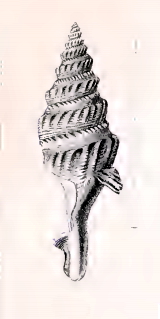

Side by side
| Comitas declivis | Comitas obliquicosta | |
|---|---|---|
| Scientific name | Comitas declivis A. W. B. Powell, 1931 | Comitas obliquicosta (E. von Martens, 1901) |
| Group | Molluscs | Molluscs |
| Class | Gastropoda Gastropod | Gastropoda Gastropod |
| Order | Neogastropoda | Neogastropoda |
| Family | Pseudomelatomidae | Pseudomelatomidae |
| Genus | Comitas | Comitas |
| Named in | 1931 | 1901 |
| Environment | marine | marine |
Rows where the two agree are shown in grey.
Checked facts
| Comitas declivis | Comitas obliquicosta | |
|---|---|---|
| Appearance |
| No checked fact yet |
| Size |
| No checked fact yet |
| Habitat |
| No checked fact yet |
| Distribution |
| No checked fact yet |
| Similar species |
| No checked fact yet |
| Other |
| No checked fact yet |
In brief
Comitas declivis
Comitas declivis is an extinct marine gastropod species belonging to the family Pseudomelatomidae. The species inhabited deep marine waters off the coast of New Zealand. Its moderately sized fusiform shell has a long straight canal, a relatively short spire and strong rounded axial knobs. Full profile
Compare something else
Page built on 29 November 2026 from the data on the two species pages, where every source is listed.
Cite this page
ScientificNames.org. (2026). Comitas declivis vs Comitas obliquicosta. Retrieved November 29, 2026, from https://scientificnames.org/compare/comitas-declivis-vs-comitas-obliquicosta
“Comitas declivis vs Comitas obliquicosta.” ScientificNames.org, 2026, scientificnames.org/compare/comitas-declivis-vs-comitas-obliquicosta. Accessed 29 Nov. 2026.
ScientificNames.org. “Comitas declivis vs Comitas obliquicosta.” Accessed November 29, 2026. https://scientificnames.org/compare/comitas-declivis-vs-comitas-obliquicosta.
@misc{scientificnames_comitas_declivis_vs_comitas_obliquicosta,
  author = {{ScientificNames.org}},
  title = {Comitas declivis vs Comitas obliquicosta},
  year = {2026},
  url = {https://scientificnames.org/compare/comitas-declivis-vs-comitas-obliquicosta},
  note = {Accessed 2026-11-29}
}