Comparison
Copaxa decrescens vs Copaxa sapatoza
Copaxa decrescens (Copaxa decrescens) and Copaxa sapatoza (Copaxa sapatoza) both belong to the genus Copaxa and part ways below it. Both are recorded in 1 country.
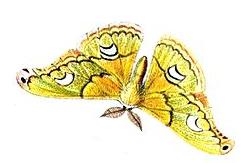
Copaxa sapatoza
John Obadiah Westwood (22 December 1805 – 2 January 1893), Public domain, via Wikimedia Commons

Side by side
| Copaxa decrescens | Copaxa sapatoza | |
|---|---|---|
| Scientific name | Copaxa decrescens Walker, 1855 | Copaxa sapatoza Westwood, 1854 |
| Group | Insects | Insects |
| Class | Insecta Insect | Insecta Insect |
| Order | Lepidoptera | Lepidoptera |
| Family | Saturniidae Royal Moths | Saturniidae Royal Moths |
| Genus | Copaxa | Copaxa |
| Named in | 1855 | 1854 |
| Countries on record | 11 countries | 1 country |
| GBIF occurrence records | 525 records | 54 records |
Rows where the two agree are shown in grey.
Where each is found
Both recorded in 1 country
Only Copaxa decrescens (10)
From Catalogue of Life checklists and GBIF occurrence records. A country missing from a list means no record is held, which is not proof of absence.
Checked facts
| Copaxa decrescens | Copaxa sapatoza | |
|---|---|---|
| Appearance |
|
|
| Habitat |
|
|
| Diet |
|
|
| Distribution |
|
|
| Other | No checked fact yet |
|
In brief
Copaxa decrescens
The species is widespread in Central and South America and occurs at low to medium altitudes. Adult males have a wingspan of 90–120 mm, while adult females have a wingspan of 105–125 mm. Full profile
Copaxa sapatoza
Copaxa sapatoza is a moth belonging to the family Saturniidae. It occurs in the north-east of the Andean Cordillera in Colombia. It was first described by John O. Westwood in 1854 under the scientific name Saturnia sapatoza. Full profile
Compare something else
Page built on 28 November 2026 from the data on the two species pages, where every source is listed.
Cite this page
ScientificNames.org. (2026). Copaxa decrescens vs Copaxa sapatoza. Retrieved November 28, 2026, from https://scientificnames.org/compare/copaxa-decrescens-vs-copaxa-sapatoza
“Copaxa decrescens vs Copaxa sapatoza.” ScientificNames.org, 2026, scientificnames.org/compare/copaxa-decrescens-vs-copaxa-sapatoza. Accessed 28 Nov. 2026.
ScientificNames.org. “Copaxa decrescens vs Copaxa sapatoza.” Accessed November 28, 2026. https://scientificnames.org/compare/copaxa-decrescens-vs-copaxa-sapatoza.
@misc{scientificnames_copaxa_decrescens_vs_copaxa_sapatoza,
  author = {{ScientificNames.org}},
  title = {Copaxa decrescens vs Copaxa sapatoza},
  year = {2026},
  url = {https://scientificnames.org/compare/copaxa-decrescens-vs-copaxa-sapatoza},
  note = {Accessed 2026-11-28}
}