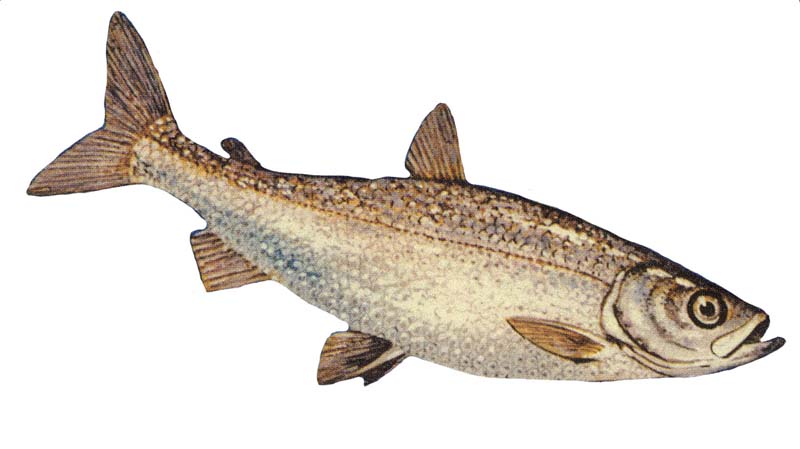
| Appearance | | |
|---|
| Size | No checked fact yet | |
|---|
| Habitat | - The bloater inhabits deep freshwater lakes in both pelagic and benthic regions. animaldiversity.org
- The bloater is most abundant at depths between 40 and 110 metres. animaldiversity.org
- The bloater has occasionally been recorded at depths of 10 metres and 180 metres. animaldiversity.org
- The bloater inhabits underwater slopes at depths between 30 and 198 metres. English Wikipedia
- The bloater tolerates water temperatures between 1.5 and 11.4 degrees Celsius. English Wikipedia
- Bloater larvae are frequently found near the bottom at depths of 90 to 110 metres in water no warmer than 4.7 degrees Celsius. animaldiversity.org
| |
|---|
| Diet | - The bloater primarily feeds on animals living on the lake bottom. English Wikipedia
- The bloater also consumes small drifting animals and zooplankton. English Wikipedia
- Recorded food items of the bloater include Mysis diluviana and Diporeia hoyi. English Wikipedia
- Stomach analyses have identified Mysis relicta and Pontoporeia affinis as important food items. animaldiversity.org
- Copepods, fish eggs, and fingernail clams have also been recorded in bloater stomachs. animaldiversity.org
- The bloater is classified as a carnivore that consumes eggs and non-insect arthropods. animaldiversity.org
| |
|---|
| Behaviour | - The bloater generally stays on or near the lake bottom during daylight. animaldiversity.org
- The bloater moves upward into the water column at night to feed. animaldiversity.org
- Nighttime densities of bloaters in the water column have reached 6.61 fish per cubic metre. animaldiversity.org
- The bloater's nocturnal migration patterns vary with water temperature, light levels, and individual size. animaldiversity.org
| |
|---|
| Reproduction | - Bloater spawning generally occurs in February and March, although reproduction can occur throughout the year. animaldiversity.org
- Bloater spawning occurs over various bottom types at depths between 36 and 90 metres. animaldiversity.org
- Female bloaters produce approximately 3,000 to 12,000 eggs, with larger females producing more eggs. animaldiversity.org
- Bloater eggs have an average diameter of 1.95 millimetres. animaldiversity.org
- The bloater provides no parental care. animaldiversity.org
- Bloater larvae remain in the larval state for approximately 24 days. animaldiversity.org
| - Ciscoes move into shallow coastal waters during winter to spawn. animaldiversity.org
- Ciscoes aggregate for spawning as water temperatures decrease in autumn. animaldiversity.org
- Male ciscoes generally arrive at spawning grounds before females. animaldiversity.org
- Ciscoes generally spawn from late November to mid-December in nearshore waters at approximately 5 to 6 degrees Celsius. animaldiversity.org
- Cisco spawning activity typically peaks when water temperatures fall below 4 degrees Celsius. animaldiversity.org
- Ciscoes deposit their eggs at night on rocky substrates. animaldiversity.org
- Cisco parents abandon their eggs after depositing them in nearshore environments. animaldiversity.org
- Cisco eggs develop slowly during winter and typically hatch in spring as surface ice begins to thaw. animaldiversity.org
- Cisco fry generally remain in shallow bays until approximately one month old. animaldiversity.org
- Ciscoes generally reach maturity between one and four years of age. animaldiversity.org
|
|---|
| Distribution | - The bloater is native to the Great Lakes except Lake Erie and to Lake Nipigon. English Wikipedia
| - The cisco is distributed throughout Canada and the northern United States. animaldiversity.org
- The cisco's north-south range extends from the upper Mississippi drainage to the Northwest Territories and Alberta. animaldiversity.org
|
|---|
| Conservation | - The bloater is classified as Vulnerable to global extinction by the IUCN. English Wikipedia
- Bloater populations have declined in Lakes Superior and Huron. English Wikipedia
- Predation by alewives is identified as the principal cause of bloater population declines, with sea lamprey predation and pollution also contributing. English Wikipedia
- The Lake Ontario bloater reintroduction program involves multiple North American fishery agencies. English Wikipedia
- The Lake Ontario restoration program aims to provide an alternative food source for top predators and improve ecological function. pubs.usgs.gov
| - Cisco abundance in the North American Great Lakes has declined substantially from nineteenth-century levels. English Wikipedia
- The decline in Great Lakes cisco populations is attributed partly to competition and predation from introduced species. English Wikipedia
- Cisco populations experienced severe declines between 1930 and 1960 because of overexploitation, pollution and competition from non-native species. animaldiversity.org
- Eutrophication is identified as the greatest current threat to cisco populations in the Great Lakes. animaldiversity.org
- Ciscoes are particularly sensitive to changes in water temperature and dissolved oxygen levels. English Wikipedia
|
|---|
| Uses | - Bloater catches are commercially processed primarily by smoking for human consumption. animaldiversity.org
- The bloater is an important food source for larger salmonid fishes. animaldiversity.org
- The bloater was historically considered a suitable panfish but too small for commercial marketing. English Wikipedia
| |
|---|
| Similar species | - The bloater closely resembles the kiyi but can be distinguished by its lighter upper lip and smaller eye. English Wikipedia
- The bloater is closely related to the cisco or lake herring and the shortjaw cisco. English Wikipedia
| No checked fact yet |
|---|
| Name origin | - The common name bloater refers to the swollen appearance caused by expansion of the gas bladder after the fish is brought up from deep water. English Wikipedia
| No checked fact yet |
|---|