Comparison

Bloater vs European Whitefish

Bloater (Coregonus hoyi) and European Whitefish (Coregonus lavaretus) both belong to the genus Coregonus (whitefishes) and part ways below it.
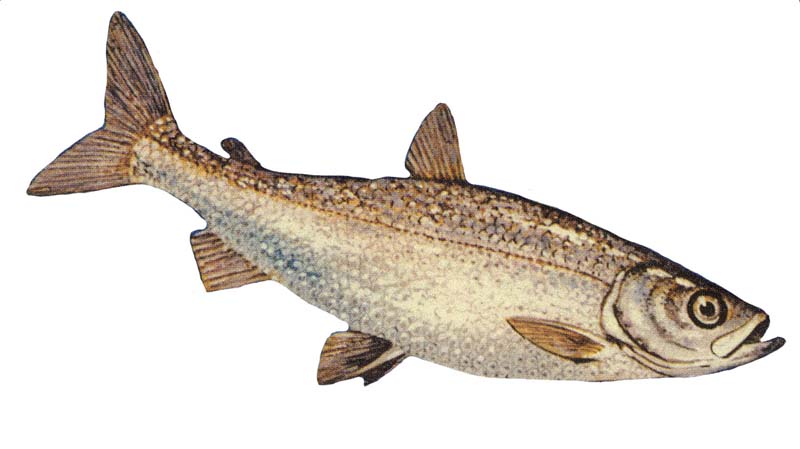
Bloater

Bloater

Coregonus hoyi

Unknown author, CC BY-SA 3.0, via Wikimedia Commons

European Whitefish

European Whitefish

Coregonus lavaretus

see Iduns kokbok, Public domain, via Wikimedia Commons

Side by side

BloaterEuropean Whitefish
Scientific nameCoregonus hoyi (Milner, 1874)Coregonus lavaretus (Linnaeus, 1758)
English nameBloaterEuropean Whitefish
GroupFishesFishes
ClassTeleostei TeleostTeleostei Teleost
OrderSalmoniformesSalmoniformes
FamilySalmonidae TroutsSalmonidae Trouts
GenusCoregonus WhitefishesCoregonus Whitefishes
Named in18741758
Red List categoryLeast ConcernVulnerable
Environmentfreshwaterbrackish, freshwater
Countries on record2 countries17 countries
GBIF occurrence records16,864 records53,362 records

Rows where the two agree are shown in grey.

Where each is found

Only Bloater (2)

Only European Whitefish (17)

From Catalogue of Life checklists and GBIF occurrence records. A country missing from a list means no record is held, which is not proof of absence.

Checked facts

BloaterEuropean Whitefish
Appearance
SizeNo checked fact yet
Habitat
  • The bloater inhabits deep freshwater lakes in both pelagic and benthic regions. animaldiversity.org
  • The bloater is most abundant at depths between 40 and 110 metres. animaldiversity.org
  • The bloater has occasionally been recorded at depths of 10 metres and 180 metres. animaldiversity.org
  • The bloater inhabits underwater slopes at depths between 30 and 198 metres. English Wikipedia
  • The bloater tolerates water temperatures between 1.5 and 11.4 degrees Celsius. English Wikipedia
  • Bloater larvae are frequently found near the bottom at depths of 90 to 110 metres in water no warmer than 4.7 degrees Celsius. animaldiversity.org
No checked fact yet
Diet
  • The bloater primarily feeds on animals living on the lake bottom. English Wikipedia
  • The bloater also consumes small drifting animals and zooplankton. English Wikipedia
  • Recorded food items of the bloater include Mysis diluviana and Diporeia hoyi. English Wikipedia
  • Stomach analyses have identified Mysis relicta and Pontoporeia affinis as important food items. animaldiversity.org
  • Copepods, fish eggs, and fingernail clams have also been recorded in bloater stomachs. animaldiversity.org
  • The bloater is classified as a carnivore that consumes eggs and non-insect arthropods. animaldiversity.org
  • European whitefish primarily consume bottom-dwelling invertebrates and zooplankton. English Wikipedia
  • Larger European whitefish also eat insects from the water surface and fish fry. English Wikipedia
Behaviour
  • The bloater generally stays on or near the lake bottom during daylight. animaldiversity.org
  • The bloater moves upward into the water column at night to feed. animaldiversity.org
  • Nighttime densities of bloaters in the water column have reached 6.61 fish per cubic metre. animaldiversity.org
  • The bloater's nocturnal migration patterns vary with water temperature, light levels, and individual size. animaldiversity.org
  • Some European whitefish populations migrate upriver to spawn, while others remain in lakes or the sea during breeding. English Wikipedia
Reproduction
  • Bloater spawning generally occurs in February and March, although reproduction can occur throughout the year. animaldiversity.org
  • Bloater spawning occurs over various bottom types at depths between 36 and 90 metres. animaldiversity.org
  • Female bloaters produce approximately 3,000 to 12,000 eggs, with larger females producing more eggs. animaldiversity.org
  • Bloater eggs have an average diameter of 1.95 millimetres. animaldiversity.org
  • The bloater provides no parental care. animaldiversity.org
  • Bloater larvae remain in the larval state for approximately 24 days. animaldiversity.org
  • European whitefish generally breed in autumn, between September and November. English Wikipedia
  • The timing of European whitefish breeding depends largely on water temperature. English Wikipedia
  • Different European whitefish populations inhabiting the same water bodies may spawn at different times. English Wikipedia
Distribution
  • The bloater is native to the Great Lakes except Lake Erie and to Lake Nipigon. English Wikipedia
No checked fact yet
Conservation
  • The bloater is classified as Vulnerable to global extinction by the IUCN. English Wikipedia
  • Bloater populations have declined in Lakes Superior and Huron. English Wikipedia
  • Predation by alewives is identified as the principal cause of bloater population declines, with sea lamprey predation and pollution also contributing. English Wikipedia
  • The Lake Ontario bloater reintroduction program involves multiple North American fishery agencies. English Wikipedia
  • The Lake Ontario restoration program aims to provide an alternative food source for top predators and improve ecological function. pubs.usgs.gov
No checked fact yet
Uses
  • Bloater catches are commercially processed primarily by smoking for human consumption. animaldiversity.org
  • The bloater is an important food source for larger salmonid fishes. animaldiversity.org
  • The bloater was historically considered a suitable panfish but too small for commercial marketing. English Wikipedia
No checked fact yet
Similar species
  • The bloater closely resembles the kiyi but can be distinguished by its lighter upper lip and smaller eye. English Wikipedia
  • The bloater is closely related to the cisco or lake herring and the shortjaw cisco. English Wikipedia
No checked fact yet
Name origin
  • The common name bloater refers to the swollen appearance caused by expansion of the gas bladder after the fish is brought up from deep water. English Wikipedia
No checked fact yet

In brief

Bloater

The bloater inhabits deep freshwater lakes in the Great Lakes except Lake Erie and in Lake Nipigon. The bloater has a silvery body with pink and purple iridescence, a greenish upper surface, and a whitish belly. Full profile

European Whitefish

European whitefish generally have a tapered body, a short snout, silvery flanks, and a white belly. Full profile

Compare something else

Page built on 29 November 2026 from the data on the two species pages, where every source is listed.

Cite this page

ScientificNames.org. (2026). Bloater vs European Whitefish. Retrieved November 29, 2026, from https://scientificnames.org/compare/bloater-vs-european-whitefish