Comparison

Himalayan Hazel vs Beaked Hazelnut

Himalayan Hazel (Corylus ferox) and Beaked Hazelnut (Corylus cornuta) both belong to the genus Corylus (hazel) and part ways below it.

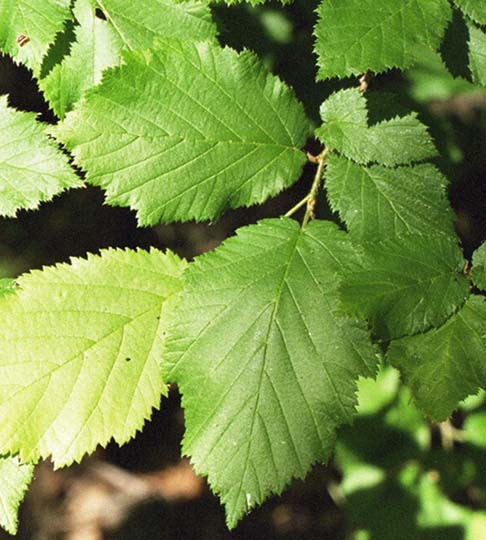
Himalayan Hazel

Himalayan Hazel

Corylus ferox

Natacha Frachon, CC BY 3.0, via Wikimedia Commons

Beaked Hazelnut

Beaked Hazelnut

Corylus cornuta

Unknown author, Public domain, via Wikimedia Commons

Side by side

Himalayan HazelBeaked Hazelnut
Scientific nameCorylus ferox Wall.Corylus cornuta Marshall
English nameHimalayan HazelBeaked Hazelnut
GroupFlowering plantsFlowering plants
ClassMagnoliopsidaMagnoliopsida
OrderFagalesFagales
FamilyBetulaceae Birch FamilyBetulaceae Birch Family
GenusCorylus HazelCorylus Hazel
Red List categoryLeast ConcernLeast Concern
Countries on record7 countries3 countries
GBIF occurrence records2,333 records27,733 records

Rows where the two agree are shown in grey.

Where each is found

Only Himalayan Hazel (7)

Only Beaked Hazelnut (3)

From Catalogue of Life checklists and GBIF occurrence records. A country missing from a list means no record is held, which is not proof of absence.

Checked facts

Himalayan HazelBeaked Hazelnut
AppearanceNo checked fact yet
  • Corylus cornuta is a deciduous shrub that typically grows with several trunks. English Wikipedia
  • Its leaves are alternately arranged, rounded oval with pointed tips, and have irregularly double-toothed margins. English Wikipedia
  • The undersides of its leaves are soft and hairy. English Wikipedia
  • Its male flowers grow in firm catkins arranged in clusters of one to three on twigs from the previous year. English Wikipedia
  • The male catkins become elongated and pendulous in spring. English Wikipedia
  • The husk bears tiny filaments that can penetrate and irritate contacting skin. English Wikipedia
  • Its nuts are spherical, small, and enclosed in hard shells. English Wikipedia
SizeNo checked fact yet
HabitatNo checked fact yet
  • The species is more common in forests with relatively open canopies than in forests with dense canopies. English Wikipedia
  • The species does not tolerate completely open habitats that become hot and dry. English Wikipedia
  • The eastern variety occurs at elevations of 100–500 metres across most of its range, reaching 1,000 metres in Alberta. English Wikipedia
  • The western variety occurs below 2,100 metres in California and below 800 metres in British Columbia. English Wikipedia
DietNo checked fact yet
  • Deer, moose, and livestock browse the foliage of the eastern variety. English Wikipedia
  • Ruffed grouse feed on the species' catkins and young buds. English Wikipedia
  • Red squirrels and least chipmunks are important rodents that cache the species' seeds. fs.usda.gov
BehaviourNo checked fact yet
  • The species can tolerate some shade but does not thrive in completely open, hot, dry areas. English Wikipedia
  • Above-ground growth is killed by fire, but the shrub can resprout from its root crown or rhizomes. English Wikipedia
  • Rodents generally disperse the species' nuts no farther than approximately 90 metres. fs.usda.gov
  • Squirrels generally distribute the nuts no farther than approximately 90 metres. English Wikipedia
ReproductionNo checked fact yet
  • Single female flowers develop in early spring. English Wikipedia
  • The male flowers develop on twigs produced during the previous year. English Wikipedia
  • Some nuts buried by squirrels in soil or leaves have an increased chance of germination. English Wikipedia
DistributionNo checked fact yet
  • The eastern variety occurs from southern Canada south to Georgia. English Wikipedia
  • The western variety occurs along the west coast from Alaska to California. English Wikipedia
  • The species has two geographically distinct varieties, an eastern variety and a western variety. English Wikipedia
ConservationNo checked fact yet
  • The species is threatened in boreal regions by the invasive Siberian peashrub. English Wikipedia
UsesNo checked fact yet
  • The Gitxsan, Tsimshian, and Nisga'a peoples have cultivated the species for at least 7,000 years. English Wikipedia
  • Native American peoples used the sprouts to make baskets, fish traps, and baby carriers. English Wikipedia
  • The nuts were eaten and traded among Indigenous groups. English Wikipedia
  • The species was used medicinally as an emetic, deworming agent, astringent, and teething aid. English Wikipedia
  • The species is used in restoration plantings to increase biodiversity and improve wildlife food sources. English Wikipedia
  • The species is used in restoration plantings to reduce laminated root rot in nearby Douglas-fir and Sitka spruce. English Wikipedia
Similar speciesNo checked fact yet
  • The western variety is considered to have low palatability for ungulates, unlike the eastern variety. English Wikipedia
Name originNo checked fact yet
  • The common name beaked hazelnut refers to the beak-like tubular extension of the fruit husk. English Wikipedia

In brief

Beaked Hazelnut

The eastern variety occurs from southern Canada south to Georgia, while the western variety occurs along the west coast from Alaska to California. The species has spherical nuts enclosed in hard shells and a fruit husk with a beak-like tubular extension. Full profile

Compare something else

Page built on 26 November 2026 from the data on the two species pages, where every source is listed.

Cite this page

ScientificNames.org. (2026). Himalayan Hazel vs Beaked Hazelnut. Retrieved November 26, 2026, from https://scientificnames.org/compare/himalayan-hazel-vs-beaked-hazelnut