Comparison

Cynosa agedabiae vs Wetland Giant Wolf Spider

Cynosa agedabiae (Cynosa agedabiae) and Wetland Giant Wolf Spider (Tigrosa helluo) both belong to the family Lycosidae (wolf spider) and part ways below it.
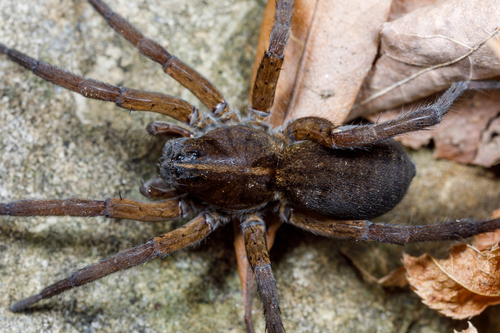
Wetland Giant Wolf Spider

Wetland Giant Wolf Spider

Tigrosa helluo

(c) Meghan Cassidy, some rights reserved (CC BY-SA), uploaded by Meghan Cassidy, CC BY-SA 4.0, via iNaturalist

Side by side

Cynosa agedabiaeWetland Giant Wolf Spider
Scientific nameCynosa agedabiae (Caporiacco, 1933)Tigrosa helluo (Walckenaer, 1837)
English nameNot recordedWetland Giant Wolf Spider
GroupSpiders and other arachnidsSpiders and other arachnids
ClassArachnida ArachnidArachnida Arachnid
OrderAraneae SpiderAraneae Spider
FamilyLycosidae Wolf SpiderLycosidae Wolf Spider
GenusCynosaTigrosa
Named in19331837
Countries on record1 country3 countries
GBIF occurrence recordsNot recorded10,585 records

Rows where the two agree are shown in grey.

Where each is found

Only Cynosa agedabiae (1)

Only Wetland Giant Wolf Spider (3)

From Catalogue of Life checklists and GBIF occurrence records. A country missing from a list means no record is held, which is not proof of absence.

Checked facts

Cynosa agedabiaeWetland Giant Wolf Spider
AppearanceNo checked fact yet
  • The species has a brown carapace with a distinctive yellow stripe extending from the anterior eyes down the cephalothorax. English Wikipedia
  • The underside of its abdomen bears several distinct black spots. English Wikipedia
  • Males have yellow legs without distinct markings, whereas females have reddish-brown legs without bands or additional markings. English Wikipedia
  • Faint yellow stripes extend posteriorly from the posterior median eyes. English Wikipedia
SizeNo checked fact yet
  • The average body length of this species is approximately 17 mm. English Wikipedia
  • Mature females typically weigh more than 300 mg and have carapace widths of approximately 6.5 mm. English Wikipedia
  • Males typically weigh more than 200 mg and have carapace widths of approximately 4.5 mm. English Wikipedia
  • Females are larger than males in this species. English Wikipedia
HabitatNo checked fact yet
  • The species inhabits woods, marshes, fields, and riparian areas. English Wikipedia
  • The species generally prefers wetter environments over dry habitats. English Wikipedia
  • In Florida and Mississippi, the species is most frequently found in wet habitats such as marshes and lakes. English Wikipedia
  • Females construct nests beneath stones or boards in fields and woods. English Wikipedia
  • Female nests consist of silk-lined burrows. English Wikipedia
DietNo checked fact yet
  • The species feeds on insects including crickets, fly grubs, cockroaches, mealworms, and beetles. English Wikipedia
  • The species can prey on smaller spiders, including Pardosa milvina. English Wikipedia
  • Individuals receiving a varied diet have higher survivorship and reach sexual maturity earlier than individuals receiving a single-prey-type diet. English Wikipedia
BehaviourNo checked fact yet
  • Individuals are solitary and generally hunt alone except when mating. English Wikipedia
  • The species is usually active at night and hunts during nighttime. English Wikipedia
  • The species does not construct webs. English Wikipedia
  • Females construct burrows beneath rocks or boards. English Wikipedia
  • Females wait for prey near their silk burrows, while males generally roam in search of feeding opportunities. English Wikipedia
  • Individuals alternate between several different foraging locations. English Wikipedia
  • Females may engage in sexual cannibalism before or after copulation. English Wikipedia
  • Females are more likely to cannibalize males when they are hungry. English Wikipedia
  • Copulation typically lasts approximately eight minutes. English Wikipedia
  • The species is generally not aggressive toward humans and does not normally attack unless provoked. English Wikipedia
ReproductionNo checked fact yet
  • Mating usually takes place in May or June. English Wikipedia
  • Egg sacs are produced during May and July and measure approximately 8–12 mm in diameter. English Wikipedia
  • Individual eggs are tan or yellow and measure approximately 1–2 mm in diameter. English Wikipedia
  • Females carry their egg sacs on their backs until the eggs hatch. English Wikipedia
  • Females continue carrying hatchlings on their backs until they are sufficiently mature to hunt independently. English Wikipedia
  • Male maturation occurs between May and September. English Wikipedia
  • Female maturation can occur at any time of the year. English Wikipedia
  • Individuals undergo periodic moulting as they mature. English Wikipedia
Similar speciesNo checked fact yet
  • Tigrosa helluo is frequently mistaken for the nursery web spider Pisaurina mira because of their physical resemblance. English Wikipedia
  • Tigrosa helluo is smaller than its close relative Tigrosa aspersa. English Wikipedia
Name originNo checked fact yet
  • The genus name Tigrosa refers to the fierce, tiger-like appearance or nature of these spiders. English Wikipedia
OtherNo checked fact yet
  • The species was formerly classified under the genus Hogna as Hogna helluo. English Wikipedia
  • Its venomous bite generally causes only minor pain and swelling in humans. English Wikipedia

In brief

Wetland Giant Wolf Spider

Tigrosa helluo inhabits woods, marshes, fields, and riparian areas, generally preferring wetter environments. It is distinguished by a brown carapace with a yellow stripe extending from the anterior eyes down the cephalothorax and distinct black spots on the underside of its abdomen. Full profile

Compare something else

Page built on 26 November 2026 from the data on the two species pages, where every source is listed.

Cite this page

ScientificNames.org. (2026). Cynosa agedabiae vs Wetland Giant Wolf Spider. Retrieved November 26, 2026, from https://scientificnames.org/compare/cynosa-agedabiae-vs-wetland-giant-wolf-spider