Comparison
Drosera broomensis vs Drosera capensis
Drosera broomensis (Drosera broomensis) and Drosera capensis (Drosera capensis) both belong to the genus Drosera (sundew) and part ways below it.

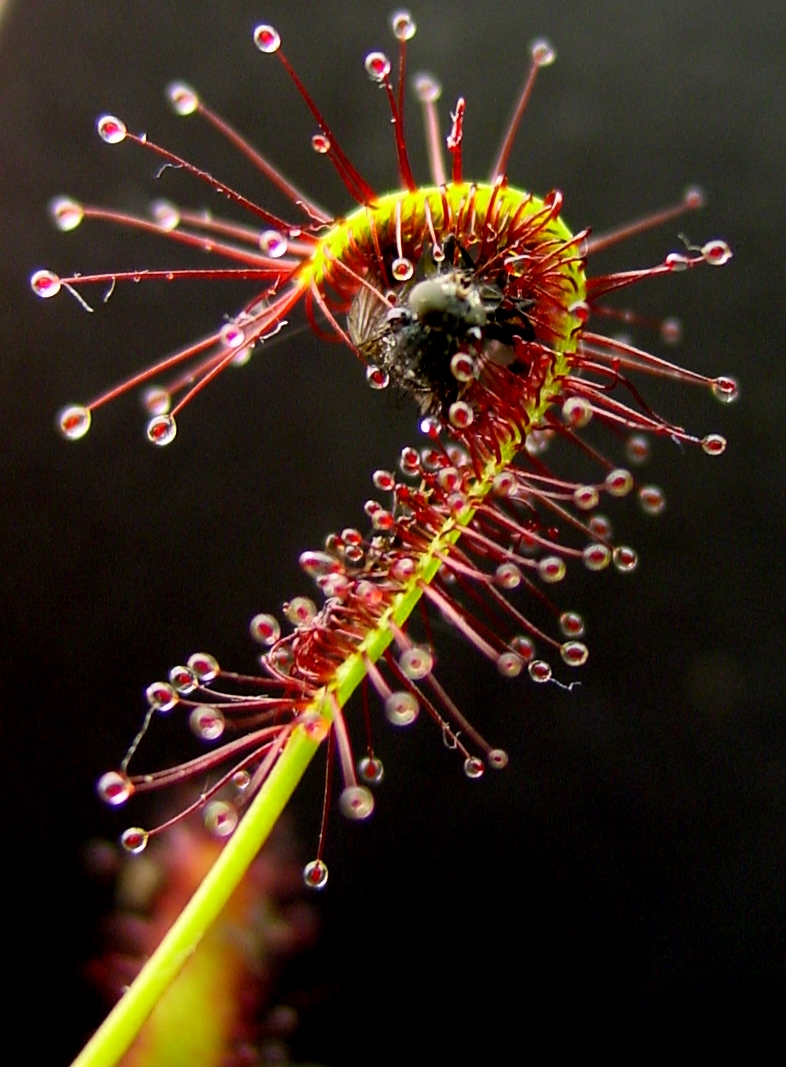


Side by side
| Drosera broomensis | Drosera capensis | |
|---|---|---|
| Scientific name | Drosera broomensis Lowrie | Drosera capensis L. |
| Group | Flowering plants | Flowering plants |
| Class | Magnoliopsida | Magnoliopsida |
| Order | Caryophyllales | Caryophyllales |
| Family | Droseraceae Sundew Family | Droseraceae Sundew Family |
| Genus | Drosera Sundew | Drosera Sundew |
| Red List category | Least Concern | Not recorded |
| Countries on record | 1 country | 3 countries |
| GBIF occurrence records | 70 records | 1,364 records |
Rows where the two agree are shown in grey.
Where each is found
Only Drosera broomensis (1)
Only Drosera capensis (3)
From Catalogue of Life checklists and GBIF occurrence records. A country missing from a list means no record is held, which is not proof of absence.
Checked facts
| Drosera broomensis | Drosera capensis | |
|---|---|---|
| Appearance |
|
|
| Size | No checked fact yet |
|
| Habitat |
|
|
| Diet |
|
|
| Behaviour | No checked fact yet |
|
| Reproduction |
|
|
| Lifespan |
| No checked fact yet |
| Distribution |
| No checked fact yet |
| Conservation | No checked fact yet |
|
| Uses | No checked fact yet |
|
| Similar species |
| No checked fact yet |
| Other | No checked fact yet |
|
In brief
Drosera broomensis
Drosera broomensis Lowrie is a perennial flowering plant in the family Droseraceae and is carnivorous. It is endemic to Western Australia and occurs north and northeast of Broome in the Kimberley region. It has leaves arranged in a small, leafy rosette and produces white flowers. Full profile
Drosera capensis
Drosera capensis L. is a perennial flowering herb in the family Droseraceae, order Caryophyllales and class Magnoliopsida. It grows in permanently wet, nutrient-poor habitats, including wet seeps, creek margins and coastal wetlands. It captures and digests insects and other arthropods using leaves with stalked glands that produce sticky mucilage. Full profile
Compare something else
Page built on 27 November 2026 from the data on the two species pages, where every source is listed.
Cite this page
ScientificNames.org. (2026). Drosera broomensis vs Drosera capensis. Retrieved November 27, 2026, from https://scientificnames.org/compare/drosera-broomensis-vs-drosera-capensis
“Drosera broomensis vs Drosera capensis.” ScientificNames.org, 2026, scientificnames.org/compare/drosera-broomensis-vs-drosera-capensis. Accessed 27 Nov. 2026.
ScientificNames.org. “Drosera broomensis vs Drosera capensis.” Accessed November 27, 2026. https://scientificnames.org/compare/drosera-broomensis-vs-drosera-capensis.
@misc{scientificnames_drosera_broomensis_vs_drosera_capensis,
  author = {{ScientificNames.org}},
  title = {Drosera broomensis vs Drosera capensis},
  year = {2026},
  url = {https://scientificnames.org/compare/drosera-broomensis-vs-drosera-capensis},
  note = {Accessed 2026-11-27}
}