Comparison
Duplexissus punctatulus vs Issus coleoptratus
Duplexissus punctatulus (Duplexissus punctatulus) and Issus coleoptratus (Issus coleoptratus) both belong to the subfamily Issinae and part ways below it.
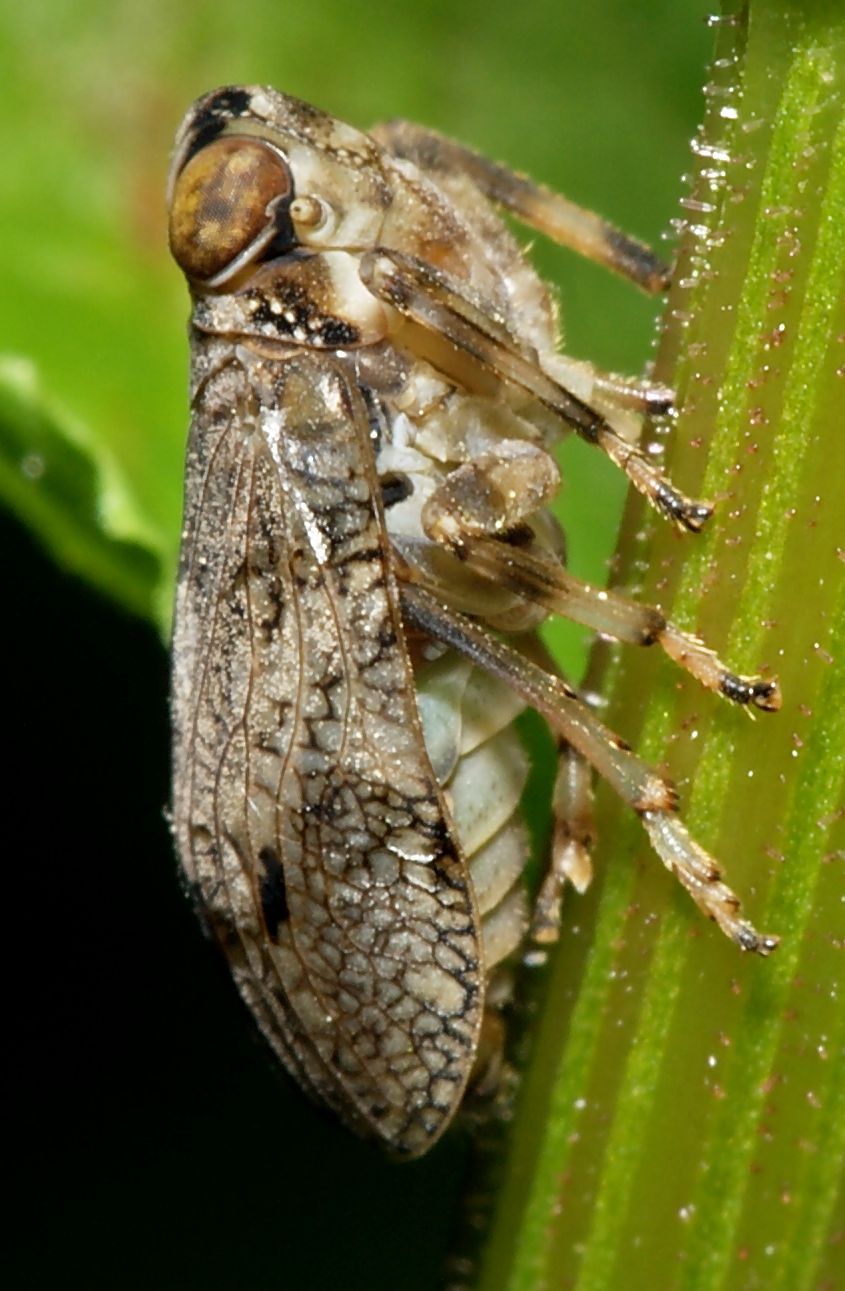

Side by side
| Duplexissus punctatulus | Issus coleoptratus | |
|---|---|---|
| Scientific name | Duplexissus punctatulus Wang, Zhang & Bourgoin, 2019 | Issus coleoptratus (Fabricius, 1781) |
| Group | Insects | Insects |
| Class | Insecta Insect | Insecta Insect |
| Order | Hemiptera | Hemiptera |
| Family | Issidae Issid Planthoppers | Issidae Issid Planthoppers |
| Genus | Duplexissus | Issus |
| Named in | 2019 | 1781 |
| Countries on record | 1 country | 32 countries |
| GBIF occurrence records | 3 records | 12,072 records |
Rows where the two agree are shown in grey.
Where each is found
Only Duplexissus punctatulus (1)
Only Issus coleoptratus (32)
- Algeria
- Austria
- Azerbaijan
- Belgium
- Bulgaria
- Croatia
- Czechia
- Denmark
- France
- Germany
- Greece
- Hungary
- Ireland
- Italy
- Jersey
- Latvia
- Luxembourg
- Moldova
- Poland
- Portugal
- Romania
- Russia
- Saint Helena
- Serbia
- Slovakia
- Slovenia
- Spain
- Sweden
- Switzerland
- The Netherlands
- Ukraine
- United Kingdom
From Catalogue of Life checklists and GBIF occurrence records. A country missing from a list means no record is held, which is not proof of absence.
Checked facts
| Duplexissus punctatulus | Issus coleoptratus | |
|---|---|---|
| Appearance | No checked fact yet |
|
| Size | No checked fact yet |
|
| Habitat | No checked fact yet |
|
| Diet | No checked fact yet |
|
| Behaviour | No checked fact yet |
|
| Reproduction | No checked fact yet |
|
| Similar species | No checked fact yet |
|
| Other | No checked fact yet |
|
In brief
Issus coleoptratus
Issus coleoptratus inhabits shrubbery, woody plant foliage, deciduous trees, and mixed forests, including forest edges and parks. It is unable to fly and has nymphs with gear-like structures that synchronize hind-leg movements during jumping. Full profile
Compare something else
Page built on 26 November 2026 from the data on the two species pages, where every source is listed.
Cite this page
ScientificNames.org. (2026). Duplexissus punctatulus vs Issus coleoptratus. Retrieved November 26, 2026, from https://scientificnames.org/compare/duplexissus-punctatulus-vs-issus-coleoptratus
“Duplexissus punctatulus vs Issus coleoptratus.” ScientificNames.org, 2026, scientificnames.org/compare/duplexissus-punctatulus-vs-issus-coleoptratus. Accessed 26 Nov. 2026.
ScientificNames.org. “Duplexissus punctatulus vs Issus coleoptratus.” Accessed November 26, 2026. https://scientificnames.org/compare/duplexissus-punctatulus-vs-issus-coleoptratus.
@misc{scientificnames_duplexissus_punctatulus_vs_issus_coleoptratus,
  author = {{ScientificNames.org}},
  title = {Duplexissus punctatulus vs Issus coleoptratus},
  year = {2026},
  url = {https://scientificnames.org/compare/duplexissus-punctatulus-vs-issus-coleoptratus},
  note = {Accessed 2026-11-26}
}