Comparison

Hairy Sea-mat vs Neptune Grass Sea Mat

Hairy Sea-mat (Electra pilosa) and Neptune Grass Sea Mat (Electra posidoniae) both belong to the genus Electra and part ways below it. Both are recorded in 4 countries.
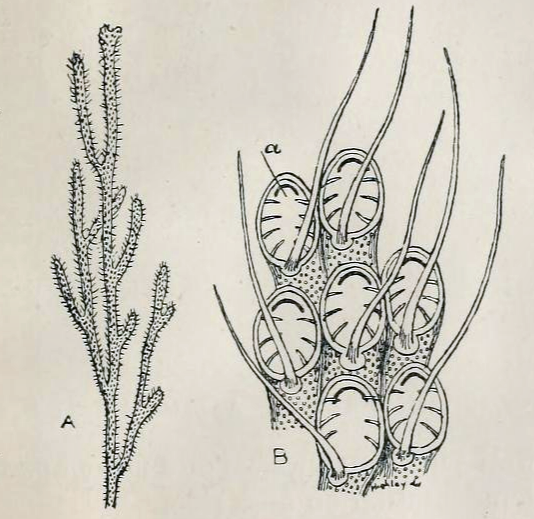
Hairy Sea-mat

Hairy Sea-mat

Electra pilosa

British Museum, Public domain, via Wikimedia Commons

Neptune Grass Sea Mat

Neptune Grass Sea Mat

Electra posidoniae

Tigerente, CC BY-SA 3.0, via Wikimedia Commons

Side by side

Hairy Sea-matNeptune Grass Sea Mat
Scientific nameElectra pilosa (Linnaeus, 1761)Electra posidoniae Gautier, 1954
English nameHairy Sea-matNeptune Grass Sea Mat
GroupOther invertebratesOther invertebrates
ClassGymnolaemataGymnolaemata
OrderCheilostomatidaCheilostomatida
FamilyElectridaeElectridae
GenusElectraElectra
Named in17611954
Environmentmarinemarine
Countries on record21 countries6 countries
GBIF occurrence records28,906 records1,470 records

Rows where the two agree are shown in grey.

Where each is found

Both recorded in 4 countries

Only Hairy Sea-mat (17)

Only Neptune Grass Sea Mat (2)

From Catalogue of Life checklists and GBIF occurrence records. A country missing from a list means no record is held, which is not proof of absence.

Checked facts

Hairy Sea-matNeptune Grass Sea Mat
Appearance
  • Colonies form broad mats or star-shaped patches on large algal fronds. English Wikipedia
  • Colonies can grow as small patches or tufts on shells and stones. English Wikipedia
  • Colonies can form cylindrical encrustations around the fronds of red algae. marlin.ac.uk
  • The zooids are closely packed and cylindrical. English Wikipedia
  • Each zooid has a mineralized exoskeleton with a transparent membranous oval window. English Wikipedia
  • Zooids are generally arranged in a quincunx pattern, with four surrounding a central zooid. marlin.ac.uk
  • The calcified front of each zooid is translucent and perforated by large pores. marlin.ac.uk
  • Electra posidoniae forms white encrusting colonies on seagrass leaves. English Wikipedia
  • Its colonies consist of irregularly branching ribbons made of a single layer of zooids arranged in parallel rows. English Wikipedia
  • The colonies have a flexible structure because they are poorly calcified. English Wikipedia
Size
Habitat
  • The species grows on large brown algae including Laminaria and Fucus serratus. English Wikipedia
  • The species can grow around the fronds of the red alga Mastocarpus stellatus. English Wikipedia
  • Colonies occur on shells and stones. English Wikipedia
  • The species occurs from the intertidal zone of sheltered rocky shores to depths of approximately 50 metres. English Wikipedia
  • The species occurs in open coasts, straits, sounds, sea lochs, rias, estuaries and enclosed coastal embayments. marlin.ac.uk
  • The species grows primarily on Neptune grass (Posidonia oceanica) and occasionally on eelgrass (Zostera marina). English Wikipedia
  • Its seagrass habitats grow in soft sediment at depths reaching approximately 35 metres. English Wikipedia
Diet
  • The species filter-feeds by using its lophophore to sieve particles from the water. English Wikipedia
  • Its probable food includes flagellates, phytoplankton, bacteria, algal debris and algal spores. English Wikipedia
  • The species feeds on diatoms and organic particles collected from the surrounding water by its lophophores. English Wikipedia
Behaviour
  • The median proximal spine can elongate in response to overgrowth by other bryozoan colonies. marlin.ac.uk
  • The elongated spine may protect the feeding polypide from physical or mechanical disturbance. marlin.ac.uk
  • Zooid growth rates vary with water flow, temperature, food supply and competition from other bryozoan colonies. English Wikipedia
  • Its flexible colonies bend as their supporting seagrass leaves move in the water. English Wikipedia
  • Its life cycle is synchronised with that of its seagrass host. English Wikipedia
  • Very few colonies remain on Posidonia oceanica during winter. English Wikipedia
  • Bryozoan colonies decrease by late summer as phytoplankton availability declines and macroalgae compete for space. English Wikipedia
Reproduction
  • Fertilised embryos are released into the water column and develop into planktonic cyphonautes larvae. marlin.ac.uk
  • The larvae are free-swimming and are not brooded. marlin.ac.uk
  • In Britain, breeding takes place during August and September. English Wikipedia
  • Cyphonautes larvae are present in the water column throughout the year. English Wikipedia
  • Larval settlement occurs between April and November, with peaks in May–June and July–August. English Wikipedia
  • Larvae probably use olfactory cues to select settlement locations. English Wikipedia
  • A new colony begins when a larva settles on a suitable surface and metamorphoses into an ancestrula. English Wikipedia
  • Colonies grow through asexual budding of daughter zooids. English Wikipedia
  • Colonies grow by producing new zooids through budding. English Wikipedia
  • Colonies contain specialised reproductive zooids with male and female units, and occasionally hermaphrodites. English Wikipedia
  • Embryos develop temporarily inside membranous pouches within zooids before entering a planktonic larval stage. English Wikipedia
  • The planktonic larval stage can last several months and allows widespread dispersal. English Wikipedia
  • Recruitment occurs in early spring when the seagrass begins producing new foliage. English Wikipedia
DistributionNo checked fact yet
Other
  • The species lacks ooecia, avicularia and vibracula. marlin.ac.uk
  • Colonies growing on erect substrates can develop narrow, bilaminar fronds after exhausting the available substrate. marlin.ac.uk
  • The nudibranch Polycera quadrilineata feeds on Electra posidoniae and other bryozoans. English Wikipedia

In brief

Hairy Sea-mat

Electra pilosa grows on large brown algae, red algae, shells and stones, from the intertidal zone to depths of approximately 50 metres. Full profile

Neptune Grass Sea Mat

Electra posidoniae lives primarily on Neptune grass (Posidonia oceanica) and occasionally on eelgrass (Zostera marina) in the Mediterranean Sea. It forms flexible, white encrusting colonies of irregularly branching ribbons that can grow up to 10 cm long. Full profile

Compare something else

Page built on 28 November 2026 from the data on the two species pages, where every source is listed.

Cite this page

ScientificNames.org. (2026). Hairy Sea-mat vs Neptune Grass Sea Mat. Retrieved November 28, 2026, from https://scientificnames.org/compare/hairy-sea-mat-vs-neptune-grass-sea-mat