Comparison

Flanged Mallee vs Mountain Ash

Flanged Mallee (Eucalyptus armillata) and Mountain Ash (Eucalyptus regnans) both belong to the genus Eucalyptus (gum) and part ways below it. Both are recorded in 1 country.

Flanged Mallee

Flanged Mallee

Eucalyptus armillata

Russell Cumming, CC BY 3.0 au, via Wikimedia Commons

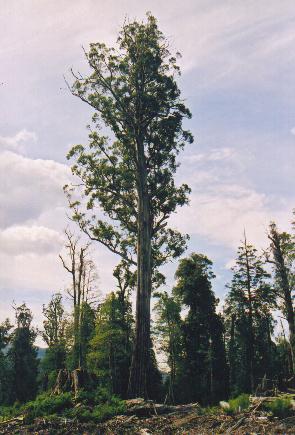
Mountain Ash

Mountain Ash

Eucalyptus regnans

TTaylor, CC BY 2.5, via Wikimedia Commons

Side by side

Flanged MalleeMountain Ash
Scientific nameEucalyptus armillata D.Nicolle & M.E.FrenchEucalyptus regnans F.Muell.
English nameFlanged MalleeMountain Ash
GroupFlowering plantsFlowering plants
ClassMagnoliopsidaMagnoliopsida
OrderMyrtalesMyrtales
FamilyMyrtaceae Myrtle FamilyMyrtaceae Myrtle Family
GenusEucalyptus GumEucalyptus Gum
Red List categoryVulnerableLeast Concern
Countries on record1 country7 countries
GBIF occurrence records240 records9,124 records

Rows where the two agree are shown in grey.

Where each is found

Both recorded in 1 country

Only Mountain Ash (6)

From Catalogue of Life checklists and GBIF occurrence records. A country missing from a list means no record is held, which is not proof of absence.

Checked facts

Flanged MalleeMountain Ash
Appearance
  • The species is a mallee with smooth bark that changes from pale grey or white to pink or reddish purple. English Wikipedia
  • Young plants and coppice regrowth have dull green, narrow lance-shaped leaves. English Wikipedia
  • Adult leaves are glossy and narrow lance-shaped. English Wikipedia
  • The flower buds hang downwards and generally occur in groups of three. English Wikipedia
  • Mature flower buds have two cone-shaped sections joined at their bases and a prominent flange below the operculum. English Wikipedia
  • The flowers are usually red but can occasionally be pale creamy yellow. English Wikipedia
  • The fruit have prominent side ribs and a double flange around the rim. English Wikipedia
  • Eucalyptus regnans is an evergreen tree with a straight trunk and an open, relatively small crown. English Wikipedia
  • The trunk has smooth cream-coloured, greyish or brown bark and rough, fibrous or flaky bark around its base. English Wikipedia
  • Adult leaves are glossy green and range from lance-shaped to sickle-shaped. English Wikipedia
  • The adult leaves measure 90–230 mm long and 15–50 mm wide. English Wikipedia
  • Flower buds occur in groups of nine to fifteen. English Wikipedia
  • The flowers are white and bloom between March and May. English Wikipedia
  • The fruit is a woody, cup-shaped or conical capsule measuring 5–8 mm long. English Wikipedia
  • The seeds are pyramid-shaped and measure 1.5–3 mm long. English Wikipedia
Size
  • The tree typically reaches heights of 70–114 metres. English Wikipedia
  • The trunk typically reaches 2.5 metres in diameter at breast height. English Wikipedia
  • The tallest measured living specimen, named Centurion, is 100 metres tall in Tasmania. English Wikipedia
Habitat
  • The species grows in tall wet forests, sometimes with rainforest understorey. English Wikipedia
  • The species favours deep loam soils in temperate areas with high rainfall. English Wikipedia
  • The species grows mainly in cool mountainous areas receiving more than 1,000 millimetres of annual rainfall. English Wikipedia
  • The species is particularly suited to deep, friable clay loam soils, often of volcanic origin. English Wikipedia
  • On poorer soils, the species may be restricted to watercourses and valleys. English Wikipedia
BehaviourNo checked fact yet
  • Young trees can grow in height by an average of one to two metres annually. English Wikipedia
  • Some individuals grow more than two metres annually during their first 20 years. English Wikipedia
  • The species lacks a lignotuber and cannot resprout following intense fires. English Wikipedia
Reproduction
  • The flowers emerge from buds with a distinctive flanged rim in late summer. trees.stanford.edu
  • The stamens push off the conical opercula, which can subsequently be found beneath the tree. trees.stanford.edu
  • The fruit develop a second flange at the lip of the cup. trees.stanford.edu
  • The species regenerates exclusively from seeds after intense fires. English Wikipedia
  • Seeds remain enclosed in woody capsules until the branchlets die and the capsules dry out. English Wikipedia
  • Seedlings require substantial light to germinate and develop into saplings. English Wikipedia
  • Some trees develop mature fruit capsules as early as seven years of age. English Wikipedia
  • Most trees probably begin producing seeds after approximately eleven years. English Wikipedia
  • The mean age at which trees become reproductively viable is approximately 21 years. English Wikipedia
  • Seedling densities following major fires have been recorded at up to 2.5 million per hectare. English Wikipedia
Distribution
  • The species is endemic to south-western Western Australia. English Wikipedia
  • Its recorded range extends from near Corrow and Calingiri to near Beacon and Wubin. English Wikipedia
  • Its distribution includes the Avon Wheatbelt, Geraldton Sandplains, Jarrah Forest and Mallee biogeographic regions. English Wikipedia
  • The species is native to the Australian states of Victoria and Tasmania. English Wikipedia
  • Its distribution covers an area approximately 700 kilometres by 500 kilometres in southern Australia. English Wikipedia
Conservation
  • The Western Australian Government Department of Parks and Wildlife classifies the species as not threatened. English Wikipedia
  • Large numbers of trees have been logged, including some of the tallest known specimens. English Wikipedia
  • Much of the species' forest distribution across Gippsland was cleared for farmland between 1860 and 1880. English Wikipedia
  • Frequent fires occurring before trees reach reproductive maturity can cause local extinction through inadequate regeneration. English Wikipedia
  • Modified contemporary fire regimes pose a risk to the species' forests in many regions. English Wikipedia
UsesNo checked fact yet
  • The species is cultivated in plantations in Australia and other countries. English Wikipedia
  • Its timber is marketed as Tasmanian oak together with timber from Eucalyptus obliqua and Eucalyptus delegatensis. English Wikipedia
Similar speciesNo checked fact yet
  • Eucalyptus fastigata is a close relative that shares the unusual characteristic of paired inflorescences arising from axillary buds. English Wikipedia

In brief

Flanged Mallee

Flanged Mallee is a mallee with smooth bark that changes from pale grey or white to pink or reddish purple. It is endemic to south-western Western Australia, where it grows in mallee vegetation, usually on level ground. It is distinguished by flower buds with two cone-shaped sections and a prominent flange below the operculum, and fruit with a double flange around the rim. Full profile

Mountain Ash

Eucalyptus regnans is native to Victoria and Tasmania in southern Australia. It typically reaches heights of 70–114 metres and has a straight trunk with smooth bark and a relatively small, open crown. Full profile

Compare something else

Page built on 27 November 2026 from the data on the two species pages, where every source is listed.

Cite this page

ScientificNames.org. (2026). Flanged Mallee vs Mountain Ash. Retrieved November 27, 2026, from https://scientificnames.org/compare/flanged-mallee-vs-mountain-ash