Comparison
Fox Grape vs Muscadine Grape
Fox Grape (Vitis labrusca) and Muscadine Grape (Vitis rotundifolia) both belong to the genus Vitis (grape) and part ways below it. Both are recorded in 2 countries.
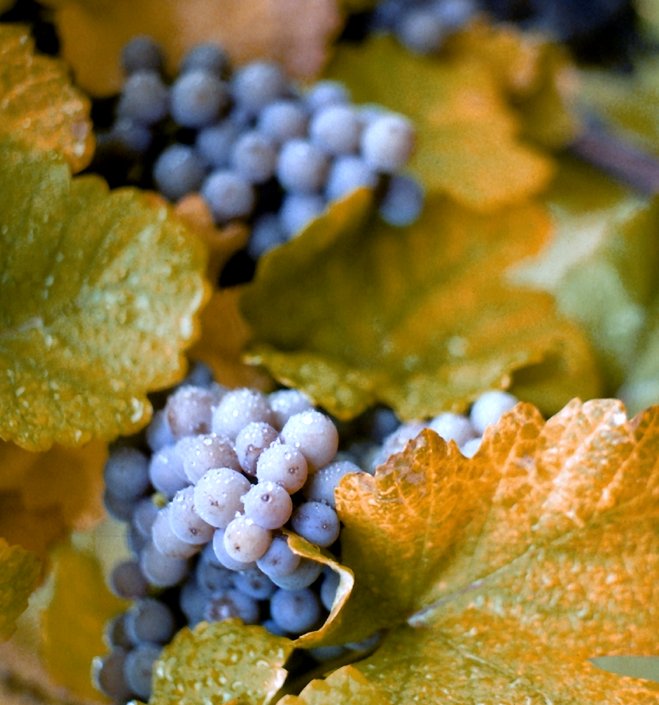
Fox Grape
Vitis labrusca
UnknownUnknown ; cropped, cleaned up, and levels adjustment by Howcheng, Public domain, via Wikimedia Commons


Side by side
| Fox Grape | Muscadine Grape | |
|---|---|---|
| Scientific name | Vitis labrusca L. | Vitis rotundifolia Michx. |
| English name | Fox Grape | Muscadine Grape |
| Group | Flowering plants | Flowering plants |
| Class | Magnoliopsida | Magnoliopsida |
| Order | Vitales | Vitales |
| Family | Vitaceae Grape Family | Vitaceae Grape Family |
| Genus | Vitis Grape | Vitis Grape |
| Countries on record | 20 countries | 4 countries |
| GBIF occurrence records | 5,378 records | 37,422 records |
Rows where the two agree are shown in grey.
Where each is found
Both recorded in 2 countries
Only Fox Grape (18)
- Afghanistan
- Armenia
- Azerbaijan
- Canada
- China
- Georgia
- Germany
- Greece
- Hungary
- India
- Japan
- Portugal
- Taiwan
- Tajikistan
- Turkey
- Turkmenistan
- Uzbekistan
- Vietnam
Only Muscadine Grape (2)
From Catalogue of Life checklists and GBIF occurrence records. A country missing from a list means no record is held, which is not proof of absence.
Checked facts
| Fox Grape | Muscadine Grape | |
|---|---|---|
| Appearance |
|
|
| Size | No checked fact yet |
|
| Habitat |
| |
| Diet | No checked fact yet | |
| Behaviour |
|
|
| Reproduction | No checked fact yet |
|
| Distribution |
|
|
| Conservation |
|
|
| Uses |
|
|
| Similar species | No checked fact yet |
|
| Other |
|
|
In brief
Fox Grape
The fox grape (Vitis labrusca L.) is a flowering plant in the genus Vitis, family Vitaceae, order Vitales, and class Magnoliopsida. It is native to eastern North America and occurs from Nova Scotia to Georgia and westward to the Mississippi River. It is a woody climbing vine with thick-skinned, sweet grapes and large leaves with hairy undersides. Full profile
Muscadine Grape
Vitis rotundifolia is native to East Texas and the southeastern and south-central United States, with a range extending from Florida to the New Jersey coast and westward to eastern Texas and Oklahoma. It is distinguished by its vigorous deciduous vines, thick-skinned fruits, and 40 chromosomes. Full profile
Compare something else
Page built on 27 November 2026 from the data on the two species pages, where every source is listed.
Cite this page
ScientificNames.org. (2026). Fox Grape vs Muscadine Grape. Retrieved November 27, 2026, from https://scientificnames.org/compare/fox-grape-vs-muscadine-grape
“Fox Grape vs Muscadine Grape.” ScientificNames.org, 2026, scientificnames.org/compare/fox-grape-vs-muscadine-grape. Accessed 27 Nov. 2026.
ScientificNames.org. “Fox Grape vs Muscadine Grape.” Accessed November 27, 2026. https://scientificnames.org/compare/fox-grape-vs-muscadine-grape.
@misc{scientificnames_fox_grape_vs_muscadine_grape,
  author = {{ScientificNames.org}},
  title = {Fox Grape vs Muscadine Grape},
  year = {2026},
  url = {https://scientificnames.org/compare/fox-grape-vs-muscadine-grape},
  note = {Accessed 2026-11-27}
}