Comparison

Fuchsia-flowered Gooseberry vs Blackcurrant

Fuchsia-flowered Gooseberry (Ribes speciosum) and Blackcurrant (Ribes nigrum) both belong to the genus Ribes (currant) and part ways below it. Both are recorded in 1 country.

Fuchsia-flowered Gooseberry

Fuchsia-flowered Gooseberry

Ribes speciosum

Unknown author, CC BY-SA 3.0, via Wikimedia Commons

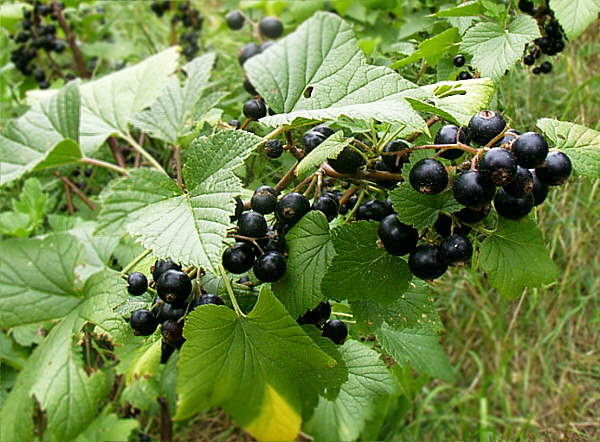
Blackcurrant

Blackcurrant

Ribes nigrum

Unknown author, Public domain, via Wikimedia Commons

Side by side

Fuchsia-flowered GooseberryBlackcurrant
Scientific nameRibes speciosum PurshRibes nigrum L.
English nameFuchsia-flowered GooseberryBlackcurrant
GroupFlowering plantsFlowering plants
ClassMagnoliopsidaMagnoliopsida
OrderSaxifragalesSaxifragales
FamilyGrossulariaceae Currant FamilyGrossulariaceae Currant Family
GenusRibes CurrantRibes Currant
Countries on record2 countries55 countries
GBIF occurrence records8,200 records123,977 records

Rows where the two agree are shown in grey.

Where each is found

Both recorded in 1 country

Only Fuchsia-flowered Gooseberry (1)

Only Blackcurrant (54)

From Catalogue of Life checklists and GBIF occurrence records. A country missing from a list means no record is held, which is not proof of absence.

Checked facts

Fuchsia-flowered GooseberryBlackcurrant
Appearance
  • Ribes speciosum is a spiny, deciduous shrub with elongated red flowers that resemble fuchsias. English Wikipedia
  • Its stems have bristles and three long spines at each node. English Wikipedia
  • Its leathery leaves are shallowly divided into several mostly hairless lobes, with glossy dark green upper surfaces. English Wikipedia
  • Its flowers occur singly or in racemes containing up to four flowers. English Wikipedia
  • Its tubular flowers have scarlet, gland-covered sepals surrounding four red petals. English Wikipedia
  • Its red stamens and stigmas extend up to 4 centimeters beyond the flower opening. English Wikipedia
  • Its fruit is a red-orange berry densely covered with glandular bristles. English Wikipedia
  • Its thick, glossy, maple-like leaves grow predominantly near the tops of its branches. ucanr.edu
  • Its red flowers hang along nearly horizontal or arching branches. ucanr.edu
Size
  • The shrub can reach a maximum height of 3 metres. English Wikipedia
  • The shrub usually grows to approximately 4 by 4 feet but can sometimes exceed 8 feet in height. ucanr.edu
  • Its berries are approximately one centimeter long. English Wikipedia
  • The leaves measure approximately 3–5 centimetres in both length and width. English Wikipedia
  • The flower clusters can reach 8 centimetres in length. English Wikipedia
  • An established shrub can produce approximately 4.5 kilograms of fruit annually. English Wikipedia
Habitat
  • The species grows in scrub and chaparral habitats in coastal mountain ranges. English Wikipedia
  • The species grows in both full sun and beneath the shade of trees. ucanr.edu
  • The species can grow in soils that are not particularly specialized, but it does not tolerate excessive irrigation in water-retaining heavy soils. ucanr.edu
  • The species grows naturally in temperate regions with damp, fertile soils. English Wikipedia
  • The shrub can grow in sandy loams, heavy loams, and forest soils when its nutrient requirements are satisfied. English Wikipedia
  • The species prefers moist, fertile soil but does not tolerate waterlogged conditions. English Wikipedia
  • The species is intolerant of drought. English Wikipedia
  • Organically rich, well-drained soil is suitable for growing this shrub. trees.umn.edu
Diet
  • Birds and other wildlife consume the shrub's bristly, reddish-orange berries during summer. ucanr.edu
  • The berries are edible and are consumed raw or cooked in various dishes. English Wikipedia
Behaviour
  • The species frequently enters summer dormancy when conditions are dry. ucanr.edu
  • Its foliage and flowers can drop during dry conditions, exposing the shrub's spiny bare branches. ucanr.edu
  • Supplemental watering can help the shrub retain its foliage and remain semi-evergreen. ucanr.edu
  • Moderate summer irrigation delays dormancy and helps the shrub retain green foliage. ucanr.edu
  • The shrub loses its foliage under completely dry conditions until winter rains restart leafy growth. ucanr.edu
  • Its flowering often begins in late autumn following the arrival of late fall rains. ucanr.edu
  • Cold conditions during spring flowering can reduce fruit production. English Wikipedia
  • Cold winds can reduce the number of flying insects visiting and pollinating the flowers. English Wikipedia
Reproduction
  • Its flowers provide an important source of nectar. ucanr.edu
  • Its flowers attract bees and hummingbirds through their nectar. ucanr.edu
  • The flowers open sequentially, beginning at the base of each flower cluster. English Wikipedia
  • The flowers are primarily pollinated by insects, although some pollen is distributed by wind. English Wikipedia
  • The species is partly self-pollinating, but cross-pollination between different varieties increases fruit production. English Wikipedia
  • Pollen germination and tube growth to the ovule take approximately 48 hours in warm weather. English Wikipedia
  • In cold weather, pollen tube growth can take up to a week. English Wikipedia
  • Fruit development may fail and the fruit may drop prematurely when fewer than approximately 35 ovules are fertilised. English Wikipedia
  • Frost can damage unopened and open flowers when temperatures fall below approximately −1.9 °C. English Wikipedia
  • The fruits ripen during midsummer. English Wikipedia
Distribution
  • The species is native to central and southern California and Baja California. English Wikipedia
  • The species is native to temperate regions of central and northern Europe and northern Asia. English Wikipedia
  • The species is widely cultivated commercially and domestically. English Wikipedia
  • Commercial cultivation is concentrated largely in eastern Europe for juice and juice concentrate production. English Wikipedia
  • New Zealand has become an important centre for blackcurrant research and development since 1991. English Wikipedia
Conservation
  • The species is susceptible to fatal effects from excessive irrigation in heavy soils that retain water. ucanr.edu
No checked fact yet
Uses
  • Gardeners commonly position the shrub away from busy traffic areas because of its thorny stems. ucanr.edu
  • The species prefers dappled to bright light when cultivated in dry gardens and beneath oak trees. English Wikipedia
  • The species has received the Royal Horticultural Society's Award of Garden Merit. English Wikipedia
  • The species is cultivated for its edible berries. English Wikipedia
  • The berries are used to produce jams, preserves, and syrups. English Wikipedia
  • The berries are commercially cultivated for juice production. English Wikipedia
  • The berries are also used to produce alcoholic beverages and dyes. English Wikipedia
  • The shrub can be planted as an ornamental plant. trees.umn.edu
  • Raw blackcurrant fruit contains approximately 218% of the daily value of vitamin C per 100 grams. English Wikipedia
  • Blackcurrant seed oil contains vitamin E and unsaturated fatty acids, including alpha-linolenic and gamma-linolenic acids. English Wikipedia
  • The leaves, bark, and roots have historically been used to prepare medicinal decoctions. English Wikipedia
Name origin
  • The common name fuchsia-flowered gooseberry refers to the species' tubular red flowers, which resemble fuchsia flowers. ucanr.edu
No checked fact yet
OtherNo checked fact yet
  • The species has been investigated for the potential biological activities of polyphenols found in its fruit, seeds, and leaves. English Wikipedia

In brief

Fuchsia-flowered Gooseberry

Fuchsia-flowered Gooseberry is a spiny, deciduous shrub with elongated red flowers that resemble fuchsias. The species is native to central and southern California and Baja California, where it grows in scrub and chaparral habitats in coastal mountain ranges. Its tubular red flowers have scarlet sepals, four red petals, and stamens and stigmas that extend beyond the flower opening. Full profile

Blackcurrant

Ribes nigrum grows naturally in temperate regions of central and northern Europe and northern Asia. It produces very dark purple, nearly black berries that are edible and used in food and beverage production. Full profile

Compare something else

Page built on 28 November 2026 from the data on the two species pages, where every source is listed.

Cite this page

ScientificNames.org. (2026). Fuchsia-flowered Gooseberry vs Blackcurrant. Retrieved November 28, 2026, from https://scientificnames.org/compare/fuchsia-flowered-gooseberry-vs-blackcurrant