Comparison
Goby Flathead vs Natal Duckbill
Goby Flathead (Bembrops gobioides) and Natal Duckbill (Bembrops platyrhynchus) both belong to the genus Bembrops and part ways below it.

Goby Flathead
Bembrops gobioides
NOAA's Fisheries Collection , SEFSC Pascagoula Laboratory; Collection of Brandi Noble, NOAA/NMFS/SEFSC NOAA Photo Library, Public domain, via Wikimedia Commons


Side by side
| Goby Flathead | Natal Duckbill | |
|---|---|---|
| Scientific name | Bembrops gobioides (Goode, 1880) | Bembrops platyrhynchus (Alcock, 1894) |
| English name | Goby Flathead | Natal Duckbill |
| Group | Fishes | Fishes |
| Class | Teleostei Teleost | Teleostei Teleost |
| Order | Perciformes | Perciformes |
| Family | Bembropidae Duckbill Flatheads | Bembropidae Duckbill Flatheads |
| Genus | Bembrops | Bembrops |
| Named in | 1880 | 1894 |
| Red List category | Least Concern | Not recorded |
| Environment | marine | marine |
| Countries on record | 3 countries | 6 countries |
| GBIF occurrence records | 319 records | 210 records |
Rows where the two agree are shown in grey.
Where each is found
Only Goby Flathead (3)
Only Natal Duckbill (6)
From Catalogue of Life checklists and GBIF occurrence records. A country missing from a list means no record is held, which is not proof of absence.
Checked facts
| Goby Flathead | Natal Duckbill | |
|---|---|---|
| Appearance |
| No checked fact yet |
| Size | No checked fact yet |
|
| Habitat |
| No checked fact yet |
| Diet |
| No checked fact yet |
| Other | No checked fact yet |
|
In brief
Goby Flathead
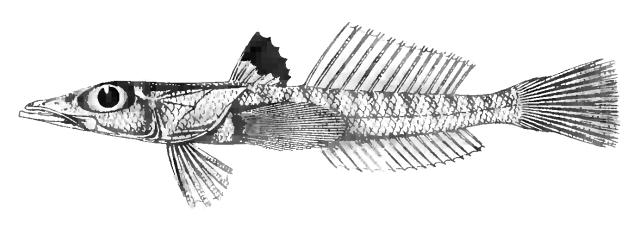
The goby flathead (Bembrops gobioides) is a benthic fish in the family Bembropidae, order Perciformes and class Teleostei. It occupies muddy bottoms at depths reaching 724 metres, with more commonly recorded depths of 350–450 metres. It is distinguished by a depressed head, a strongly projecting lower jaw and elongated dark blotches along its tan upper and pale lower body. Full profile
Compare something else
Page built on 28 November 2026 from the data on the two species pages, where every source is listed.
Cite this page
ScientificNames.org. (2026). Goby Flathead vs Natal Duckbill. Retrieved November 28, 2026, from https://scientificnames.org/compare/goby-flathead-vs-natal-duckbill
“Goby Flathead vs Natal Duckbill.” ScientificNames.org, 2026, scientificnames.org/compare/goby-flathead-vs-natal-duckbill. Accessed 28 Nov. 2026.
ScientificNames.org. “Goby Flathead vs Natal Duckbill.” Accessed November 28, 2026. https://scientificnames.org/compare/goby-flathead-vs-natal-duckbill.
@misc{scientificnames_goby_flathead_vs_natal_duckbill,
  author = {{ScientificNames.org}},
  title = {Goby Flathead vs Natal Duckbill},
  year = {2026},
  url = {https://scientificnames.org/compare/goby-flathead-vs-natal-duckbill},
  note = {Accessed 2026-11-28}
}