Comparison

Greater Honeyguide vs Lesser Honeyguide

Greater Honeyguide (Indicator indicator) and Lesser Honeyguide (Indicator minor) both belong to the genus Indicator (typical honeyguides) and part ways below it. Both are recorded in 37 countries.

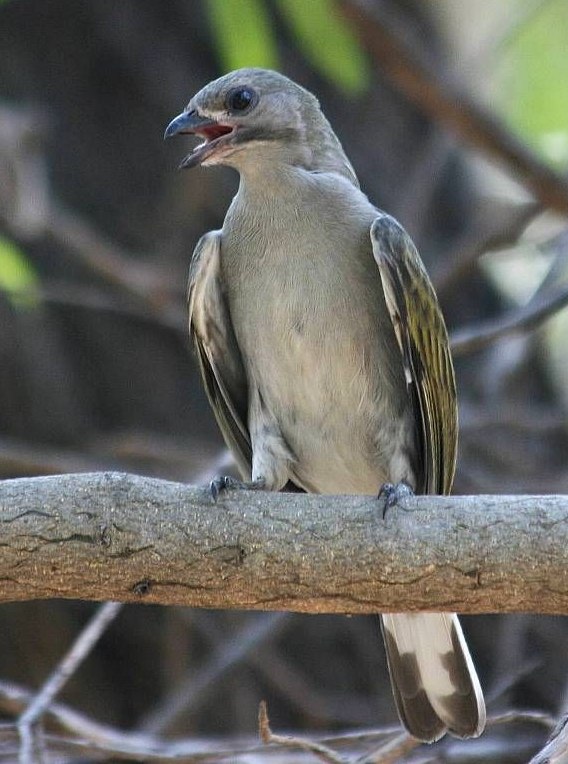
Greater Honeyguide

Greater Honeyguide

Indicator indicator

Dominic Sherony, CC BY-SA 2.0, via Wikimedia Commons

Lesser Honeyguide

Lesser Honeyguide

Indicator minor

Alan Manson, CC BY-SA 3.0, via Wikimedia Commons

Side by side

Greater HoneyguideLesser Honeyguide
Scientific nameIndicator indicator (Sparrman, 1777)Indicator minor Stephens, 1815
English nameGreater HoneyguideLesser Honeyguide
GroupBirdsBirds
ClassAves BirdAves Bird
OrderPiciformes WoodpeckersPiciformes Woodpeckers
FamilyIndicatoridae HoneyguideIndicatoridae Honeyguide
GenusIndicator Typical HoneyguidesIndicator Typical Honeyguides
Named in17771815
Red List categoryLeast ConcernLeast Concern
Countries on record40 countries38 countries
GBIF occurrence records48,818 records64,102 records

Rows where the two agree are shown in grey.

Where each is found

Both recorded in 37 countries

Only Greater Honeyguide (3)

Only Lesser Honeyguide (1)

From Catalogue of Life checklists and GBIF occurrence records. A country missing from a list means no record is held, which is not proof of absence.

Checked facts

Greater HoneyguideLesser Honeyguide
Appearance
  • The Greater Honeyguide has predominantly brownish plumage, white outer tail feathers, and an upright posture. ebird.org
  • Adult males have black throats, pink bills, dark grey-brown upperparts, and white underparts. English Wikipedia
  • Adult males have yellow shoulder patches and whitish streaking on their wings. English Wikipedia
  • Adult females are duller than males and have blackish bills and black throats. English Wikipedia
  • Immature birds have olive-brown upperparts, white rumps, yellow throats, and yellow upper breasts. English Wikipedia
  • Adult males have a pale grey ear patch and golden feathers bordering their wing coverts. animaldiversity.org
  • Juveniles have yellow-gold, taupe, and olive-brown plumage that differs markedly from adult plumage. animaldiversity.org
  • The adult plumage takes approximately eight months to develop fully. animaldiversity.org
  • The lesser honeyguide is a small, inconspicuous bird with gray-green plumage. ebird.org
  • The lesser honeyguide has conspicuous white outer tail feathers. ebird.org
SizeNo checked fact yet
Habitat
  • The Greater Honeyguide inhabits dry open woodland and other tree-containing habitats but does not occur in West African rain forests. English Wikipedia
  • The species occupies savannas, shrublands, forest edges, riversides, and orchards. animaldiversity.org
  • The species occurs from sea level to elevations approaching 3,000 meters, although it is usually found below 2,000 meters. animaldiversity.org
No checked fact yet
Diet
  • The Greater Honeyguide primarily consumes beeswax, bee eggs, larvae, and pupae. English Wikipedia
  • The species also eats waxworms and insect wings from flying swarming colonies. English Wikipedia
  • The species occasionally consumes fruit and rarely eats bird eggs. English Wikipedia
  • Young Greater Honeyguides primarily receive fruit from their host parents. English Wikipedia
  • The species can digest beeswax, an otherwise difficult food source, through specialized digestive enzymes. animaldiversity.org
No checked fact yet
Behaviour
  • The Greater Honeyguide guides human honey hunters toward wild bee nests, enabling access to beeswax and larvae after the nests are opened. audubon.org
  • The species responds to the Yao honey hunters' traditional brrr-hmm call in northern Mozambique. English Wikipedia
  • The Yao hunters' brrr-hm call successfully attracted Greater Honeyguides in 66 percent of experimental trials. audubon.org
  • Searches accompanied by guiding birds successfully located a beehive in 75 percent of the reported searches. audubon.org
  • The Greater Honeyguide is primarily solitary and active during daylight hours. animaldiversity.org
  • Groups of Greater Honeyguides gather at newly opened beehives to feed. animaldiversity.org
  • Male Greater Honeyguides court females by circling above them while producing sounds with their wings. animaldiversity.org
  • The species sometimes guides humans toward non-bee animals, including snakes and dead mammals. pmc.ncbi.nlm.nih.gov
  • Guiding humans toward non-bee animals was recorded in only 3.7 percent of interactions during one study year and was absent in other study years. pmc.ncbi.nlm.nih.gov
  • Research findings suggest that guiding humans toward non-bee animals may result from errors in recalling spatial information rather than deliberate punishment. pmc.ncbi.nlm.nih.gov
  • The lesser honeyguide is a brood parasite that lays its eggs primarily in the nests of African barbets. English Wikipedia
  • The lesser honeyguide occasionally lays its eggs in the nests of starlings and woodpeckers. English Wikipedia
  • The lesser honeyguide's white outer tail feathers are visible when it flies in an undulating pattern. ebird.org
Reproduction
  • The female can lay between three and seven eggs in a series, producing approximately 10 to 20 eggs annually. English Wikipedia
  • Females commonly destroy host eggs when depositing their own eggs in parasitized nests. English Wikipedia
  • Newly hatched chicks use a hooked structure on their bills to kill the host's offspring. English Wikipedia
  • Greater Honeyguides generally breed between September and October. animaldiversity.org
  • Females typically lay between four and eight eggs per breeding season, with one egg deposited in each host nest. animaldiversity.org
  • The eggs require approximately 18 days of incubation before hatching. animaldiversity.org
  • Young Greater Honeyguides leave the nest approximately 30 to 40 days after hatching. animaldiversity.org
  • Juveniles reach reproductive maturity at approximately one year of age. animaldiversity.org
  • The species does not normally provide parental care to its own offspring after mating. animaldiversity.org
No checked fact yet
Distribution
  • The Greater Honeyguide is widely distributed throughout sub-Saharan Africa, excluding southwestern Namibia, Botswana, and part of South Africa. animaldiversity.org
  • The species is a resident breeder throughout sub-Saharan Africa. English Wikipedia
ConservationNo checked fact yet
Name origin
  • The English and scientific names of the Greater Honeyguide refer to its behavior of guiding people toward bee colonies. English Wikipedia
No checked fact yet

In brief

Greater Honeyguide

Indicator indicator is a resident breeder throughout sub-Saharan Africa, excluding southwestern Namibia, Botswana, and part of South Africa. It is distinguished by guiding human honey hunters toward wild bee nests. Full profile

Lesser Honeyguide

The Lesser Honeyguide occurs widely throughout sub-Saharan Africa. The Lesser Honeyguide is a small, inconspicuous bird with gray-green plumage and conspicuous white outer tail feathers. Full profile

Compare something else

Page built on 27 November 2026 from the data on the two species pages, where every source is listed.

Cite this page

ScientificNames.org. (2026). Greater Honeyguide vs Lesser Honeyguide. Retrieved November 27, 2026, from https://scientificnames.org/compare/greater-honeyguide-vs-lesser-honeyguide