Comparison

Greyish Mourner vs Great Kiskadee

Greyish Mourner (Rhytipterna simplex) and Great Kiskadee (Pitangus sulphuratus) both belong to the family Tyrannidae (tyrant flycatcher) and part ways below it. Both are recorded in 9 countries.
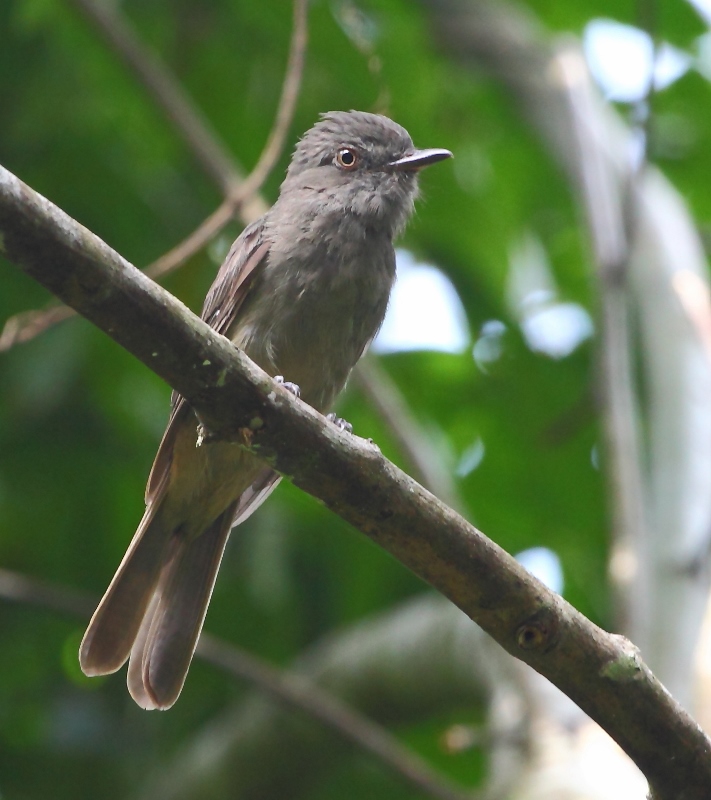
Greyish Mourner

Greyish Mourner

Rhytipterna simplex

Hector Bottai, CC BY-SA 3.0, via Wikimedia Commons

Great Kiskadee

Great Kiskadee

Pitangus sulphuratus

Rhododendrites, CC BY-SA 4.0, via Wikimedia Commons

Side by side

Greyish MournerGreat Kiskadee
Scientific nameRhytipterna simplex (M. H. C. Lichtenstein, 1823)Pitangus sulphuratus (Linnaeus, 1766)
English nameGreyish MournerGreat Kiskadee
GroupBirdsBirds
ClassAves BirdAves Bird
OrderPasseriformes PasserinePasseriformes Passerine
FamilyTyrannidae Tyrant FlycatcherTyrannidae Tyrant Flycatcher
GenusRhytipterna MournersPitangus Great Kiskadee
Named in18231766
Red List categoryLeast ConcernLeast Concern
EnvironmentNot recordedterrestrial
Countries on record9 countries27 countries
GBIF occurrence records19,849 records2,441,860 records

Rows where the two agree are shown in grey.

Where each is found

Both recorded in 9 countries

Only Great Kiskadee (18)

From Catalogue of Life checklists and GBIF occurrence records. A country missing from a list means no record is held, which is not proof of absence.

Checked facts

Greyish MournerGreat Kiskadee
Appearance
  • Males of the nominate subspecies have a gray head with a slight crest at the rear of the crown. English Wikipedia
  • The upperparts, wings, and tail are gray, with a brown tinge on the wings and tail. English Wikipedia
  • The throat is light gray, while the underparts are slightly darker gray and the belly has a slight yellowish-green tinge. English Wikipedia
  • Females resemble males but have fulvous edges on their wing and tail feathers. English Wikipedia
  • The subspecies Rhytipterna simplex frederici is darker overall than the nominate subspecies. English Wikipedia
  • Both subspecies have dark red to reddish-brown irises, slightly hooked black bills that are often pink at the base, and black legs and feet. English Wikipedia
  • Adult birds have a black head, a prominent white stripe above the eye, and a concealed yellow stripe on the crown. English Wikipedia
  • The upperparts, wings, and tail are brown, with the wings and tail usually having pronounced reddish-brown edges. English Wikipedia
  • The bill is short, thick, and black. English Wikipedia
  • Both sexes have similar coloration and physical characteristics. animaldiversity.org
  • The bird has bright yellow underparts and a white throat. animaldiversity.org
  • Excited individuals can raise their yellow crown feathers into a temporary crest. txtbba.tamu.edu
SizeNo checked fact yet
Habitat
  • The species primarily inhabits the middle and upper forest layers of humid terra firme forest. English Wikipedia
  • The species occasionally occupies transition zones between humid terra firme forest and other forest types. English Wikipedia
  • In Brazil, the species is mostly found from sea level to 800 m elevation, sometimes occurring higher. English Wikipedia
  • In Colombia and Ecuador, the species occurs up to 700 m elevation. English Wikipedia
  • In Peru, the species occurs up to 1,400 m elevation. English Wikipedia
  • In Venezuela, the species occurs up to 1,300 m elevation. English Wikipedia
  • The species is also associated with subtropical or tropical moist lowland forests. inaturalist.org
  • The species inhabits open woodland containing scattered trees and scrub. animaldiversity.org
  • In tropical regions, the species favors open habitats near water rather than dense, continuous forests. animaldiversity.org
  • The species occupies tropical and subtropical wooded habitats, including areas modified by humans, particularly near water. txtbba.tamu.edu
  • The species nests in residential yards, cemeteries, alleyways, and rural woodlands. txtbba.tamu.edu
  • Breeding nests are commonly located 6–10 metres above the ground. txtbba.tamu.edu
Diet
  • Wild Turk's cap fruit is one of the foods consumed by the species. txtbba.tamu.edu
  • The species also eats chilipiquin peppers and other small native fruits. txtbba.tamu.edu
  • During winter, the species relies on seeds, fruits, and berries when other food resources are scarce. animaldiversity.org
  • The species sometimes catches freshwater fish, tadpoles, and frogs by plunging into water. animaldiversity.org
  • The species can catch insects in flight by launching from elevated perches. English Wikipedia
  • The species sometimes eats freshwater snails, fish, and tadpoles by diving into shallow water. English Wikipedia
Behaviour
  • The species typically forages alone or in pairs. English Wikipedia
  • The Greyish Mourner regularly joins mixed-species feeding flocks. English Wikipedia
  • While foraging, the bird perches upright on exposed branches and sallies out to glean prey and fruit from vegetation, briefly hovering. English Wikipedia
  • The Greyish Mourner is a year-round resident. English Wikipedia
  • Its song is variable in tempo and normally consists of rising sharp notes ending in loud, explosive notes. English Wikipedia
  • The species also produces slowly ascending series of clear, whistled notes. English Wikipedia
Reproduction
Distribution
  • The species occurs in every mainland South American country except Argentina, Chile, Paraguay, and Uruguay. English Wikipedia
  • The nominate subspecies occurs in eastern Brazil, from Alagoas south to eastern Minas Gerais and southwestern São Paulo. English Wikipedia
  • The subspecies Rhytipterna simplex frederici occurs from southeastern Colombia through eastern Ecuador and eastern Peru to northwestern Bolivia. English Wikipedia
  • Rhytipterna simplex frederici also occurs eastward through southern and eastern Venezuela, the Guianas, and Amazonian Brazil. English Wikipedia
Conservation
  • The IUCN classifies the Greyish Mourner as Least Concern. English Wikipedia
  • The species has a very large geographic range. English Wikipedia
  • The population size is unknown and is believed to be decreasing. English Wikipedia
  • No immediate threats to the species have been identified. English Wikipedia
  • The Greyish Mourner is considered common in Brazil and fairly common in Colombia, Peru, and Venezuela. English Wikipedia
  • The species occurs in numerous public and private protected areas. English Wikipedia
  • Much of the species' habitat in eastern Brazil has been destroyed, and the status of the nominate subspecies requires investigation. English Wikipedia
  • The species is not considered threatened by the IUCN. English Wikipedia
  • Human hunting and trade are not considered major threats to the species. animaldiversity.org
  • The species has become a common breeding bird in several southern Texas counties. txtbba.tamu.edu
UsesNo checked fact yet
  • The species was introduced to Bermuda in an attempt to control introduced lizard populations. English Wikipedia
  • The introduction of the species to Bermuda did not successfully control lizard numbers. English Wikipedia
Similar species
  • The Greyish Mourner shares the genus Rhytipterna with the Pale-bellied Mourner and Rufous Mourner. English Wikipedia
  • The Greyish Mourner and Rufous Mourner apparently form a superspecies. English Wikipedia
No checked fact yet
OtherNo checked fact yet
  • The species produces a characteristic vocalization transcribed as BEE-tee-WEE. English Wikipedia

In brief

Greyish Mourner

Rhytipterna simplex inhabits humid terra firme forests and moist lowland forests across mainland South America, except Argentina, Chile, Paraguay, and Uruguay. It has predominantly gray plumage, measures 19.5–20.5 cm in length, and primarily feeds on large insects. Full profile

Great Kiskadee

The natural range extends from southern Texas through Central America to southern Argentina. It is distinguished by bright yellow underparts, a black head, a white stripe above the eye, and a concealed yellow crown stripe. Full profile

Compare something else

Page built on 27 November 2026 from the data on the two species pages, where every source is listed.

Cite this page

ScientificNames.org. (2026). Greyish Mourner vs Great Kiskadee. Retrieved November 27, 2026, from https://scientificnames.org/compare/greyish-mourner-vs-great-kiskadee