Comparison

Hawaiian Hawk vs Common Buzzard

Hawaiian Hawk (Buteo solitarius) and Common Buzzard (Buteo buteo) both belong to the genus Buteo (buteonine hawks) and part ways below it.
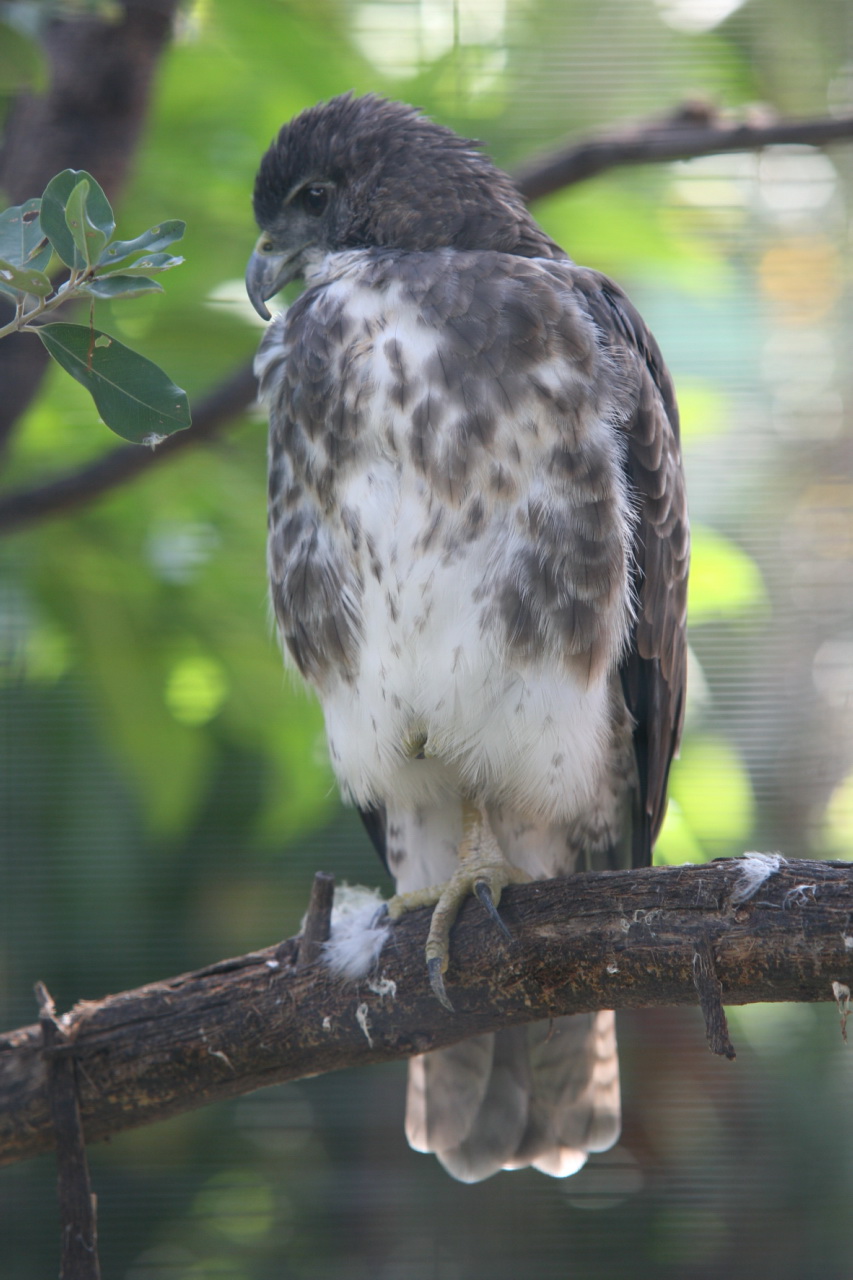
Hawaiian Hawk

Hawaiian Hawk

Buteo solitarius

cliff1066, CC BY 2.0, via Wikimedia Commons

Common Buzzard

Common Buzzard

Buteo buteo

caroline legg, CC BY 2.0, via Wikimedia Commons

Side by side

Hawaiian HawkCommon Buzzard
Scientific nameButeo solitarius Peale, 1849Buteo buteo (Linnaeus, 1758)
English nameHawaiian HawkCommon Buzzard
GroupBirdsBirds
ClassAves BirdAves Bird
OrderAccipitriformes HawksAccipitriformes Hawks
FamilyAccipitridae HawksAccipitridae Hawks
GenusButeo Buteonine HawksButeo Buteonine Hawks
Named in18491758
Red List categoryNear ThreatenedLeast Concern
EnvironmentNot recordedterrestrial
Countries on record1 country125 countries
GBIF occurrence records11,204 records8,142,612 records

Rows where the two agree are shown in grey.

Where each is found

Only Hawaiian Hawk (1)

Only Common Buzzard (125)

From Catalogue of Life checklists and GBIF occurrence records. A country missing from a list means no record is held, which is not proof of absence.

Checked facts

Hawaiian HawkCommon Buzzard
Appearance
  • The species has two distinct plumage morphs, one dark and one light. English Wikipedia
  • Adults have yellowish feet and legs, whereas juveniles have greenish feet and legs. English Wikipedia
  • Breeding adults may develop a distinctive yellow forecap above the upper mandible. English Wikipedia
  • The common buzzard has highly variable plumage, ranging from almost uniform black-brown to predominantly white. English Wikipedia
  • European common buzzards typically have a broad dark subterminal band on the tail. English Wikipedia
Size
  • The species measures approximately 40–46 centimetres in length. English Wikipedia
  • Females average 605 grams in weight, compared with 441 grams for males. English Wikipedia
  • The common buzzard measures 40–58 cm in body length and has a wingspan of 109–140 cm. English Wikipedia
  • Female common buzzards average approximately 2–7% larger than males in linear measurements and weigh approximately 15% more. English Wikipedia
  • Male common buzzards in Great Britain have recorded body masses of 427–1,183 g. English Wikipedia
  • Female common buzzards in Great Britain have recorded body masses of 486–1,370 g. English Wikipedia
Habitat
  • The species breeds primarily in native ʻōhiʻa forests, where its density and reproductive success are higher than in other habitats. fws.gov
  • The species occupies dense native forests as well as agricultural areas. fws.gov
  • The species inhabits lowland non-native forests, urban areas, agricultural lands, pasturelands, and high-elevation native forests. dlnr.hawaii.gov
  • Some individuals have been recorded in subalpine māmane-naio forests during winter. dlnr.hawaii.gov
  • Common buzzards use open agricultural landscapes as foraging areas during winter. pmc.ncbi.nlm.nih.gov
  • Roadside habitats along expressways provide attractive foraging areas for common buzzards. pmc.ncbi.nlm.nih.gov
Diet
  • The species currently consumes introduced rats, lizards, game birds, and insects. English Wikipedia
  • Its present diet includes rats, mice, mongooses, and various bird species. fws.gov
  • Its current diet includes non-native insects, birds, and rodents, together with native insects and birds. dlnr.hawaii.gov
  • Before the arrival of land mammals, birds probably constituted the species' principal food source. fws.gov
  • The species preys on the Hawaiian crow, which is extinct in the wild. English Wikipedia
  • Common buzzards feed primarily on small mammals, particularly rodents such as voles. English Wikipedia
  • Common buzzards are opportunistic predators capable of taking a wide variety of prey. English Wikipedia
  • Common buzzards can obtain food from road-killed animals. pmc.ncbi.nlm.nih.gov
Behaviour
  • The species maintains and defends its territory throughout the year. English Wikipedia
  • The species generally hunts from stationary positions but can also dive onto prey from the air. English Wikipedia
  • The species is an opportunistic predator with versatile feeding habits. English Wikipedia
  • The species produces a shrill, high-pitched vocalization. English Wikipedia
  • Individuals are particularly noisy during the breeding season. English Wikipedia
  • The species forms monogamous, long-term pair bonds. dlnr.hawaii.gov
  • Males perform acrobatic courtship displays from winter through spring. fws.gov
  • Both parents feed fledglings, which may remain dependent on adults for up to nine months. dlnr.hawaii.gov
  • Common buzzards typically hunt from a stationary perch. English Wikipedia
  • Common buzzards use a sit-and-wait ambush strategy to capture prey. pmc.ncbi.nlm.nih.gov
  • Common buzzards adjust their hunting-site selection in response to changes in mean wind speed. pmc.ncbi.nlm.nih.gov
  • Common buzzards changed hunting sites more frequently along expressways than in farmland. pmc.ncbi.nlm.nih.gov
  • Common buzzards spend more time at medium-height hunting sites along expressways than in farmland. pmc.ncbi.nlm.nih.gov
  • Snow cover, land use and mean wind speed influence the number of prey attacks made by common buzzards. pmc.ncbi.nlm.nih.gov
Reproduction
  • The species generally lays one egg per clutch, although clutches of up to three eggs have been recorded. English Wikipedia
  • Breeding generally begins when individuals reach three or four years of age. fws.gov
  • Egg laying generally occurs between March and June. dlnr.hawaii.gov
  • Egg laying begins in March, and hatching typically occurs by July. fws.gov
  • Both parents participate in incubating the eggs for approximately 38 days. fws.gov
  • Females perform most of the incubation, while males undertake most of the hunting during this period. English Wikipedia
  • Both sexes contribute to nest construction. dlnr.hawaii.gov
  • Nest construction can begin up to two months before the first egg is laid and continue into the nestling period. dlnr.hawaii.gov
  • Young birds generally fledge between July and September. dlnr.hawaii.gov
  • Chicks generally fledge at seven or eight weeks of age. English Wikipedia
Distribution
  • The species is currently restricted to the island of Hawaiʻi. English Wikipedia
  • The species occurs throughout the island of Hawaiʻi at all elevations. dlnr.hawaii.gov
  • The species' estimated current range covers 2,372 square miles, equivalent to 58.7 percent of Hawaiʻi Island. fws.gov
  • The common buzzard occurs across most of Europe and extends into the Palearctic as far as northwestern China, western Siberia and northwestern Mongolia. English Wikipedia
Conservation
  • The species was federally listed as endangered in the United States in 1967. fws.gov
  • The species was removed from the United States federal endangered species list in 2020. English Wikipedia
  • NatureServe assigns the species a G2 rank, indicating imperiled status. dlnr.hawaii.gov
  • Illegal shooting, poisoning, vehicle collisions, starvation, and predation are identified as threats to the species. English Wikipedia
  • The common buzzard has a global population estimated in the millions. English Wikipedia
Similar speciesNo checked fact yet
  • Genetic studies indicate that the common buzzard is fairly closely related to the North American red-tailed hawk. English Wikipedia
Other
  • The Hawaiian name ʻio is associated with the species' characteristic vocalization. English Wikipedia
  • The common buzzard belongs to the genus Buteo and the family Accipitridae. English Wikipedia

In brief

Hawaiian Hawk

The species is currently restricted to the island of Hawaiʻi, where it occurs at all elevations. It has two distinct plumage morphs, one dark and one light. Full profile

Common Buzzard

The Common Buzzard is a bird belonging to the genus Buteo and the family Accipitridae. It occurs across most of Europe and extends into the Palearctic as far as northwestern China, western Siberia and northwestern Mongolia. Its plumage is highly variable, ranging from almost uniform black-brown to predominantly white. Full profile

Compare something else

Page built on 27 November 2026 from the data on the two species pages, where every source is listed.

Cite this page

ScientificNames.org. (2026). Hawaiian Hawk vs Common Buzzard. Retrieved November 27, 2026, from https://scientificnames.org/compare/hawaiian-hawk-vs-common-buzzard