Comparison
Hida Salamander vs Korean Salamander
Hida Salamander (Hynobius kimurae) and Korean Salamander (Hynobius leechii) both belong to the genus Hynobius (asian salamanders) and part ways below it.
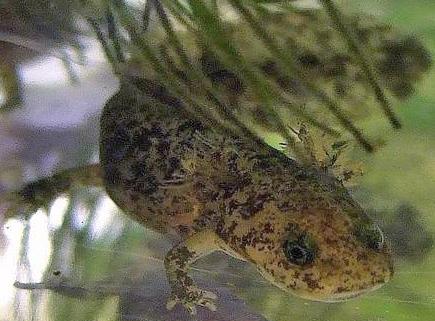

Korean Salamander
Hynobius leechii
Side by side
| Hida Salamander | Korean Salamander | |
|---|---|---|
| Scientific name | Hynobius kimurae Dunn, 1923 | Hynobius leechii Boulenger, 1887 |
| English name | Hida Salamander | Korean Salamander |
| Group | Amphibians | Amphibians |
| Class | Amphibia Amphibians | Amphibia Amphibians |
| Order | Caudata Salamanders | Caudata Salamanders |
| Family | Hynobiidae Asiatic Salamander | Hynobiidae Asiatic Salamander |
| Genus | Hynobius Asian Salamanders | Hynobius Asian Salamanders |
| Named in | 1923 | 1887 |
| Red List category | Least Concern | Least Concern |
| Countries on record | 1 country | 3 countries |
| GBIF occurrence records | 319 records | 10,075 records |
Rows where the two agree are shown in grey.
Where each is found
Only Hida Salamander (1)
Only Korean Salamander (3)
From Catalogue of Life checklists and GBIF occurrence records. A country missing from a list means no record is held, which is not proof of absence.
Checked facts
| Hida Salamander | Korean Salamander | |
|---|---|---|
| Appearance |
|
|
| Size |
| No checked fact yet |
| Habitat |
|
|
| Behaviour |
| No checked fact yet |
| Reproduction |
|
|
| Distribution |
|
|
| Other |
|
|
In brief
Hida Salamander
Hynobius kimurae is endemic to central and western Honshu, Japan. Its egg sacs exhibit iridescent coloration associated with a quasi-periodic diffraction grating structure within their envelopes. Full profile
Korean Salamander
The Korean Salamander is an amphibian belonging to the genus Hynobius. It occurs in South Korea, North Korea, and the northeastern Chinese provinces of Liaoning, Jilin, and Heilongjiang. It is black with pale brown mottling on its back, and adults lack a visible tail fin. Full profile
Compare something else
Page built on 28 November 2026 from the data on the two species pages, where every source is listed.
Cite this page
ScientificNames.org. (2026). Hida Salamander vs Korean Salamander. Retrieved November 28, 2026, from https://scientificnames.org/compare/hida-salamander-vs-korean-salamander
“Hida Salamander vs Korean Salamander.” ScientificNames.org, 2026, scientificnames.org/compare/hida-salamander-vs-korean-salamander. Accessed 28 Nov. 2026.
ScientificNames.org. “Hida Salamander vs Korean Salamander.” Accessed November 28, 2026. https://scientificnames.org/compare/hida-salamander-vs-korean-salamander.
@misc{scientificnames_hida_salamander_vs_korean_salamander,
  author = {{ScientificNames.org}},
  title = {Hida Salamander vs Korean Salamander},
  year = {2026},
  url = {https://scientificnames.org/compare/hida-salamander-vs-korean-salamander},
  note = {Accessed 2026-11-28}
}