Comparison
Steppe Lemming vs European Water Vole
Steppe Lemming (Lagurus lagurus) and European Water Vole (Arvicola amphibius) both belong to the subfamily Arvicolinae (arvicoline rodents) and part ways below it. Both are recorded in 4 countries.
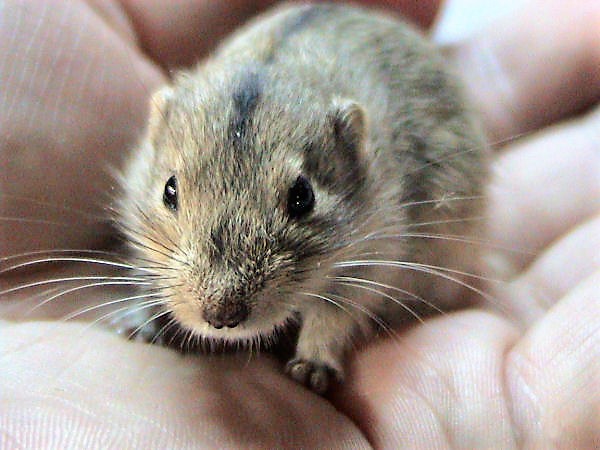
Steppe Lemming
Lagurus lagurus
User:Dawson at the English Wikipedia, CC BY-SA 2.5, via Wikimedia Commons


Side by side
| Steppe Lemming | European Water Vole | |
|---|---|---|
| Scientific name | Lagurus lagurus (Pallas, 1773) | Arvicola amphibius (Linnaeus, 1758) |
| English name | Steppe Lemming | European Water Vole |
| Group | Mammals | Mammals |
| Class | Mammalia Mammal | Mammalia Mammal |
| Order | Rodentia Rodent | Rodentia Rodent |
| Family | Cricetidae New World Mice and Rats | Cricetidae New World Mice and Rats |
| Genus | Lagurus Sagebrush Voles | Arvicola Water Voles |
| Named in | 1773 | 1758 |
| Red List category | Least Concern | Least Concern |
| Countries on record | 5 countries | 38 countries |
| GBIF occurrence records | 830 records | 132,467 records |
Rows where the two agree are shown in grey.
Where each is found
Both recorded in 4 countries
Only Steppe Lemming (1)
Only European Water Vole (34)
- Armenia
- Austria
- Belgium
- Bosnia and Herzegovina
- Bulgaria
- Croatia
- Czechia
- Denmark
- Estonia
- Finland
- France
- Georgia
- Germany
- Greece
- Hungary
- Iran
- Israel
- Italy
- Latvia
- Liechtenstein
- Lithuania
- Luxembourg
- North Macedonia
- Norway
- Romania
- Serbia
- Slovakia
- Slovenia
- Spain
- Sweden
- Switzerland
- The Netherlands
- Turkey
- United Kingdom
From Catalogue of Life checklists and GBIF occurrence records. A country missing from a list means no record is held, which is not proof of absence.
Checked facts
| Steppe Lemming | European Water Vole | |
|---|---|---|
| Appearance |
|
|
| Size |
|
|
| Habitat |
|
|
| Diet |
|
|
| Behaviour |
|
|
| Reproduction |
|
|
| Distribution |
|
|
| Conservation | No checked fact yet |
|
| Uses |
|
|
| Similar species |
| No checked fact yet |
| Other |
|
|
In brief
Steppe Lemming
The Steppe Lemming (Lagurus lagurus) is a small rodent in the family Cricetidae, order Rodentia, and class Mammalia. It inhabits Eurasian steppes, including semiarid, forest-steppe and semidesert environments. It is a colonial species that digs burrows and exhibits migrations during years of population outbreaks. Full profile
European Water Vole
The European Water Vole is a semi-aquatic rodent in the family Cricetidae, order Rodentia, and class Mammalia. It occurs across most of Europe, Russia, West Asia, and Kazakhstan. It has thick fur covering its body and tail, short fuzzy ears, and well-developed claws on all four feet. Full profile
Compare something else
Page built on 29 November 2026 from the data on the two species pages, where every source is listed.
Cite this page
ScientificNames.org. (2026). Steppe Lemming vs European Water Vole. Retrieved November 29, 2026, from https://scientificnames.org/compare/steppe-lemming-vs-european-water-vole
“Steppe Lemming vs European Water Vole.” ScientificNames.org, 2026, scientificnames.org/compare/steppe-lemming-vs-european-water-vole. Accessed 29 Nov. 2026.
ScientificNames.org. “Steppe Lemming vs European Water Vole.” Accessed November 29, 2026. https://scientificnames.org/compare/steppe-lemming-vs-european-water-vole.
@misc{scientificnames_steppe_lemming_vs_european_water_vole,
  author = {{ScientificNames.org}},
  title = {Steppe Lemming vs European Water Vole},
  year = {2026},
  url = {https://scientificnames.org/compare/steppe-lemming-vs-european-water-vole},
  note = {Accessed 2026-11-29}
}