Comparison

Steppe Lemming vs European Hamster

Steppe Lemming (Lagurus lagurus) and European Hamster (Cricetus cricetus) both belong to the family Cricetidae (new world mice and rats) and part ways below it. Both are recorded in 4 countries.
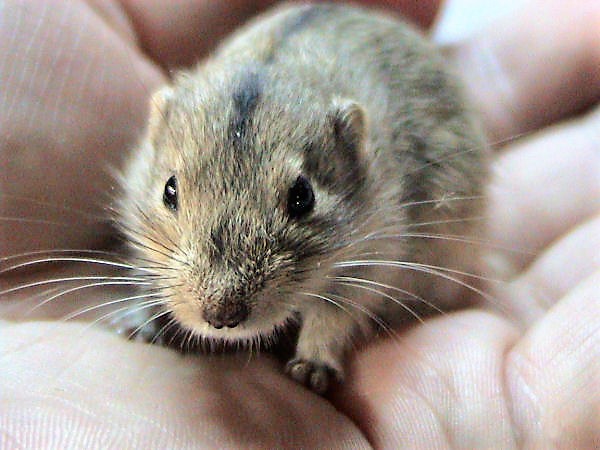
Steppe Lemming

Steppe Lemming

Lagurus lagurus

User:Dawson at the English Wikipedia, CC BY-SA 2.5, via Wikimedia Commons

European Hamster

European Hamster

Cricetus cricetus

katanski, CC BY 3.0, via Wikimedia Commons

Side by side

Steppe LemmingEuropean Hamster
Scientific nameLagurus lagurus (Pallas, 1773)Cricetus cricetus (Linnaeus, 1758)
English nameSteppe LemmingEuropean Hamster
GroupMammalsMammals
ClassMammalia MammalMammalia Mammal
OrderRodentia RodentRodentia Rodent
FamilyCricetidae New World Mice and RatsCricetidae New World Mice and Rats
GenusLagurus Sagebrush VolesCricetus
Named in17731758
Red List categoryLeast ConcernCritically Endangered
Countries on record5 countries18 countries
GBIF occurrence records830 records11,013 records

Rows where the two agree are shown in grey.

Where each is found

Both recorded in 4 countries

Only Steppe Lemming (1)

Only European Hamster (14)

From Catalogue of Life checklists and GBIF occurrence records. A country missing from a list means no record is held, which is not proof of absence.

Checked facts

Steppe LemmingEuropean Hamster
Appearance
Size
  • The European hamster reaches approximately 20–30 cm in body length. English Wikipedia
  • Adult male European hamsters average 24.1 cm in length, while females average approximately 23.7 cm. animaldiversity.org
  • Male European hamsters average 451 g in body mass, compared with 359 g for females. animaldiversity.org
  • Adult European hamsters typically weigh between 200 and 650 g, although exceptional individuals exceed 1 kg. English Wikipedia
Habitat
  • The European hamster naturally inhabits steppe and grassland environments. animaldiversity.org
  • The species also occupies agricultural land and green spaces within urban areas. animaldiversity.org
  • European hamsters typically inhabit areas below 400 m above sea level. animaldiversity.org
  • European hamster burrows commonly occur in dense loess or clay soils. animaldiversity.org
  • The species typically occupies lowland areas with loam or loess-like soils and permeable bedrock below 500 m elevation. English Wikipedia
Diet
  • European hamsters consume grasses, seeds, grains, roots, fruits, and legumes. animaldiversity.org
  • European hamsters opportunistically consume insects and insect larvae. animaldiversity.org
  • Animal matter accounts for approximately 10–13% of the European hamster's diet and includes earthworms, snails, and insects. English Wikipedia
  • European hamsters generally obtain sufficient water from their food without needing to drink. English Wikipedia
Behaviour
  • The steppe lemming is more active at night but is not exclusively nocturnal. English Wikipedia
  • The steppe lemming is a colonial species that digs burrows. English Wikipedia
  • The steppe lemming emerges from its burrow only briefly during daytime activity. English Wikipedia
  • The steppe lemming exhibits migrations during years of population outbreaks. English Wikipedia
  • The steppe lemming's population numbers vary according to climatic conditions and available resources. English Wikipedia
  • European hamsters are primarily nocturnal but may also be active during twilight or daytime. English Wikipedia
  • European hamsters are generally solitary animals. English Wikipedia
  • European hamsters construct extensive underground tunnel systems containing living, food-storage, and latrine chambers. animaldiversity.org
  • European hamster tunnels typically measure 8–9 cm in diameter and have several exits. animaldiversity.org
  • European hamsters transport food to underground storage chambers using their cheek pouches. English Wikipedia
  • European hamster food stores typically contain 2–3 kg of food, although exceptional stores can reach 65 kg. English Wikipedia
  • European hamsters hibernate approximately from mid-October until mid-March. animaldiversity.org
  • During hibernation, European hamsters wake every five to seven days to feed. English Wikipedia
  • European hamsters occupy larger average home ranges in males than in females. animaldiversity.org
  • European hamsters mark their territories using secretions from their flank organs. animaldiversity.org
Reproduction
  • The steppe lemming reaches sexual maturity at approximately six weeks of age. English Wikipedia
  • The steppe lemming can produce up to six broods annually. English Wikipedia
  • Each brood of the steppe lemming typically contains five or six young. English Wikipedia
  • The steppe lemming can reproduce throughout the year under suitable conditions. English Wikipedia
  • The European hamster has a promiscuous mating system involving multiple matings during each breeding season. animaldiversity.org
  • Female European hamsters reach sexual maturity at approximately 80 days of age. English Wikipedia
  • Male European hamsters reach sexual maturity at approximately 60 days of age. English Wikipedia
  • European hamster litters typically contain between three and seven pups. animaldiversity.org
  • Pregnancy in European hamsters lasts approximately 18–21 days. animaldiversity.org
  • Female European hamsters nurse their young for approximately four weeks. animaldiversity.org
  • Female European hamsters can become pregnant again shortly after giving birth to their first litter, even while nursing. animaldiversity.org
Distribution
  • The steppe lemming occurs in western Mongolia and northwestern China. English Wikipedia
  • The steppe lemming occurs in western and eastern Siberia. English Wikipedia
  • The steppe lemming occurs in the southern and middle Ural regions. English Wikipedia
  • Fossil remains of the steppe lemming have been discovered as far west as Great Britain. English Wikipedia
No checked fact yet
ConservationNo checked fact yet
  • The European hamster was classified as critically endangered across its global range in 2020. English Wikipedia
  • Intensive agriculture and habitat destruction are identified as major threats to European hamster populations. English Wikipedia
  • Road construction can fragment European hamster populations and contribute to habitat loss. English Wikipedia
Uses
  • The steppe lemming is commonly kept as a domestic vole, particularly in Europe. English Wikipedia
  • European hamsters have historically been hunted for their fur. English Wikipedia
  • European hamsters have been used in cancer research because of their exposure to pesticides and urban air pollution. animaldiversity.org
Similar speciesNo checked fact yet
Other
  • European hamsters contribute to seed dispersal by storing seeds underground and occasionally losing them. animaldiversity.org
  • European hamsters contribute to ecosystem engineering through their burrowing activity. animaldiversity.org

In brief

Steppe Lemming

The Steppe Lemming (Lagurus lagurus) is a small rodent in the family Cricetidae, order Rodentia, and class Mammalia. It inhabits Eurasian steppes, including semiarid, forest-steppe and semidesert environments. It is a colonial species that digs burrows and exhibits migrations during years of population outbreaks. Full profile

European Hamster

Cricetus cricetus naturally inhabits steppe and grassland environments. Full profile

Compare something else

Page built on 26 November 2026 from the data on the two species pages, where every source is listed.

Cite this page

ScientificNames.org. (2026). Steppe Lemming vs European Hamster. Retrieved November 26, 2026, from https://scientificnames.org/compare/steppe-lemming-vs-european-hamster