Comparison

Leucosyrinx exulans vs Leucosyrinx claviforma

Leucosyrinx exulans (Leucosyrinx exulans) and Leucosyrinx claviforma (Leucosyrinx claviforma) both belong to the genus Leucosyrinx and part ways below it.
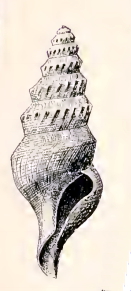
Side by side

Leucosyrinx exulansLeucosyrinx claviforma
Scientific nameLeucosyrinx exulans (Dall, 1890)Leucosyrinx claviforma (Kosuge, 1992)
GroupMolluscsMolluscs
ClassGastropoda GastropodGastropoda Gastropod
OrderNeogastropodaNeogastropoda
FamilyAntiplanidaeAntiplanidae
GenusLeucosyrinxLeucosyrinx
Named in18901992
Environmentmarinemarine
Countries on record1 country1 country
GBIF occurrence records4 records8 records

Rows where the two agree are shown in grey.

Where each is found

Only Leucosyrinx exulans (1)

Only Leucosyrinx claviforma (1)

From Catalogue of Life checklists and GBIF occurrence records. A country missing from a list means no record is held, which is not proof of absence.

Checked facts

Leucosyrinx exulansLeucosyrinx claviforma
Appearance
  • The original description characterizes the solid shell as yellowish chocolate-brown. English Wikipedia
  • The shell has eight or nine whorls. English Wikipedia
  • The shell whorls are rounded. English Wikipedia
  • The shell's spiral sculpture comprises shallow grooves separating slightly raised, flattened threads. English Wikipedia
  • The shell has a relatively wide, shallow, rounded notch. English Wikipedia
  • The outer lip is thin, simple, and extended in its middle portion. English Wikipedia
  • The siphonal canal is relatively well defined and not very long in the original description. English Wikipedia
  • The columella is creamy brown and covered by a thin polished glaze. English Wikipedia
  • The shell is fusiform and thin, with a medium-high spire and yellowish-brown coloration. English Wikipedia
  • The siphonal canal is lighter in color than the rest of the shell. English Wikipedia
  • The protoconch and upper teleoconch whorls are eroded in the available specimens. English Wikipedia
  • The teleoconch whorls are rounded and angled at the shoulder. English Wikipedia
  • Larger specimens may have an almost evenly rounded body whorl with a weakly defined shoulder. English Wikipedia
  • The subsutural ramp is slightly concave on upper whorls and can become nearly flat on the last whorl. English Wikipedia
  • The penultimate and body whorls bear 18–19 strong, oblique, moderately broad, rounded axial folds on the shoulder. English Wikipedia
  • The axial folds weaken toward the aperture on the body whorl of larger specimens. English Wikipedia
  • The spiral sculpture consists of low, rounded, wavy cords of similar width. English Wikipedia
  • The shell base is strongly convex before narrowing rapidly into a long, relatively narrow siphonal canal. English Wikipedia
  • The aperture is moderately narrow and elongated-oval. English Wikipedia
  • The anal sinus is shallow, broadly arcuate, and extends across the subsutural ramp. English Wikipedia
  • The shell is narrowly fusiform, thin but solid, and has a very high spire and light yellowish coloration. English Wikipedia
  • The protoconch consists of nearly two smooth, convex, evenly rounded whorls. English Wikipedia
  • The teleoconch whorls have distinctly angled shoulders and concave subsutural ramps. English Wikipedia
  • The teleoconch shoulders bear strong, oblique, broad, rounded axial folds. English Wikipedia
  • The number of axial folds increases with shell size, reaching 17–18 on the body whorl. English Wikipedia
  • The shell has closely spaced, low, rounded spiral cords extending across its entire surface. English Wikipedia
  • The shell base is convex and transitions smoothly into a long, straight canal. English Wikipedia
  • The aperture is narrow and elongate-oval and is poorly differentiated from the siphonal canal. English Wikipedia
  • The shell has a deep, broadly arcuate anal sinus extending across the subsutural ramp. English Wikipedia
Size
  • The shell reaches 32 mm in length and 13 mm in diameter according to the original description. English Wikipedia
  • The shell reaches 37 mm in the holotype according to a more recent description. English Wikipedia
Habitat
  • The species occurs in marine environments at depths between 1160 m and 3014 m. English Wikipedia
Distribution
  • The species occurs off the Galapagos Islands. English Wikipedia
  • The species is recorded from the Galapagos region at depths of 1159–2070 m in the cited fauna document. academia.edu
  • The species occurs off Western Australia, the Maldive Islands, Papua New Guinea, the Solomon Islands, and in the Bismarck Sea. English Wikipedia
OtherNo checked fact yet
  • The radula comprises approximately 25 rows of teeth, including 8–9 nascent rows. English Wikipedia
  • The marginal radular teeth are duplex and approximately 205–290 µm long. English Wikipedia
  • The major limb of the marginal teeth is moderately narrow, lanceolate in dorsal view, and curved. English Wikipedia
  • The accessory limb of the marginal teeth is narrow and constitutes less than half of the tooth width. English Wikipedia

In brief

Leucosyrinx exulans

The species occurs off the Galapagos Islands and in marine environments at depths between 1160 m and 3014 m. It has a fusiform, yellowish-brown shell with rounded whorls, axial folds, and spiral sculpture consisting of cords or raised threads. Full profile

Leucosyrinx claviforma

The species occurs off Western Australia, the Maldive Islands, Papua New Guinea, the Solomon Islands, and in the Bismarck Sea. It is distinguished by a narrowly fusiform, light yellowish shell with a very high spire, strong axial folds, and closely spaced spiral cords. Full profile

Compare something else

Page built on 28 November 2026 from the data on the two species pages, where every source is listed.

Cite this page

ScientificNames.org. (2026). Leucosyrinx exulans vs Leucosyrinx claviforma. Retrieved November 28, 2026, from https://scientificnames.org/compare/leucosyrinx-exulans-vs-leucosyrinx-claviforma