Comparison
Pacific Crabapple vs European Crab Apple
Pacific Crabapple (Malus fusca) and European Crab Apple (Malus sylvestris) both belong to the genus Malus (apple) and part ways below it. Both are recorded in 1 country.
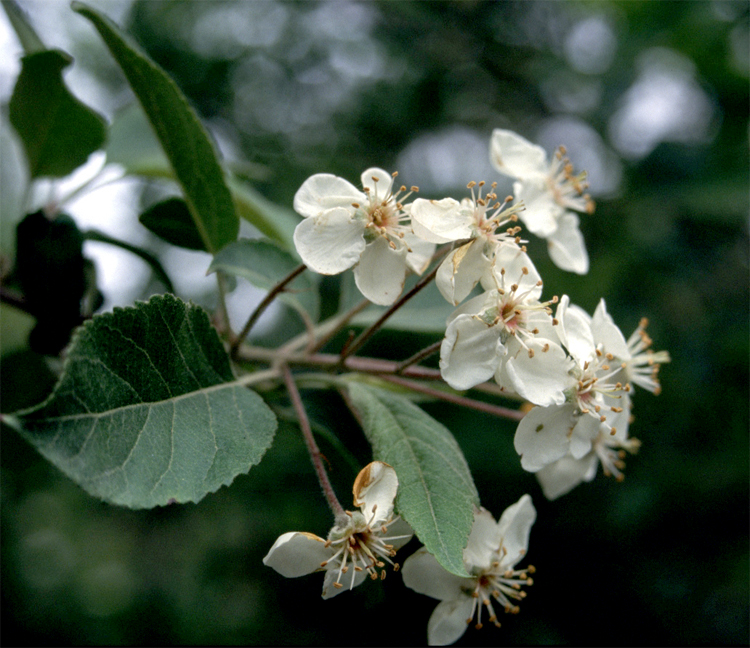
Pacific Crabapple
Malus fusca
Gordon Leppig & Andrea J. Pickart, Public domain, via Wikimedia Commons


Side by side
| Pacific Crabapple | European Crab Apple | |
|---|---|---|
| Scientific name | Malus fusca (Raf.) C.K.Schneid. | Malus sylvestris Mill. |
| English name | Pacific Crabapple | European Crab Apple |
| Group | Flowering plants | Flowering plants |
| Class | Magnoliopsida | Magnoliopsida |
| Order | Rosales | Rosales |
| Family | Rosaceae Rose Family | Rosaceae Rose Family |
| Genus | Malus Apple | Malus Apple |
| Red List category | Least Concern | Data Deficient |
| Countries on record | 2 countries | 60 countries |
| GBIF occurrence records | 5,671 records | 186,479 records |
Rows where the two agree are shown in grey.
Where each is found
Both recorded in 1 country
Only Pacific Crabapple (1)
Only European Crab Apple (59)
- Afghanistan
- Aland Islands
- Albania
- Andorra
- Argentina
- Australia
- Austria
- Belarus
- Belgium
- Bosnia and Herzegovina
- Bulgaria
- China
- Croatia
- Czechia
- Denmark
- Estonia
- Finland
- France
- Germany
- Greece
- Guernsey
- Hungary
- India
- Indonesia
- Iran
- Ireland
- Isle of Man
- Italy
- Japan
- Jersey
- Kazakhstan
- Kosovo
- Latvia
- Liechtenstein
- Lithuania
- Luxembourg
- Moldova
- Montenegro
- North Macedonia
- Norway
- Pakistan
- Peru
- Poland
- Portugal
- Romania
- Russia
- Saudi Arabia
- Serbia
- Slovakia
- Slovenia
- Spain
- Sweden
- Switzerland
- Taiwan
- The Netherlands
- Turkey
- Ukraine
- United Kingdom
- Yemen
From Catalogue of Life checklists and GBIF occurrence records. A country missing from a list means no record is held, which is not proof of absence.
Checked facts
| Pacific Crabapple | European Crab Apple | |
|---|---|---|
| Appearance |
|
|
| Size |
|
|
| Habitat |
| No checked fact yet |
| Diet |
|
|
| Behaviour | No checked fact yet |
|
| Reproduction |
|
|
| Lifespan |
| No checked fact yet |
| Distribution |
|
|
| Conservation | No checked fact yet |
|
| Uses |
|
|
| Similar species | No checked fact yet |
|
| Name origin | No checked fact yet |
|
| Other |
| No checked fact yet |
In brief
Pacific Crabapple
Malus fusca grows in temperate coniferous forests, particularly in the Cascade Range and Pacific Coast Ranges, and occurs from Alaska through British Columbia to northwestern California. It produces small, sour, apple-shaped fruits that range from red to yellow-green. Full profile
European Crab Apple
Malus sylvestris occurs widely throughout Europe, extending from central Europe to western Asia, including Anatolia and the southern Caucasus. It is a deciduous tree with spiny branches, white or pinkish flowers and small fruits. Full profile
Compare something else
Page built on 29 November 2026 from the data on the two species pages, where every source is listed.
Cite this page
ScientificNames.org. (2026). Pacific Crabapple vs European Crab Apple. Retrieved November 29, 2026, from https://scientificnames.org/compare/pacific-crabapple-vs-european-crab-apple
“Pacific Crabapple vs European Crab Apple.” ScientificNames.org, 2026, scientificnames.org/compare/pacific-crabapple-vs-european-crab-apple. Accessed 29 Nov. 2026.
ScientificNames.org. “Pacific Crabapple vs European Crab Apple.” Accessed November 29, 2026. https://scientificnames.org/compare/pacific-crabapple-vs-european-crab-apple.
@misc{scientificnames_pacific_crabapple_vs_european_crab_apple,
  author = {{ScientificNames.org}},
  title = {Pacific Crabapple vs European Crab Apple},
  year = {2026},
  url = {https://scientificnames.org/compare/pacific-crabapple-vs-european-crab-apple},
  note = {Accessed 2026-11-29}
}