Comparison

Melipona capixaba vs Melipona subnitida

Melipona capixaba (Melipona capixaba) and Melipona subnitida (Melipona subnitida) both belong to the genus Melipona and part ways below it. Both are recorded in 1 country.

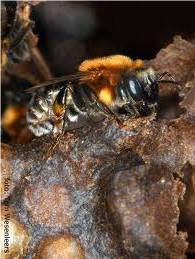
Melipona capixaba

Melipona capixaba

Josemar de Carvalho Ramos, CC BY-SA 4.0, via Wikimedia Commons

Melipona subnitida

Melipona subnitida

Informativotibau, CC BY-SA 3.0, via Wikimedia Commons

Side by side

Melipona capixabaMelipona subnitida
Scientific nameMelipona capixaba Moure & Camargo, 1995Melipona subnitida Ducke, 1911
GroupInsectsInsects
ClassInsecta InsectInsecta Insect
OrderHymenoptera AntsHymenoptera Ants
FamilyApidae EuglossineApidae Euglossine
GenusMeliponaMelipona
Named in19951911
Countries on record1 country1 country
GBIF occurrence records129 records538 records

Rows where the two agree are shown in grey.

Where each is found

Both recorded in 1 country

From Catalogue of Life checklists and GBIF occurrence records. A country missing from a list means no record is held, which is not proof of absence.

Checked facts

Melipona capixabaMelipona subnitida
AppearanceNo checked fact yet
  • Adults can be identified by obscure metasomal bands, an absence of facial maculation, and fulvous thoracic pile. English Wikipedia
  • Queens are smaller than other colony members and lack pollen-carrying hairs on certain legs. English Wikipedia
  • A queen's abdomen becomes greatly expanded, eventually preventing her from flying. English Wikipedia
SizeNo checked fact yet
  • Perennial colonies contain several hundred to approximately one thousand individuals. English Wikipedia
Habitat
Diet
  • The species also obtains pollen from native forest plants, field plants, fruit-bearing plants, and introduced ornamental plants. pmc.ncbi.nlm.nih.gov
  • Eucalyptus and Melastomataceae/Combretaceae are predominant pollen types stored in the species' food pots. pmc.ncbi.nlm.nih.gov
  • The species primarily collects pollen from Mimosa caesalpiniifolia. English Wikipedia
  • The species also collects pollen from non-native Eucalyptus species. English Wikipedia
  • Fabaceae is the most important plant family among the pollen sources of this species. English Wikipedia
Behaviour
  • This species exhibits single mating and monogynous colony organization. English Wikipedia
  • Workers of this species have particularly strong fighting abilities. English Wikipedia
  • A colony normally contains only one queen, which maintains dominance by destroying cells that could contain potential queens. English Wikipedia
  • Daughters of the queen perform brood care, nest protection, and food foraging. English Wikipedia
  • Workers prefer food sources marked with scent from other individuals of their species over unmarked sources, although this preference is weaker than in the other tested species. pmc.ncbi.nlm.nih.gov
  • Workers trained to blue feeders subsequently prefer blue feeders. pmc.ncbi.nlm.nih.gov
  • Training workers with yellow feeders produces less distinct color preferences. pmc.ncbi.nlm.nih.gov
  • Workers primarily orient toward their previously trained position and locations close to the nest. pmc.ncbi.nlm.nih.gov
  • During scent-mark experiments, workers preferentially visit feeders closer to their nest. pmc.ncbi.nlm.nih.gov
  • During color-learning experiments, workers choose feeder locations randomly. pmc.ncbi.nlm.nih.gov
ReproductionNo checked fact yet
Distribution
  • Melipona capixaba is endemic to the mountainous region of Espírito Santo State in Brazil. English Wikipedia
  • The species occurs in mountainous areas of southwestern Espírito Santo, Brazil, at elevations between 900 and 1000 metres above sea level. pmc.ncbi.nlm.nih.gov
  • Melipona subnitida occurs in the dry regions of northeastern Brazil. English Wikipedia
Conservation
  • Melipona capixaba has been classified as vulnerable to extinction. English Wikipedia
  • The species was included in Brazil's list of threatened species in 2003. English Wikipedia
  • Melipona capixaba is the only eusocial insect included on the Brazilian Ministry of the Environment's threatened species list. English Wikipedia
  • Conservation efforts should prioritize protecting existing wild colonies and increasing their numbers. English Wikipedia
  • Limited information about the species' biology, ecology, and behaviour makes conservation more difficult. pmc.ncbi.nlm.nih.gov
  • Destructive colony extraction for commercial purposes and deforestation are identified as causes of colony decline. English Wikipedia
Uses
  • Melipona capixaba contributes to orchid pollination within its geographical range. English Wikipedia
  • Melipona capixaba has been used as a flagship species to promote awareness of environmental damage caused by deforestation in Espírito Santo. English Wikipedia
  • The species is valued for its pollination services and honey production. English Wikipedia
  • The species is suitable for beekeeping because it is easy to handle and produces good honey. English Wikipedia
  • Beekeepers can maintain artificial colonies of this species. English Wikipedia
  • This species is commonly farmed in urban areas within its native range. English Wikipedia
  • Brood chambers may produce approximately one litre of honey annually in the Brazilian caatinga region. English Wikipedia
  • Older colonies can produce as much as six litres of honey. English Wikipedia
  • Honey produced by this species is known as jandaíra honey. English Wikipedia
  • The species produces dark brown wax that was formerly used to seal food containers. English Wikipedia
Similar speciesNo checked fact yet
  • Workers of Melipona subnitida strongly resemble workers of Melipona favosa. English Wikipedia
Name origin
  • The common name uruçu derives from the Tupi expression eiru su, meaning big bee. English Wikipedia
No checked fact yet
OtherNo checked fact yet

In brief

Melipona capixaba

Melipona capixaba is an insect of the family Apidae, order Hymenoptera, and class Insecta, and is a eusocial stingless bee. It is endemic to the mountainous region of Espírito Santo State in Brazil, where it inhabits the Atlantic Rainforest biome. Full profile

Melipona subnitida

Melipona subnitida occurs in the dry regions of northeastern Brazil and is characteristic of the caatinga biome. Adults are identified by obscure metasomal bands, an absence of facial maculation, and fulvous thoracic pile. Full profile

Compare something else

Page built on 28 November 2026 from the data on the two species pages, where every source is listed.

Cite this page

ScientificNames.org. (2026). Melipona capixaba vs Melipona subnitida. Retrieved November 28, 2026, from https://scientificnames.org/compare/melipona-capixaba-vs-melipona-subnitida