Comparison

Northern Rock Mouse vs White-footed Mouse

Northern Rock Mouse (Peromyscus nasutus) and White-footed Mouse (Peromyscus leucopus) both belong to the genus Peromyscus (deer mice) and part ways below it. Both are recorded in 2 countries.

Northern Rock Mouse

Peromyscus nasutus
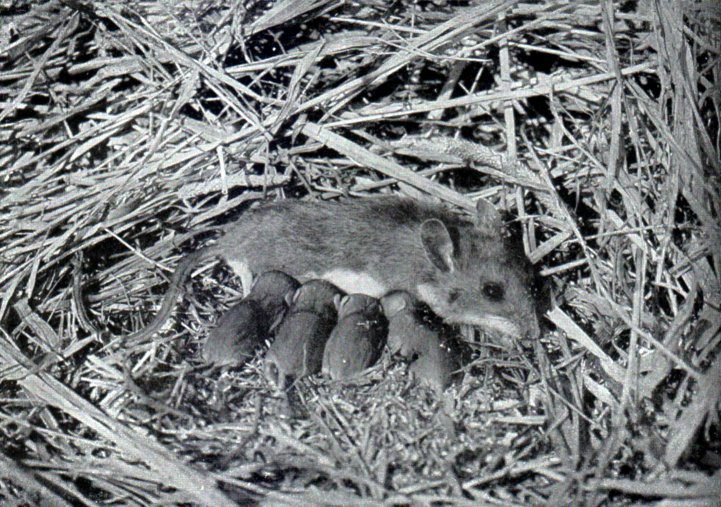
White-footed Mouse

White-footed Mouse

Peromyscus leucopus

Edited by Chandler B. Beach, A.M., Public domain, via Wikimedia Commons

Side by side

Northern Rock MouseWhite-footed Mouse
Scientific namePeromyscus nasutus (J. A. Allen, 1891)Peromyscus leucopus (Rafinesque, 1818)
English nameNorthern Rock MouseWhite-footed Mouse
GroupMammalsMammals
ClassMammalia MammalMammalia Mammal
OrderRodentia RodentRodentia Rodent
FamilyCricetidae New World Mice and RatsCricetidae New World Mice and Rats
GenusPeromyscus Deer MicePeromyscus Deer Mice
Named in18911818
Red List categoryLeast ConcernLeast Concern
EnvironmentNot recordedterrestrial
Countries on record2 countries3 countries
GBIF occurrence records3,671 records137,357 records

Rows where the two agree are shown in grey.

Where each is found

Both recorded in 2 countries

Only White-footed Mouse (1)

From Catalogue of Life checklists and GBIF occurrence records. A country missing from a list means no record is held, which is not proof of absence.

Checked facts

Northern Rock MouseWhite-footed Mouse
Appearance
  • The northern rock deermouse has grayish-buff fur and a relatively long tail. depts.ttu.edu
  • Its tail is brownish to blackish on the upper surface and white underneath. depts.ttu.edu
  • The upper surfaces of its front and hind feet, including the ankles, are white. depts.ttu.edu
  • Its ears are approximately as long as its hind feet. depts.ttu.edu
  • The upperparts of this species range from pale to rich reddish brown, while its underside and feet are white. animaldiversity.org
  • Its tail is darker on the upper surface and lighter underneath. biokids.umich.edu
Size
  • Its tail exceeds 100 mm in length and is longer than the combined length of its head and body. depts.ttu.edu
  • Its maxillary tooth row measures approximately 4.5 mm. depts.ttu.edu
Habitat
  • In Texas, the species inhabits boulder fields on rocky mountain slopes. depts.ttu.edu
  • It occurs in rock piles within Texas madrone and oak associations. depts.ttu.edu
  • It uses crevices and cracks covered by thick layers of leaves. depts.ttu.edu
  • In the Franklin Mountains of El Paso County, it occurs in rocky areas and talus slopes. depts.ttu.edu
  • In the Davis Mountains, it prefers cooler, moist conditions in shaded rocky canyons at high elevations. depts.ttu.edu
  • The species appears to prefer rugged, rocky habitats with sparse vegetation. depts.ttu.edu
  • This species is most frequently encountered in warm, dry forests and brushlands at low and intermediate elevations. animaldiversity.org
  • It can inhabit environments ranging from high-elevation forests to semi-desert landscapes. animaldiversity.org
  • It also occupies suburban and agricultural environments. biokids.umich.edu
  • In the southern and western portions of its range, this species mainly inhabits wooded areas and semi-desert scrub near waterways. animaldiversity.org
  • In southern Mexico, this species is primarily associated with agricultural environments. biokids.umich.edu
  • It constructs nests in warm, dry locations such as hollow trees and abandoned bird nests. animaldiversity.org
DietNo checked fact yet
  • This species is omnivorous and consumes seeds, berries, nuts, insects, grains, fruits, and fungi. biokids.umich.edu
  • Its diet includes seeds, nuts, fruits, berries, and insects. tn.gov
  • It consumes the pupal stage of invasive gypsy moths. English Wikipedia
  • It gathers and stores seeds and nuts during autumn for consumption during winter. biokids.umich.edu
Behaviour
  • Individuals are docile and easily handled in captivity. depts.ttu.edu
  • The species is highly gregarious. depts.ttu.edu
  • Groups of twelve or more juveniles and adults of both sexes may occupy a single nest without apparent conflict. depts.ttu.edu
  • This species is primarily active during nighttime. animaldiversity.org
  • Individuals are generally solitary and territorial, although neighboring home ranges can overlap. animaldiversity.org
  • Its home ranges generally cover between 0.5 and 1.5 acres. biokids.umich.edu
  • Its population density can range from 4 to 12 individuals per acre. animaldiversity.org
  • Individuals are capable of climbing and swimming effectively. animaldiversity.org
  • Captured individuals have demonstrated the ability to return to their original capture location after being released two miles away. animaldiversity.org
  • Individuals produce a prolonged buzzing sound by striking hollow reeds or dry leaves with their forepaws. biokids.umich.edu
  • Females transport threatened offspring individually by holding them around the neck with their teeth. biokids.umich.edu
Reproduction
  • Pregnant females have been recorded between June and August. depts.ttu.edu
  • A female captured in New Mexico in late July contained four large fetuses. depts.ttu.edu
  • A female captured in New Mexico in late August contained six fetuses. depts.ttu.edu
Distribution
  • The species occurs in Mexico and the United States. English Wikipedia
  • In Texas, the species is known only from the Trans-Pecos region. depts.ttu.edu
  • Its Texas records include mountainous areas of Brewster, Culberson, El Paso, Jeff Davis, and Presidio counties. depts.ttu.edu
  • In New Mexico, the species has been recorded along the northwestern escarpment of the Llano Estacado in Quay and Curry counties. depts.ttu.edu
  • This species occurs across much of eastern North America, extending from Nova Scotia westward to Saskatchewan and Montana. animaldiversity.org
  • Its geographical range extends southward into eastern and southern Mexico and the Yucatan Peninsula. biokids.umich.edu
Conservation
  • The species is classified as least concern by the IUCN. depts.ttu.edu
  • The species does not appear on federal or state lists of species of concern. depts.ttu.edu
  • The species has an uncommon population status in Texas. depts.ttu.edu
  • Its distribution in the isolated mountains of far western Texas is patchy. depts.ttu.edu
  • The species has not been found abundant at any surveyed location. depts.ttu.edu
  • In some Davis Mountains localities, trapping surveys conducted approximately ten years after collections in the late 1990s produced no captures. depts.ttu.edu
  • Increasing aridity associated with climate change may threaten the species. depts.ttu.edu
  • The species may face serious competition from the brush deermouse under increasingly arid conditions. depts.ttu.edu
UsesNo checked fact yet
  • This species contributes to controlling populations of insect pests such as gypsy moths. animaldiversity.org
  • It serves as an important prey species for numerous small predators. maine.gov
  • It is commonly used as a laboratory animal, ranking among the most frequently used mouse species after the house mouse. English Wikipedia
  • Domesticated individuals are also maintained as pets and have been selectively bred for different coat colors. English Wikipedia
Similar speciesNo checked fact yet
  • The eastern deer mouse (Peromyscus maniculatus) is a similar species. English Wikipedia
  • Other closely related species that can be difficult to distinguish from it include Peromyscus maniculatus, P. eremicus, P. polionotus, and P. gossypinus. animaldiversity.org
Other
  • The northern rock mouse belongs to the genus Peromyscus. English Wikipedia
  • The genus Peromyscus is a closely related group of New World mice commonly called deermice. English Wikipedia
No checked fact yet

In brief

Northern Rock Mouse

The Northern Rock Mouse is a mammal in the family Cricetidae, order Rodentia, class Mammalia, and genus Peromyscus. It occurs in Mexico and the United States, including mountainous areas of the Trans-Pecos region of Texas and parts of New Mexico. It has grayish-buff fur, a relatively long tail, and white upper surfaces on its feet and ankles. Full profile

White-footed Mouse

Peromyscus leucopus occurs across much of eastern North America, extending from Nova Scotia westward to Saskatchewan and Montana, and southward into eastern and southern Mexico and the Yucatan Peninsula. Its upperparts range from pale to rich reddish brown, while its underside and feet are white. Full profile

Compare something else

Page built on 28 November 2026 from the data on the two species pages, where every source is listed.

Cite this page

ScientificNames.org. (2026). Northern Rock Mouse vs White-footed Mouse. Retrieved November 28, 2026, from https://scientificnames.org/compare/northern-rock-mouse-vs-white-footed-mouse