Comparison
Bigg's Killer Whale vs False Killer Whale
Bigg's Killer Whale (Orcinus rectipinnus) and False Killer Whale (Pseudorca crassidens) both belong to the family Delphinidae (oceanic dolphin) and part ways below it.
Bigg's Killer Whale
Orcinus rectipinnus

Side by side
| Bigg's Killer Whale | False Killer Whale | |
|---|---|---|
| Scientific name | Orcinus rectipinnus (Cope in Scammon, 1869) | Pseudorca crassidens (Owen, 1846) |
| English name | Bigg's Killer Whale | False Killer Whale |
| Group | Mammals | Mammals |
| Class | Mammalia Mammal | Mammalia Mammal |
| Order | Cetacea Cetacean | Cetacea Cetacean |
| Family | Delphinidae Oceanic Dolphin | Delphinidae Oceanic Dolphin |
| Genus | Orcinus Killer Whales | Pseudorca False Killer Whales |
| Named in | 1869 | 1846 |
| Red List category | Not recorded | Near Threatened |
| Environment | marine | marine |
| Countries on record | Not recorded | 32 countries |
| GBIF occurrence records | Not recorded | 9,197 records |
Rows where the two agree are shown in grey.
Where each is found
Only False Killer Whale (32)
- American Samoa
- Australia
- Bahamas
- Canada
- Costa Rica
- Cuba
- Cyprus
- Denmark
- Dominica
- France
- French Polynesia
- Grenada
- Guadeloupe
- Guam
- Ireland
- Italy
- Martinique
- Mexico
- Micronesia
- New Caledonia
- New Zealand
- Northern Mariana Islands
- Panama
- Portugal
- Spain
- Sweden
- The Netherlands
- Timor Leste
- United Kingdom
- United States
- United States Minor Outlying Islands
- Wallis and Futuna
From Catalogue of Life checklists and GBIF occurrence records. A country missing from a list means no record is held, which is not proof of absence.
Checked facts
| Bigg's Killer Whale | False Killer Whale | |
|---|---|---|
| Appearance | No checked fact yet |
|
| Habitat | No checked fact yet |
|
| Diet | No checked fact yet |
|
| Behaviour | No checked fact yet |
|
| Reproduction | No checked fact yet |
|
| Conservation | No checked fact yet |
|
| Uses | No checked fact yet |
|
| Similar species | No checked fact yet |
|
| Name origin | No checked fact yet |
|
In brief
False Killer Whale
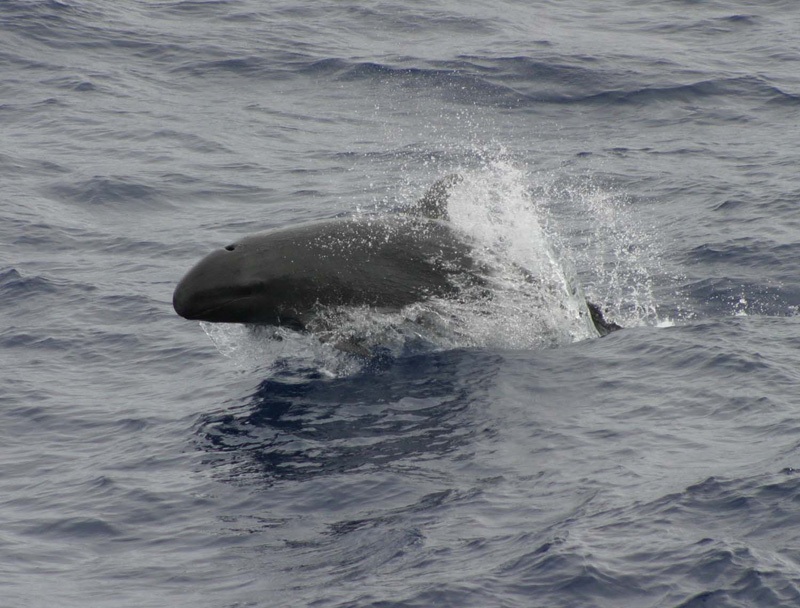
Pseudorca crassidens inhabits tropical and subtropical marine waters, primarily in open-ocean and deep-water environments. It has a slender, dark gray or black body, an elongated tapered head without a distinct beak and a sickle-shaped dorsal fin. Full profile
Compare something else
Page built on 26 November 2026 from the data on the two species pages, where every source is listed.
Cite this page
ScientificNames.org. (2026). Bigg's Killer Whale vs False Killer Whale. Retrieved November 26, 2026, from https://scientificnames.org/compare/biggs-killer-whale-vs-false-killer-whale
“Bigg's Killer Whale vs False Killer Whale.” ScientificNames.org, 2026, scientificnames.org/compare/biggs-killer-whale-vs-false-killer-whale. Accessed 26 Nov. 2026.
ScientificNames.org. “Bigg's Killer Whale vs False Killer Whale.” Accessed November 26, 2026. https://scientificnames.org/compare/biggs-killer-whale-vs-false-killer-whale.
@misc{scientificnames_biggs_killer_whale_vs_false_killer_whale,
  author = {{ScientificNames.org}},
  title = {Bigg's Killer Whale vs False Killer Whale},
  year = {2026},
  url = {https://scientificnames.org/compare/biggs-killer-whale-vs-false-killer-whale},
  note = {Accessed 2026-11-26}
}