Comparison

Persian Brook Salamander vs Hida Salamander

Persian Brook Salamander (Paradactylodon persicus) and Hida Salamander (Hynobius kimurae) both belong to the subfamily Hynobiinae and part ways below it.

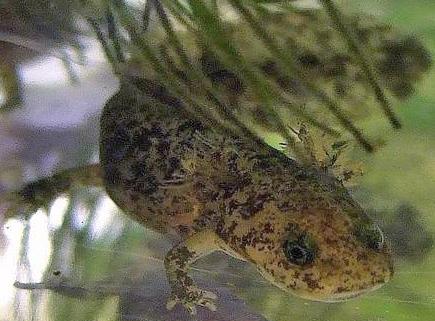
Persian Brook Salamander

Persian Brook Salamander

Paradactylodon persicus

Mehregan Ebrahimi, CC BY-SA 2.5, via Wikimedia Commons
Hida Salamander

Hida Salamander

Hynobius kimurae

Eugene van der Pijll, CC BY-SA 2.5, via Wikimedia Commons

Side by side

Persian Brook SalamanderHida Salamander
Scientific nameParadactylodon persicus (Eiselt & Steiner, 1970)Hynobius kimurae Dunn, 1923
English namePersian Brook SalamanderHida Salamander
GroupAmphibiansAmphibians
ClassAmphibia AmphibiansAmphibia Amphibians
OrderCaudata SalamandersCaudata Salamanders
FamilyHynobiidae Asiatic SalamanderHynobiidae Asiatic Salamander
GenusParadactylodon Mountain SalamandersHynobius Asian Salamanders
Named in19701923
Red List categoryNear ThreatenedLeast Concern
Countries on record1 country1 country
GBIF occurrence records52 records319 records

Rows where the two agree are shown in grey.

Where each is found

Only Persian Brook Salamander (1)

Only Hida Salamander (1)

From Catalogue of Life checklists and GBIF occurrence records. A country missing from a list means no record is held, which is not proof of absence.

Checked facts

Persian Brook SalamanderHida Salamander
Appearance
  • Adult Persian brook salamanders have four fingers and four toes, dark coloration with scattered yellow spots, rectangular heads, and rounded tails that are often longer than their bodies. English Wikipedia
  • Larvae have large, rounded triangular heads, short fin-like tails, and generally light-yellow coloration without distinct spots. English Wikipedia
  • Juveniles develop darker coloration, mottled yellow spots, more rectangular heads, and longer, rounder tails. English Wikipedia
  • The species has a long and robust trunk. amphibiaweb.org
  • Dorsal coloration in Hynobius kimurae varies from uniformly dark coloration without yellow spots to patterns with numerous confluent spots forming a continuous light-colored dorsal area. pmc.ncbi.nlm.nih.gov
  • The vomerine tooth series varies in shape from V-shaped to shallow U-shaped. pmc.ncbi.nlm.nih.gov
  • Variation within the species includes differences in the presence and size of the fifth toe. pmc.ncbi.nlm.nih.gov
Size
Habitat
  • The species inhabits temperate rainforest along the southwestern tip of the Caspian Sea in Iran. English Wikipedia
  • Its known habitat includes rivers, inland karsts, and caves. English Wikipedia
  • Larvae inhabit aquatic environments and use external gills for respiration. English Wikipedia
  • Stream-dwelling larvae occupy rocky areas of fast-flowing streams. English Wikipedia
Diet
  • Individuals at all life stages are carnivorous and consume arthropods and small animals sharing their habitat. English Wikipedia
  • Researchers found remains of the bat Myotis blythyii in the stomach of cave-dwelling adult specimens. English Wikipedia
  • Adults and juveniles have been found with conspecific larvae in their stomachs, indicating cannibalism. English Wikipedia
No checked fact yet
Behaviour
  • Adults inhabiting caves and karsts remain active throughout the year. English Wikipedia
  • Adults in other localities hide in burrows during the day and are thought to become more active at night. English Wikipedia
  • Hynobius kimurae belongs to a group of salamanders that reproduce in mountain streams. pmc.ncbi.nlm.nih.gov
Reproduction
  • The species typically breeds in flowing water rather than stagnant water. English Wikipedia
  • The species breeds in streams. English Wikipedia
  • Hida salamanders typically spawn between February and April. English Wikipedia
  • Some individuals metamorphose in late September, while others postpone metamorphosis until after the following winter. English Wikipedia
  • The egg sacs have been reported to exhibit iridescent coloration ranging from blue to yellow. English Wikipedia
  • Hynobius kimurae populations in eastern and western Honshu differ in the number of eggs produced per clutch. pmc.ncbi.nlm.nih.gov
Distribution
  • The only confirmed populations described in the document occur in Iran. English Wikipedia
  • The species is suspected to occur in parts of Azerbaijan, but definitive sightings have not been verified. English Wikipedia
  • The species' native range covers approximately 2,000 km². English Wikipedia
  • The Hida salamander is endemic to central and western Honshu, Japan. English Wikipedia
  • Hynobius kimurae occurs in highland areas of eastern, central, and western Honshu, Japan. pmc.ncbi.nlm.nih.gov
Conservation
  • Urban expansion around the Caspian Sea coast and foothills is identified as a habitat-loss threat. English Wikipedia
  • Agriculture, particularly rice cultivation, is identified as a threat to the species. English Wikipedia
  • Logging threatens the species by increasing siltation in streams used by larvae. English Wikipedia
  • Drought periods and collection for the pet trade are suggested as possible threats. English Wikipedia
No checked fact yet
Other
  • Larvae possess external gills, which are replaced by lungs as individuals mature. English Wikipedia
  • Phylogenetic analysis indicates that populations formerly classified as Paradactylodon gorganensis belong to this species. English Wikipedia

In brief

Persian Brook Salamander

Paradactylodon persicus inhabits temperate rainforest along the southwestern tip of the Caspian Sea in Iran, including rivers, inland karsts, and caves. Adults have dark coloration with scattered yellow spots, rectangular heads, and rounded tails that are often longer than their bodies. Full profile

Hida Salamander

Hynobius kimurae is endemic to central and western Honshu, Japan. Its egg sacs exhibit iridescent coloration associated with a quasi-periodic diffraction grating structure within their envelopes. Full profile

Compare something else

Page built on 27 November 2026 from the data on the two species pages, where every source is listed.

Cite this page

ScientificNames.org. (2026). Persian Brook Salamander vs Hida Salamander. Retrieved November 27, 2026, from https://scientificnames.org/compare/persian-brook-salamander-vs-hida-salamander