Comparison
Cortez Searobin vs Armed Gurnard
Cortez Searobin (Peristedion paucibarbiger) and Armed Gurnard (Peristedion cataphractum) both belong to the genus Peristedion and part ways below it.
Cortez Searobin
Peristedion paucibarbiger

Side by side
| Cortez Searobin | Armed Gurnard | |
|---|---|---|
| Scientific name | Peristedion paucibarbiger Castro-Aguirre & Garcia-Domínguez, 1984 | Peristedion cataphractum (Linnaeus, 1758) |
| English name | Cortez Searobin | Armed Gurnard |
| Group | Fishes | Fishes |
| Class | Teleostei Teleost | Teleostei Teleost |
| Order | Perciformes | Perciformes |
| Family | Peristediidae Armored Gurnards | Peristediidae Armored Gurnards |
| Genus | Peristedion | Peristedion |
| Named in | 1984 | 1758 |
| Red List category | Not recorded | Least Concern |
| Environment | marine | marine |
| Countries on record | Not recorded | 38 countries |
| GBIF occurrence records | Not recorded | 1,557 records |
Rows where the two agree are shown in grey.
Where each is found
Only Armed Gurnard (38)
- Aland Islands
- Albania
- Algeria
- Angola
- Benin
- Cabo Verde
- Cameroon
- Croatia
- Democratic Republic of the Congo
- Equatorial Guinea
- Estonia
- Finland
- France
- Gabon
- Ghana
- Greece
- Guinea
- Guinea-Bissau
- Italy
- Ivory Coast
- Latvia
- Liberia
- Lithuania
- Malta
- Mauritania
- Montenegro
- Morocco
- Nigeria
- Poland
- Portugal
- Republic of the Congo
- Senegal
- Sierra Leone
- Spain
- Sweden
- Togo
- Tunisia
- Western Sahara
From Catalogue of Life checklists and GBIF occurrence records. A country missing from a list means no record is held, which is not proof of absence.
Checked facts
| Cortez Searobin | Armed Gurnard | |
|---|---|---|
| Appearance |
|
|
| Size | No checked fact yet |
|
| Habitat | No checked fact yet |
|
| Diet |
|
|
| Behaviour | No checked fact yet |
|
| Reproduction | No checked fact yet |
|
| Distribution |
|
|
| Conservation | No checked fact yet |
|
| Uses | No checked fact yet |
|
In brief
Cortez Searobin
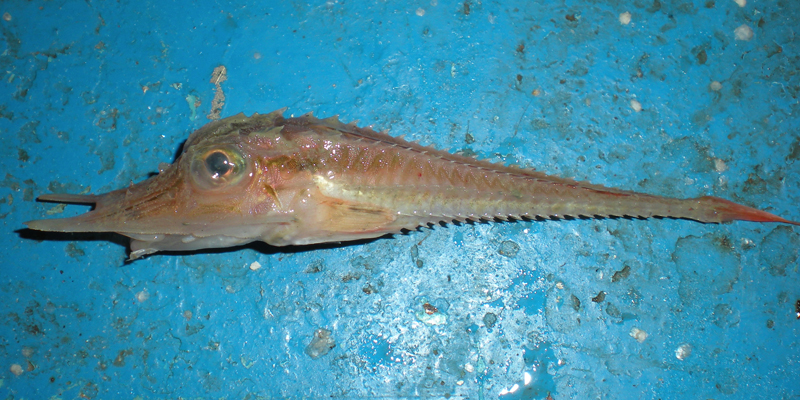
The species is known from a single specimen collected off La Paz in the western Gulf of California. It has an intensely red body and a head and underside protected by heavy bony plates and spines. Full profile
Armed Gurnard
Peristedion cataphractum occurs in the eastern Atlantic Ocean and throughout the Mediterranean Sea. It has an elongated, armoured body, a large spiny head and a wide snout with rostral extensions. Full profile
Compare something else
Page built on 28 November 2026 from the data on the two species pages, where every source is listed.
Cite this page
ScientificNames.org. (2026). Cortez Searobin vs Armed Gurnard. Retrieved November 28, 2026, from https://scientificnames.org/compare/cortez-searobin-vs-armed-gurnard
“Cortez Searobin vs Armed Gurnard.” ScientificNames.org, 2026, scientificnames.org/compare/cortez-searobin-vs-armed-gurnard. Accessed 28 Nov. 2026.
ScientificNames.org. “Cortez Searobin vs Armed Gurnard.” Accessed November 28, 2026. https://scientificnames.org/compare/cortez-searobin-vs-armed-gurnard.
@misc{scientificnames_cortez_searobin_vs_armed_gurnard,
  author = {{ScientificNames.org}},
  title = {Cortez Searobin vs Armed Gurnard},
  year = {2026},
  url = {https://scientificnames.org/compare/cortez-searobin-vs-armed-gurnard},
  note = {Accessed 2026-11-28}
}