Comparison

New Zealand Green-lipped Mussel vs Brown Mussel

New Zealand Green-lipped Mussel (Perna canaliculus) and Brown Mussel (Perna perna) both belong to the genus Perna and part ways below it.

New Zealand Green-lipped Mussel

New Zealand Green-lipped Mussel

Perna canaliculus

Auckland Museum Collections from Auckland, Aotearoa New Zealand, CC BY 2.0, via Wikimedia Commons
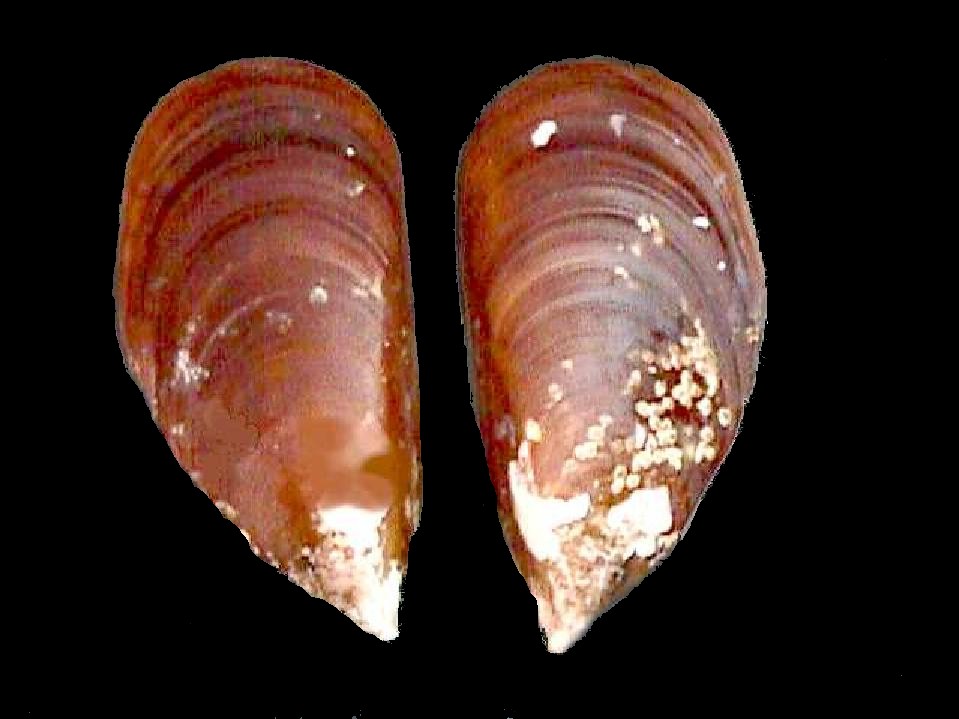
Brown Mussel

Brown Mussel

Perna perna

Veronidae, CC BY-SA 3.0, via Wikimedia Commons

Side by side

New Zealand Green-lipped MusselBrown Mussel
Scientific namePerna canaliculus (Gmelin, 1791)Perna perna (Linnaeus, 1758)
English nameNew Zealand Green-lipped MusselBrown Mussel
GroupMolluscsMolluscs
ClassBivalviaBivalvia
OrderMytilidaMytilida
FamilyMytilidae MusselsMytilidae Mussels
GenusPernaPerna
Named in17911758
Environmentmarinemarine
Countries on record2 countries35 countries
GBIF occurrence records2,750 records2,792 records

Rows where the two agree are shown in grey.

Where each is found

Only New Zealand Green-lipped Mussel (2)

Only Brown Mussel (35)

From Catalogue of Life checklists and GBIF occurrence records. A country missing from a list means no record is held, which is not proof of absence.

Checked facts

New Zealand Green-lipped MusselBrown Mussel
Appearance
Size
Habitat
  • The species occurs in intertidal and subtidal coastal habitats. pmc.ncbi.nlm.nih.gov
  • The species is usually found below the intertidal zone but can also occur within it. English Wikipedia
  • The species attaches to hard surfaces such as rocks, boats and piers using threads known as a beard. nimpis.marinepests.gov.au
  • The species naturally colonizes rocky shorelines. English Wikipedia
  • It attaches to submerged artificial structures, including navigation buoys, petroleum platforms and shipwrecks. English Wikipedia
  • Potential habitats near Australian ports include rocky shores, wood, jetties and port facilities. nimpis.marinepests.gov.au
  • The species can establish colonies on soft substrates by attaching initially to small hard objects such as shells or rocks. nimpis.marinepests.gov.au
  • The species occurs in intertidal and shallow subtidal environments, including rocky shores, mangroves and estuaries. pmc.ncbi.nlm.nih.gov
  • The species can tolerate water temperatures ranging from 10 to 30 °C. English Wikipedia
  • The species tolerates salinities of approximately 15 to 50 ppt. English Wikipedia
DietNo checked fact yet
  • Perna perna is a filter feeder that consumes phytoplankton, zooplankton and suspended organic matter. English Wikipedia
Behaviour
  • The species filters large volumes of seawater and captures waterborne particles and microorganisms. pmc.ncbi.nlm.nih.gov
  • The species can release its attachment to a growing rope and produce a mucous parachute that helps it move to another settlement site using water currents. English Wikipedia
  • The species can form dense aggregations capable of sinking navigational buoys. English Wikipedia
  • The species can develop dense populations that clog pipes and foul industrial infrastructure. nimpis.marinepests.gov.au
  • Colonization by the species can increase hard-surface area and facilitate settlement by other marine organisms. English Wikipedia
Reproduction
  • Wild mussel populations supply seed mussels, also called spat, used by the New Zealand aquaculture industry. English Wikipedia
  • Approximately 270 tonnes of wild spat attached to beach-cast seaweed are collected annually from Ninety Mile Beach in northern New Zealand. English Wikipedia
  • Spat densities on collected seaweed range from 200 to 2,000,000 individuals per kilogram. English Wikipedia
  • Ninety Mile Beach supplies approximately 80% of the seed mussels needed by the New Zealand aquaculture industry. English Wikipedia
  • The remaining approximately 20% of aquaculture seed is collected using fibrous ropes suspended in the sea near mussel farms. English Wikipedia
  • Loss of spat from dropper ropes generally exceeds 50% and can reach 95%. English Wikipedia
  • The species uses external fertilization during its spawning season, generally between May and October. English Wikipedia
  • Spawning has also been reported in December. English Wikipedia
  • Both sexes release eggs and sperm into the water during spawning. English Wikipedia
  • Fertilized eggs develop into veliger larvae. English Wikipedia
  • The larvae develop well-formed hinge teeth approximately 15 hours after fertilization. English Wikipedia
  • Larvae undergo metamorphosis and secrete byssal threads 10 to 12 days after fertilization. English Wikipedia
  • After metamorphosis, larvae settle on rocky surfaces. English Wikipedia
Distribution
ConservationNo checked fact yet
  • Perna perna is listed as one of six species on Australia's Priority Marine Pest List that do not currently occur in Australia. nimpis.marinepests.gov.au
  • The species is occasionally detected during Australian vessel arrival inspections and removed. nimpis.marinepests.gov.au
Uses
  • The species is commercially cultivated in New Zealand under the trademark name Greenshell. English Wikipedia
  • The New Zealand aquaculture industry produces more than 140,000 metric tonnes of this mussel annually. English Wikipedia
  • The New Zealand industry cultivating this species was valued at more than NZ$250 million in 2009. English Wikipedia
  • Cultivation of the species in New Zealand began during the 1970s. English Wikipedia
  • Commercial harvesting generally takes place when farmed mussels reach approximately 100 mm in length. English Wikipedia
  • The period from initial farm seeding to harvesting is approximately 12–24 months. English Wikipedia
  • Mussel beds improve water quality by removing suspended sediment and particulate organic material. pmc.ncbi.nlm.nih.gov
  • The species can reach a commercial size of 60 to 80 mm within six or seven months. English Wikipedia
  • The species is considered a potential cultivation candidate because of its rapid growth and suitability for tropical and subtropical regions. English Wikipedia
Similar speciesNo checked fact yet
  • The European mussel, Mytilus galloprovincialis, resembles Perna perna in shape and colour. English Wikipedia
  • The black mussel, Choromytilus meridionalis, has a similar shape and size but lacks the pitted resillal ridge. English Wikipedia
  • Perna perna can be confused with Perna viridis because their shell shape and colour vary with environmental conditions. English Wikipedia
  • Perna perna is closely related to Perna viridis and Perna canaliculus, which both have green shells, particularly when young. nimpis.marinepests.gov.au

In brief

New Zealand Green-lipped Mussel

Perna canaliculus occurs in intertidal and subtidal coastal habitats around all of mainland New Zealand. It is distinguished by dark brown to green shells with green lips around their edges. Full profile

Brown Mussel

Perna perna lives in intertidal and shallow subtidal environments, including rocky shores, mangroves and estuaries. It is typically brown and has a pitted resillal ridge that distinguishes it from other bivalves. Full profile

Compare something else

Page built on 26 November 2026 from the data on the two species pages, where every source is listed.

Cite this page

ScientificNames.org. (2026). New Zealand Green-lipped Mussel vs Brown Mussel. Retrieved November 26, 2026, from https://scientificnames.org/compare/new-zealand-green-lipped-mussel-vs-brown-mussel