Comparison

Asian Green Mussel vs Brown Mussel

Asian Green Mussel (Perna viridis) and Brown Mussel (Perna perna) both belong to the genus Perna and part ways below it. Both are recorded in 7 countries.

Asian Green Mussel

Asian Green Mussel

Perna viridis

DataBase Center for Life Science (DBCLS), CC BY 4.0, via Wikimedia Commons
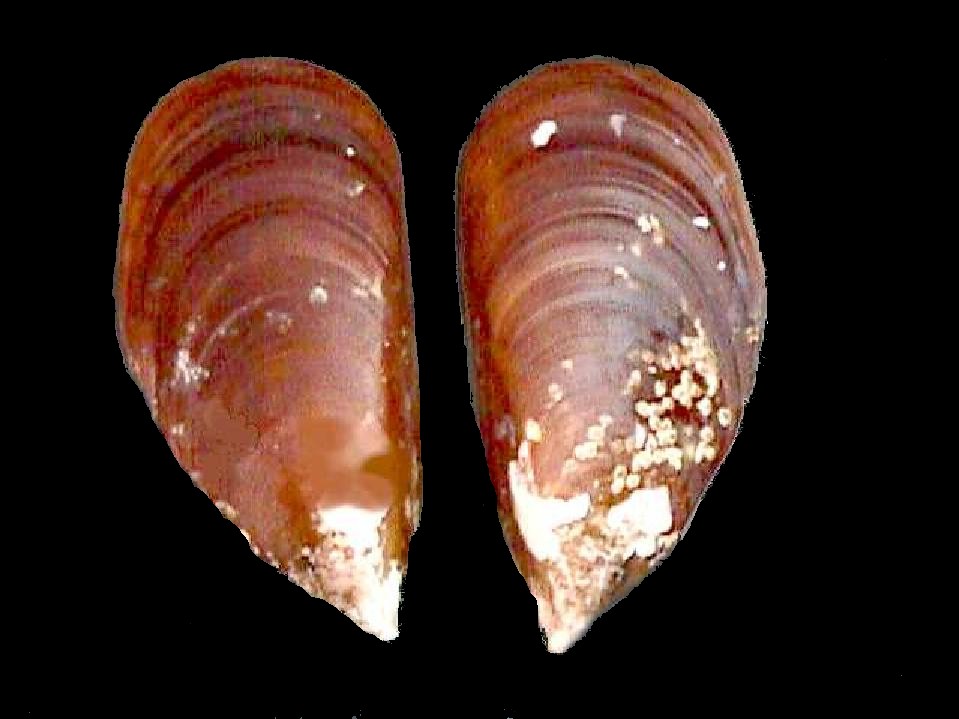
Brown Mussel

Brown Mussel

Perna perna

Veronidae, CC BY-SA 3.0, via Wikimedia Commons

Side by side

Asian Green MusselBrown Mussel
Scientific namePerna viridis (Linnaeus, 1758)Perna perna (Linnaeus, 1758)
English nameAsian Green MusselBrown Mussel
GroupMolluscsMolluscs
ClassBivalviaBivalvia
OrderMytilidaMytilida
FamilyMytilidae MusselsMytilidae Mussels
GenusPernaPerna
Named in17581758
Environmentmarinemarine
Countries on record24 countries35 countries
GBIF occurrence records2,277 records2,792 records

Rows where the two agree are shown in grey.

Where each is found

Both recorded in 7 countries

Only Asian Green Mussel (17)

Only Brown Mussel (28)

From Catalogue of Life checklists and GBIF occurrence records. A country missing from a list means no record is held, which is not proof of absence.

Checked facts

Asian Green MusselBrown Mussel
Appearance
Size
  • Individuals typically measure between 80 and 100 millimetres in shell length. English Wikipedia
  • Some individuals can reach a shell length of 165 millimetres. English Wikipedia
  • Sexual maturity is reached at a shell length of approximately 15–30 millimetres. English Wikipedia
Habitat
  • The species inhabits estuarine environments. English Wikipedia
  • The species can attach to rocks, wood and mollusc shells. invasions.si.edu
  • Individuals can settle on other mussels and form extensive beds that create complex habitats. invasions.si.edu
  • The species occurs on submerged marine objects at densities reaching 35,000 individuals per square metre. English Wikipedia
  • The species can tolerate water temperatures between 11 and 32 °C. English Wikipedia
  • The species tolerates salinity levels of approximately 18–33 parts per thousand. English Wikipedia
  • The species naturally colonizes rocky shorelines. English Wikipedia
  • It attaches to submerged artificial structures, including navigation buoys, petroleum platforms and shipwrecks. English Wikipedia
  • Potential habitats near Australian ports include rocky shores, wood, jetties and port facilities. nimpis.marinepests.gov.au
  • The species can establish colonies on soft substrates by attaching initially to small hard objects such as shells or rocks. nimpis.marinepests.gov.au
  • The species occurs in intertidal and shallow subtidal environments, including rocky shores, mangroves and estuaries. pmc.ncbi.nlm.nih.gov
  • The species can tolerate water temperatures ranging from 10 to 30 °C. English Wikipedia
  • The species tolerates salinities of approximately 15 to 50 ppt. English Wikipedia
Diet
  • The species is a filter feeder that consumes phytoplankton, zooplankton and suspended organic material. English Wikipedia
  • Perna perna is a filter feeder that consumes phytoplankton, zooplankton and suspended organic matter. English Wikipedia
Behaviour
  • The species uses its mobile foot to climb vertically when covered by sediment. English Wikipedia
  • The species produces byssus to attach itself to surfaces. English Wikipedia
  • The species can be transported to new locations on ship hulls and in ballast water. invasions.si.edu
  • The species can form dense aggregations capable of sinking navigational buoys. English Wikipedia
  • The species can develop dense populations that clog pipes and foul industrial infrastructure. nimpis.marinepests.gov.au
  • Colonization by the species can increase hard-surface area and facilitate settlement by other marine organisms. English Wikipedia
Reproduction
  • The species has separate sexes and fertilization occurs externally. English Wikipedia
  • Functional hermaphrodites account for fewer than 0.1% of individuals. English Wikipedia
  • Spawning ordinarily occurs twice annually between early spring and late autumn. English Wikipedia
  • Populations in the Philippines and Thailand can spawn throughout the year. English Wikipedia
  • The fertilized zygote develops into a larva within seven to eight hours. English Wikipedia
  • Larvae remain in the water column for 10–12 days before metamorphosing and settling onto a surface. English Wikipedia
  • Juveniles can reach sexual maturity within two to three months. English Wikipedia
  • The species uses external fertilization during its spawning season, generally between May and October. English Wikipedia
  • Spawning has also been reported in December. English Wikipedia
  • Both sexes release eggs and sperm into the water during spawning. English Wikipedia
  • Fertilized eggs develop into veliger larvae. English Wikipedia
  • The larvae develop well-formed hinge teeth approximately 15 hours after fertilization. English Wikipedia
  • Larvae undergo metamorphosis and secrete byssal threads 10 to 12 days after fertilization. English Wikipedia
  • After metamorphosis, larvae settle on rocky surfaces. English Wikipedia
LifespanNo checked fact yet
Distribution
  • The species is native to the Indo-Pacific region, with its native range extending from the Persian Gulf to the Gulf of Thailand and south through Indonesia. invasions.si.edu
Conservation
  • The species can threaten oyster fisheries in regions where it has been introduced. English Wikipedia
  • The species may displace native mussels and introduce harmful parasites and diseases. English Wikipedia
  • The species is listed as a nationally significant pest in Australia. nimpis.marinepests.gov.au
  • Perna perna is listed as one of six species on Australia's Priority Marine Pest List that do not currently occur in Australia. nimpis.marinepests.gov.au
  • The species is occasionally detected during Australian vessel arrival inspections and removed. nimpis.marinepests.gov.au
Uses
  • The species is harvested as a food source in the Indo-Pacific region. English Wikipedia
  • The species is widely used in several Asian cuisines. English Wikipedia
  • The species can serve as a biomonitor for pollution involving heavy metals, organochlorides and petroleum products. English Wikipedia
  • The species is widely farmed across several Indo-Pacific countries, including China, Japan, Taiwan, India, Myanmar, Thailand, Singapore, Indonesia and the Philippines. nimpis.marinepests.gov.au
  • The species can reach a commercial size of 60 to 80 mm within six or seven months. English Wikipedia
  • The species is considered a potential cultivation candidate because of its rapid growth and suitability for tropical and subtropical regions. English Wikipedia
Similar species
  • Perna canaliculus and Perna perna are identified as similar species. English Wikipedia
  • The European mussel, Mytilus galloprovincialis, resembles Perna perna in shape and colour. English Wikipedia
  • The black mussel, Choromytilus meridionalis, has a similar shape and size but lacks the pitted resillal ridge. English Wikipedia
  • Perna perna can be confused with Perna viridis because their shell shape and colour vary with environmental conditions. English Wikipedia
  • Perna perna is closely related to Perna viridis and Perna canaliculus, which both have green shells, particularly when young. nimpis.marinepests.gov.au

In brief

Asian Green Mussel

Perna viridis inhabits estuarine environments and attaches to submerged surfaces, including rocks, wood and mollusc shells. It has a smooth, dark-green shell that becomes increasingly brownish towards its attachment point. Full profile

Brown Mussel

Perna perna lives in intertidal and shallow subtidal environments, including rocky shores, mangroves and estuaries. It is typically brown and has a pitted resillal ridge that distinguishes it from other bivalves. Full profile

Compare something else

Page built on 27 November 2026 from the data on the two species pages, where every source is listed.

Cite this page

ScientificNames.org. (2026). Asian Green Mussel vs Brown Mussel. Retrieved November 27, 2026, from https://scientificnames.org/compare/asian-green-mussel-vs-brown-mussel