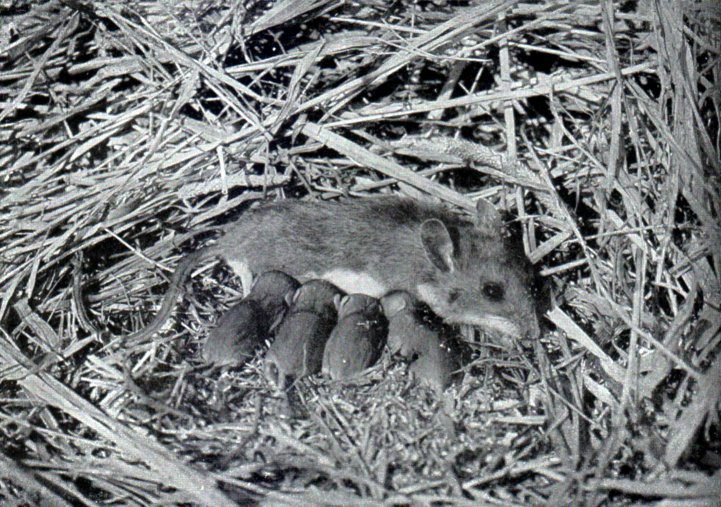
| Appearance | - The upperparts of this species range from pale to rich reddish brown, while its underside and feet are white. animaldiversity.org
- Its tail is darker on the upper surface and lighter underneath. biokids.umich.edu
| - The brush mouse has small ears and a long tail with a sparse covering of hair and a tuft at its tip. English Wikipedia
- The brush mouse has medium-brown upperparts, lighter brown sides with an orange lateral line, and whitish underparts. animaldiversity.org
- The brush mouse has a bicolored tail that is dark gray above, white below, and tufted at the end. animaldiversity.org
|
|---|
| Size | | |
|---|
| Habitat | - This species is most frequently encountered in warm, dry forests and brushlands at low and intermediate elevations. animaldiversity.org
- It can inhabit environments ranging from high-elevation forests to semi-desert landscapes. animaldiversity.org
- It also occupies suburban and agricultural environments. biokids.umich.edu
- In the southern and western portions of its range, this species mainly inhabits wooded areas and semi-desert scrub near waterways. animaldiversity.org
- In southern Mexico, this species is primarily associated with agricultural environments. biokids.umich.edu
- It constructs nests in warm, dry locations such as hollow trees and abandoned bird nests. animaldiversity.org
| - The brush mouse inhabits chaparral, pinyon-juniper woodlands, and pine-oak forests. animaldiversity.org
- The brush mouse is commonly associated with rocky areas containing dense shrub cover. animaldiversity.org
- Shrub cover, rock cover, and logs provide the brush mouse with nesting sites and refuge from weather and predators. animaldiversity.org
- In California, mature chaparral with at least 50% cover provides more suitable habitat for the brush mouse than young, open chaparral. English Wikipedia
- The brush mouse is frequently captured in habitats with medium to high shrub densities and tree cover below 4.9 m. English Wikipedia
- The brush mouse favors understory cover averaging 1.5–2.0 m in height. English Wikipedia
- In Texas, the brush mouse occurs in desert, grassland, riparian, and montane habitats. English Wikipedia
- The brush mouse is commonly associated with rock outcrops in Texas habitats. English Wikipedia
- In the northern Sierra Nevada of California, the brush mouse has been captured in brush habitats at elevations of 1,100–1,500 m. English Wikipedia
- The brush mouse appears to prefer steep slopes, including hillsides, mountainsides, and canyons. English Wikipedia
- The brush mouse constructs nests in tree cavities, rock crevices, under logs and boulders, and in caves and mine shafts. animaldiversity.org
|
|---|
| Diet | - This species is omnivorous and consumes seeds, berries, nuts, insects, grains, fruits, and fungi. biokids.umich.edu
- Its diet includes seeds, nuts, fruits, berries, and insects. tn.gov
- It consumes the pupal stage of invasive gypsy moths. English Wikipedia
- It gathers and stores seeds and nuts during autumn for consumption during winter. biokids.umich.edu
| - The brush mouse commonly eats acorns wherever they are available. English Wikipedia
- The brush mouse consumes arthropods and cutworms throughout the year. English Wikipedia
- The brush mouse forages in shrubs and trees for leaves and fruits. English Wikipedia
- In California, the brush mouse feeds extensively on acorns and conifer seeds during winter. animaldiversity.org
- In California, the brush mouse eats manzanita berries and insects during summer. animaldiversity.org
- The brush mouse typically consumes fungi when other foods are scarce. English Wikipedia
|
|---|
| Behaviour | - This species is primarily active during nighttime. animaldiversity.org
- Individuals are generally solitary and territorial, although neighboring home ranges can overlap. animaldiversity.org
- Its home ranges generally cover between 0.5 and 1.5 acres. biokids.umich.edu
- Its population density can range from 4 to 12 individuals per acre. animaldiversity.org
- Individuals are capable of climbing and swimming effectively. animaldiversity.org
- Captured individuals have demonstrated the ability to return to their original capture location after being released two miles away. animaldiversity.org
- Individuals produce a prolonged buzzing sound by striking hollow reeds or dry leaves with their forepaws. biokids.umich.edu
- Females transport threatened offspring individually by holding them around the neck with their teeth. biokids.umich.edu
| |
|---|
| Reproduction | | |
|---|
| Distribution | - This species occurs across much of eastern North America, extending from Nova Scotia westward to Saskatchewan and Montana. animaldiversity.org
- Its geographical range extends southward into eastern and southern Mexico and the Yucatan Peninsula. biokids.umich.edu
| - The brush mouse occurs from northern California and western Nevada eastward to western Texas and Oklahoma, and southward to central Mexico. animaldiversity.org
- The brush mouse is generally found at elevations exceeding 2,000 m. animaldiversity.org
|
|---|
| Conservation | | No checked fact yet |
|---|
| Uses | - This species contributes to controlling populations of insect pests such as gypsy moths. animaldiversity.org
- It serves as an important prey species for numerous small predators. maine.gov
- It is commonly used as a laboratory animal, ranking among the most frequently used mouse species after the house mouse. English Wikipedia
- Domesticated individuals are also maintained as pets and have been selectively bred for different coat colors. English Wikipedia
| No checked fact yet |
|---|
| Similar species | - The eastern deer mouse (Peromyscus maniculatus) is a similar species. English Wikipedia
- Other closely related species that can be difficult to distinguish from it include Peromyscus maniculatus, P. eremicus, P. polionotus, and P. gossypinus. animaldiversity.org
| - The brush mouse may be confused with Peromyscus attwateri, P. crinitus, P. difficilis, P. leucopus, P. maniculatus, P. pectoralis, and P. truei. animaldiversity.org
- The brush mouse can be distinguished from Peromyscus attwateri by its larger hind foot. animaldiversity.org
- The brush mouse has a longer tail relative to its head-body length and a larger overall size than Peromyscus crinitus, P. leucopus, and P. maniculatus. animaldiversity.org
- The brush mouse has shorter ears and smaller hind feet than Peromyscus difficilis and P. truei. animaldiversity.org
- The brush mouse has darker ankles than Peromyscus pectoralis. animaldiversity.org
|
|---|